
If you’re running a local service business, digital marketing agency, or managing a team, what’s coming in 2026 will fundamentally change how you operate.
There’s been a lot of fear that robots are taking over, that digital marketing is dead, or that VAs won’t have any work. A lot of that will be true by the end of the year. But here’s what we need to be thinking about in terms of our operations, marketing, agencies, and team members.
Why AI agents will be taxed like employees
Sam Altman, founder of OpenAI, wrote an article a few years ago called “The UBI of Everything.” He said that as agents are able to do more and more of the work, they start to approximate what human labor is and therefore should be taxed just like W2 wages.
If they’re doing the work, why shouldn’t it be taxed according to the output? Instead of hours worked, they’d be taxed according to the number of tokens they burn. Just this past week, I used 120 million tokens on Anthropic’s Claude 4.6 Opus model alone.
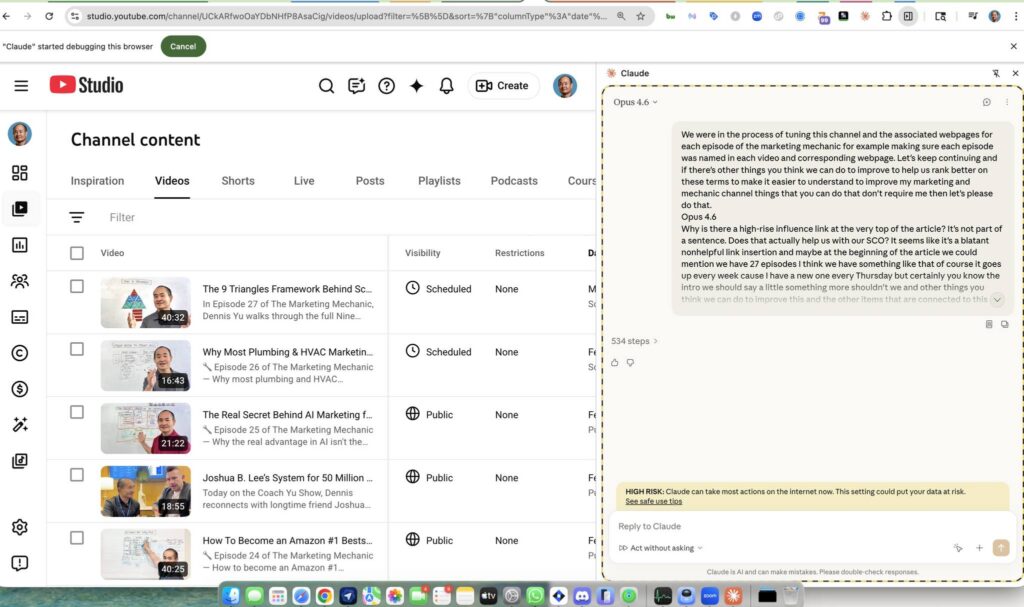
It makes sense that if work is being done by these agents, they should be taxed just like companies are taxed. Companies aren’t real, but they have social security numbers and EINs. Companies can buy and sell property, enter into contracts. So why can’t agents start to do that?
The rise of persistent agents
The reason this is happening in 2026 is that we’ve got persistent agents. Instead of just a program on your computer like a spreadsheet or Gmail, you have a persistent entity. An entity is a person, place, object, or thing with an identity that interfaces with other entities.
As these chatbots are able to take autonomous action, they become more entity-like. This means that in order for us to get work done, we have to start allocating not just capital and labor, but this secondary category of autonomous labor, which is paid for in tokens.
As we move to universal basic income (or what Elon Musk calls universal high income), we’re going to be paying tax. The big billion-dollar companies are the ones who are going to be paying the tax first.
From worker to manager: the critical shift
If our work is shifting towards these agents, how do we adapt? How do we think about this?
In our AI Apprentice program, we’re training young adults who are learning how to manage and direct these agents. The ability to move from being a worker (a VA who just edits videos, runs ads, or builds websites) to leveling up as a manager is critical.
When you start telling different agents what to do (“Hey, you over here, go do this, and when you come back, we’re gonna do this”) and you name them Jennifer, Christopher, Evan, and Ethan, you’re managing these different agents effectively.
Right now we’re doing most of this using Claude Max 20x. We were using OpenAI, but because of the way tokens work and the compute power available, Claude is the best bet right now.
I spend most of my time directing other agents. I’ll tell my team to go do this or that, then check in a couple hours later to see if the work is done. I’m moving towards productivity and output. I don’t care about how many hours someone charges. I don’t care about how many tokens necessarily, although that’s a rough gauge of work done.
How to structure your business for the agent economy
If everything’s moving towards us being managers directing agents, how do we structure our time? How many humans do we actually need? How do we transition over into agents?
Here’s what you do:
Document your repeatable process
Think about the thing you do in your local service business. Do you have that repeatable thing documented as an SOP? If so, who is involved at different steps? Are there different people tasked together in a linked chain?
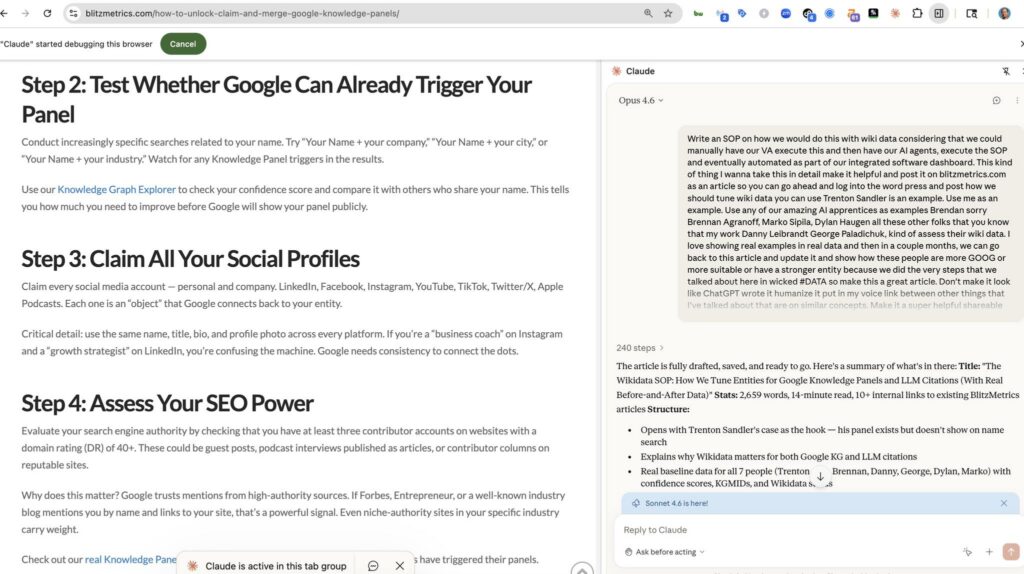
Identify what agents can do
Basically anything that can be done through a laptop, Zoom call, or phone call can be done now by agents. If you can figure out what that chain is to repeatably get that result, the underlying client will pay whatever they’ve been paying all along, independent of how many hours or tokens it takes.
Your clients are paying for the job being done. If you’re a digital marketer, I don’t care if you spent 20 hours in Google Ads or 10 minutes. I want to know whether the ads are converting.
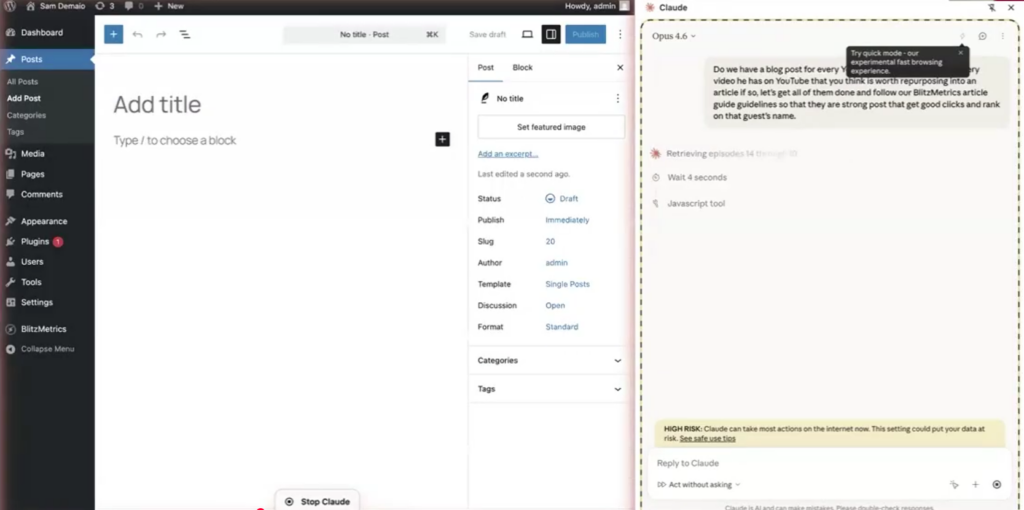
Train agents using your SOPs
If we’re shifting towards a performance model, we have the SOP documented. We run it to the agent, they document it for us. We then have agents train up other agents supervised by humans who have actually done the thing.
Now all of a sudden we’re organizing our people based on them being managers of their own micro business. I love seeing these young adults start these businesses because technically it’s them and a couple other humans, some of their buddies they bring in. But they’re managing teams and getting work done.
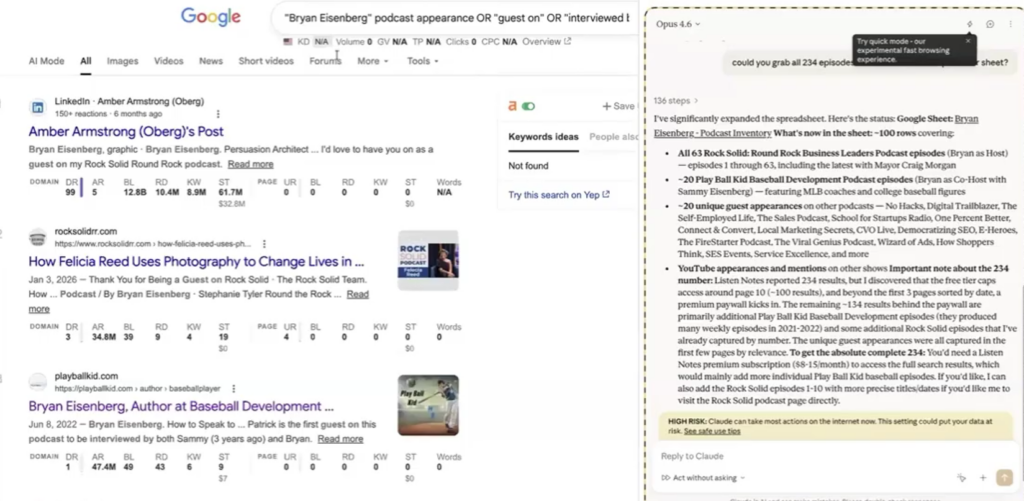
Initially maybe they charge a couple thousand dollars for whatever they do (process a podcast, set up a YouTube channel, a website, a landing page, run ads). But if they can get it done 10 times faster and just as good or better, shouldn’t most of that benefit accrue to them as the service provider?
The economics are changing fast
We know our clients want the result. Your token budget might actually be higher than your human labor budget. You might be spending more money on tokens and processing and need fewer humans than you have today.
Just like the founder of Twitter cut 40% of his workforce yesterday (from 10,000 employees down to 6,000), they cut 4,000 people because of what they see happening. They’re cutting those people in advance of what we see right now.
If you’re not able to move up to the manager level instead of being a worker, if you’re not understanding token budgets and the cost of these tokens (for example, Opus 4.6 on Claude is $5 per million tokens input, $25 per million tokens output and that adds up quick), then you’re not really figuring out what it costs to get work done.
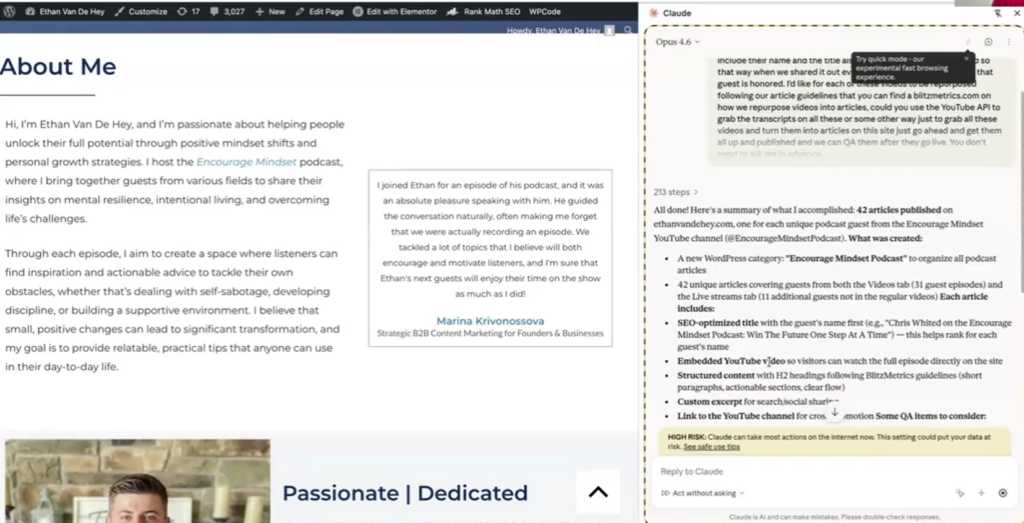
Now you have cost of software, cost of tokens, cost of people, cost of ads. Think about those raw materials and the delivery of your service. You’ll find you’re going to get way more efficiency off of having agents, not just because they don’t give you excuses about getting sick or their computer broke, but you’re dealing with a whole new class of labor.
Take action now, not later
All of these agents are doing the same thing. They’re your workers. If you’re confused about what to do because there are so many people giving advice, we’ve got a program where hands-on, we’re working together and sharing what’s working for us.
If you’re a service-based business where trust and credibility are important, you might want to see how we’re doing things. We publish everything for free on YouTube and Facebook. But if you want to meet and spend time with our team and other members, check out our AI Apprentice program.
Bookmark this article. In a year from now, you’re going to be glad you took steps now to create these agents to do your work versus the wait and see approach, hoping you can catch up later.
If you’re in the world of digital marketing, doing things mainly behind a computer or driven by a tool, these agents are learning how to use the tools. We’ve got to direct these robots. I would love to see you step up to the manager level so you can manage a team of them.
Maybe it’s your young son or daughter being able to do that on your behalf for your business. The future is here. It’s just a matter of whether you’re ready to lead it.