
I want to show you how I turn an idea into a published article in just a few minutes.
Step One: Start With Something Real
In this example, I was scrolling through Facebook like anyone else.
I came across an ad by Opinly and took a screenshot.
I created a new WordPress post and dropped the image straight into it.
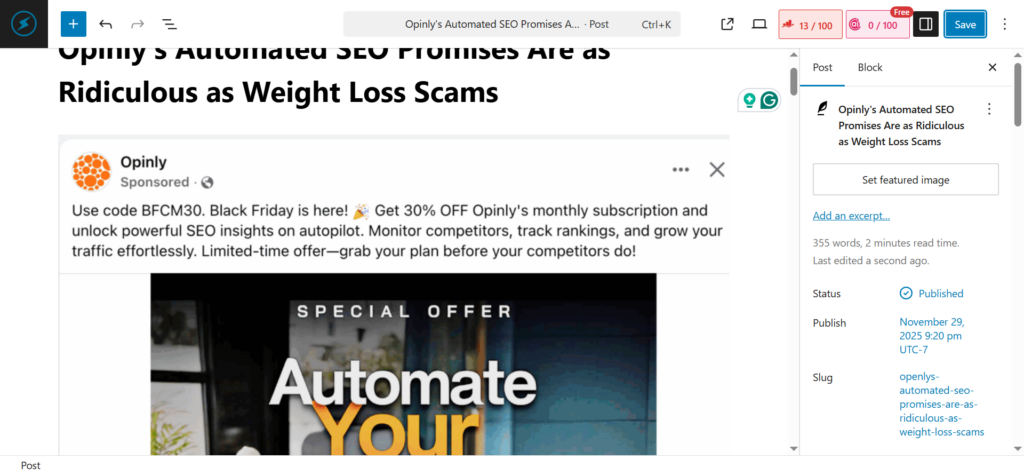
I was working with something that already existed in front of me.
That makes a difference because AI responds better when it has a real anchor to work from.
Step Two: Put the AI Into Agent Mode
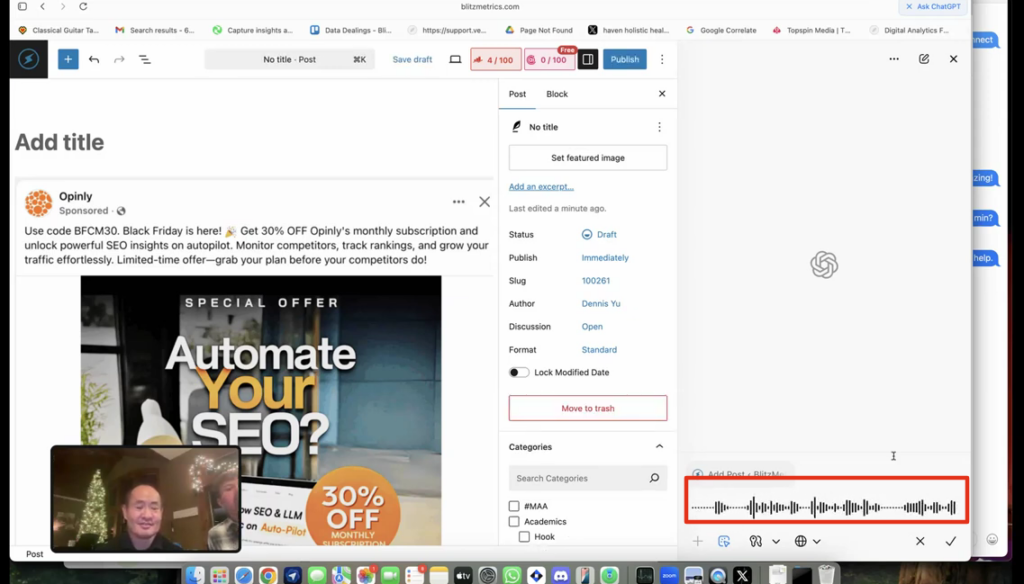
Next, I opened ChatGPT in Agent mode.
Before asking it to write anything, I explained what I was seeing.
I said:
“I just saw this Facebook ad from this service called Opinly where they promise that they can automate your SEO because their magic tools allow you to monitor competition, track rankings, and grow your traffic effortlessly.”
This gave the AI the situation I was reacting to.
Step Three: Share Your Thinking So the AI Has Direction
Then I added more background.
I explained why the topic stood out to me.
I said:
“This plays into the ignorance that local businesses and small businesses have where they think they can just pay someone or pay some automated AI-driven service to grow their traffic.”
That explanation gave the AI my perspective.
It reflected how I was interpreting what I saw.
When you do this, the writing carries your experience instead of sounding generic.
Step Four: Speak the Article Instead of Typing It
I talked through my thoughts instead of typing paragraphs.
As I spoke, the content was captured and transcribed.
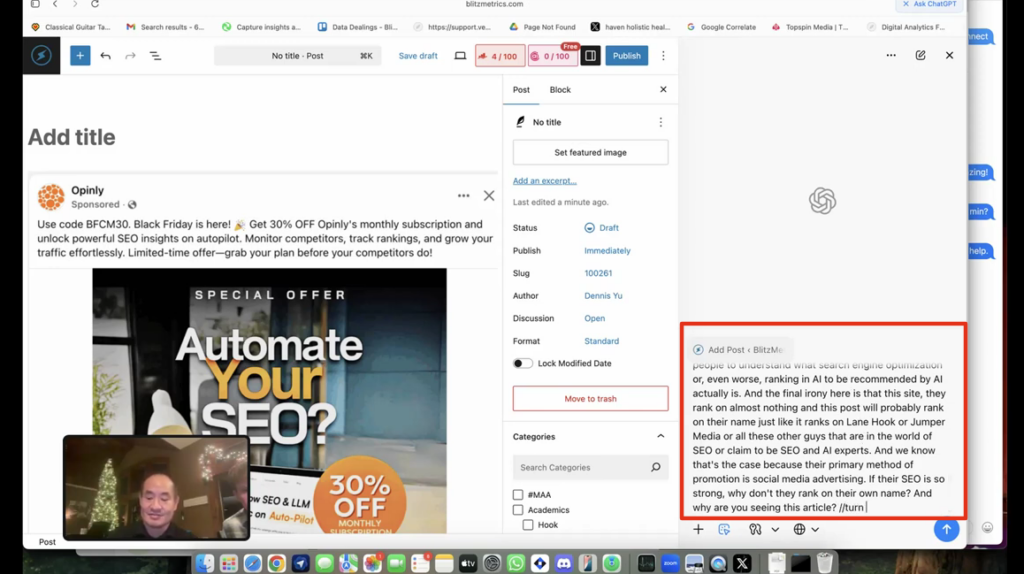
Once that was done, I gave a simple instruction:
“Turn this into an article.”
That was enough.
Most of the article already existed because the thinking had already happened.
Step Five: Give Fast, Specific Feedback
When the draft came back, I refined it.
I focused on direction rather than rewriting everything.
Here’s the type of feedback I gave:
“The author is me.”
“Choose a category instead of uncategorized.”
“Link to our other related articles.”
Plus, asking the AI to put the company name in the title so that we can rank on their name.
This is how I guide the agent.
Step Six: Let the AI Help With the Extras
While the article was finishing, I kept moving.
I also stacked a few follow-up tasks.
For example:
- To share it as a Facebook post.
- Link the article to our other posts, like that of Lane Houk.
- Link to related SEO scam articles, such as Signal Genesys Scam and Get Branded Today.
At that point, the article lived inside the system instead of standing alone.
That’s part of the Content Factory process.
Why This Worked So Quickly
The speed came from clarity.
- I already knew what I thought.
- I already had experience with the topic.
- I already understood why it mattered.
AI helped move things along because I gave it context and direction.
When you talk to it like a teammate, react to what it produces, and guide it as you go, the workflow stays efficient.
That’s how this entire process took less than five minutes.
And that’s how I recommend using AI agents.
You can check the final article I created via this link https://blitzmetrics.com/opinlys-automated-seo-promises-are-as-ridiculous-as-weight-loss-scams/