
I was out in Vegas at DigiMarCon with my team, Dylan Haugen and Jack Wendt, and we jumped on an Office Hours session that turned into one of the more useful conversations we have had in a while.
We ended up pulling apart a YouTube channel called HVAC Quote, looking at real analytics on a brand-new channel, and letting ChatGPT loose in agent mode to rewrite video titles live inside YouTube Studio.
George Paladichuk, who runs NaiL AI, was in the session. We also had Sinead joining from Ireland.
Pulling Apart the HVAC Quote Channel
HVAC Quote is a channel run by Marko, and the numbers caught my attention. He had driven 100 customers in 100 days off a brand-new channel using Facebook ads to push traffic to his YouTube videos. One video, “HVAC Companies: Stop Hiding Your Prices,” had viewers staying for an average of 3 minutes on a 7-minute video.
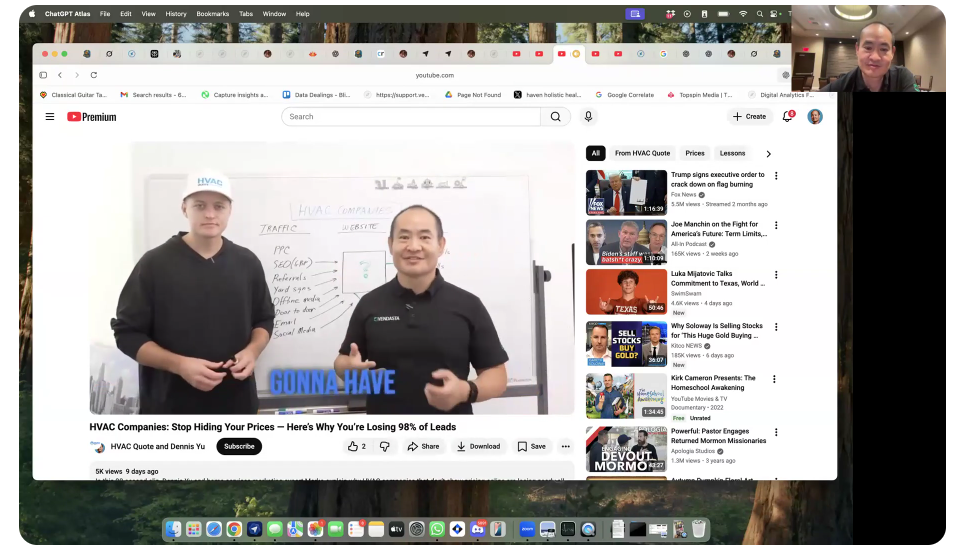
I asked George why he thought people were actually watching these videos. His answer, almost word for word from the call: “They’re HVAC businesses, and they’re staying because it’s, it’s relevant to them. You’re speaking directly to an issue that they know they have.” He paused, then added something about the title pulling them in before the first frame even loads. And he was right. When the content speaks to a specific person with a specific problem, you do not need to spend a ton on targeting.
For context, the industry average cost-per-view on YouTube ads runs between $0.10 and $0.30, according to Wyzowl’s 2026 advertising guide. I am paying maybe a penny a view to put these videos in front of HVAC company owners. That is a fraction of the industry average, and the viewers are actually watching because the content helps them.
What Happened When We Turned ChatGPT Loose on George’s Channel
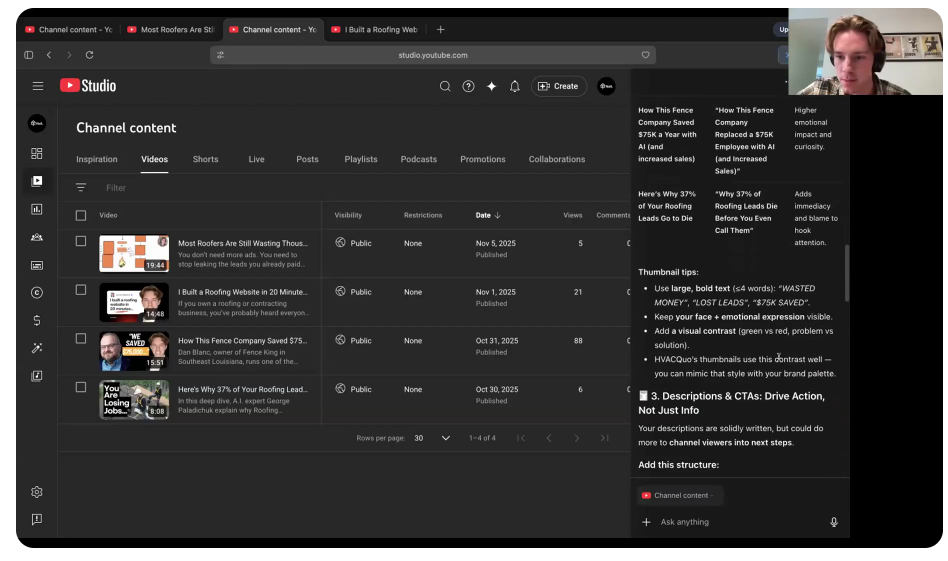
George’s NaiL AI channel had four videos up. I told him to dictate a prompt to ChatGPT while sharing his screen: “I’m on my YouTube channel here, and it’s a brand new channel. Go through my analytics, the content itself, the descriptions, titles, and give me ideas to improve based on the data.”
ChatGPT came back with concrete changes. It rewrote “Most Roofers Are Still Wasting Thousands on Missed Calls” to “Why 75% of Roofers Still Waste Thousands on Missed Calls,” adding a specific number to create curiosity.
It suggested reorganizing his playlists into actual categories, adding a website link to every description, and focusing on videos in the 5-to-10-minute range instead of going longer. Then it went into agent mode and started making the changes directly inside YouTube Studio, updating titles and descriptions in real time while we watched.
Small Numbers, Big Intent
We pulled up George’s analytics live. The numbers were small: 119 views in 28 days, 7.3 watch hours, and one new subscriber. Individual videos like “How This Fence Company Saved $75K” had 88 views, and “I Built a Roofing Website in 20 Minutes” had 21.
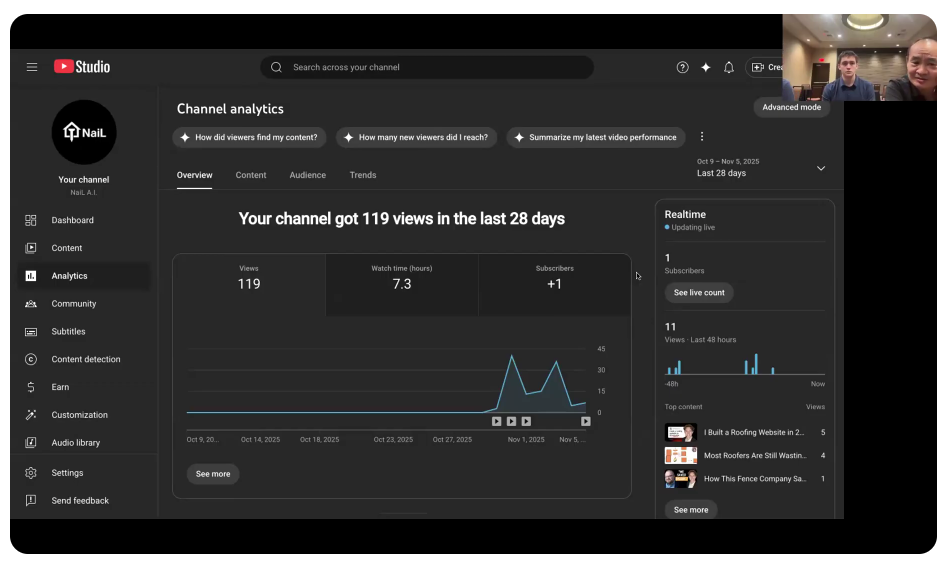
I told George those numbers are fine for a new channel. A roofing company owner who watches your entire video about saving $75K is a qualified lead warming up to you. The dollar-a-day approach to YouTube ads works because you are paying for distribution to people who already care about the topic. Relevant content builds trust, and trust drives phone calls.
Fixing the First 10 Seconds
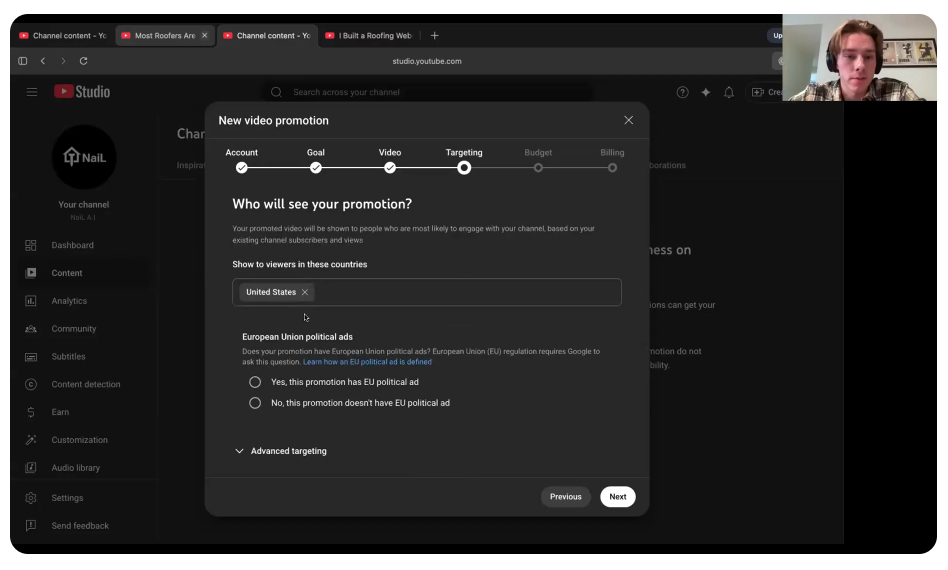
We spent time on intros because that is where most videos lose people. I showed how to trim dead time from the beginning of a video directly in YouTube Studio. George got it immediately: “If you don’t keep them there in the first 10 seconds, it doesn’t matter what happens after that. And if you’re not maintaining 70% of the people after 10 seconds, you need to change your intro.”
Then he admitted something that I think a lot of people in the session related to. Here is the actual exchange from the recording:
George: “I think the biggest thing I’ve learned is, is done is better than perfect. That’s, that’s what’s been holding me back the whole time.”
Me: “Yeah, exactly. And look, you got four videos up. How long did that take you?”
George: “Like, honestly, once I just stopped overthinking it, like a few days.”
Raw phone content, straight to YouTube, no fancy editing. That is how he got those first four videos up.
George On Booking Podcast Guests and Sinead Joining from Ireland
George shared that he had booked five podcast episodes just by sending simple LinkedIn DMs. He reached out to people like Chris Lee, who had a nine-figure exit in roofing, and Tim Brown of Hook Agency. “I just reached out saying, hey, I’m starting up this show and want some reputable folks to help me out,” he said. Every single person said yes.
That is how one podcast relationship can build your domain authority over time.
Sinead joined the call from Ireland and asked whether international participants could access the programs we run. Dennis confirmed they can. The team has been expanding access, and there are now people in the group from multiple countries running the same film-and-repurpose approach whether they are in Dublin or Denver.
What I Took Away from This Session
The session reinforced something I keep seeing: small business owners who film short, helpful videos about their actual work and then put a small ad budget behind them are getting results that traditional advertising cannot match. George went from zero videos to a growing channel in a matter of days.
He also went from no podcast to five booked guests. You film yourself talking about what you know, you use AI to optimize and repurpose that content, and you put a small budget behind it so the right people see it.
If you are in the home service space and you have not started putting videos on YouTube yet, this session is worth watching.