AI For Contractors: What’s Real, What’s Fake, And What Actually Works

If you’re a contractor, you’ve probably been hit with the same pitch from ten different directions:

“AI will handle your marketing.”
“AI will write your blog.”
“AI will rank you in Google.”
“AI will replace your content team.”

And most of it sounds like magic. Which is the first problem, because contractors live in reality. Roofs leak. Toilets back up. Heat goes out at the worst time. Customers don’t care what tool you used. They care whether you showed up, did the job right, and stood behind it.

That’s why most “AI for contractors” content feels like total nonsense. It’s sold like a shortcut. But contractors don’t need shortcuts. They need systems that produce real leads and real revenue without wasting time or wrecking their reputation.

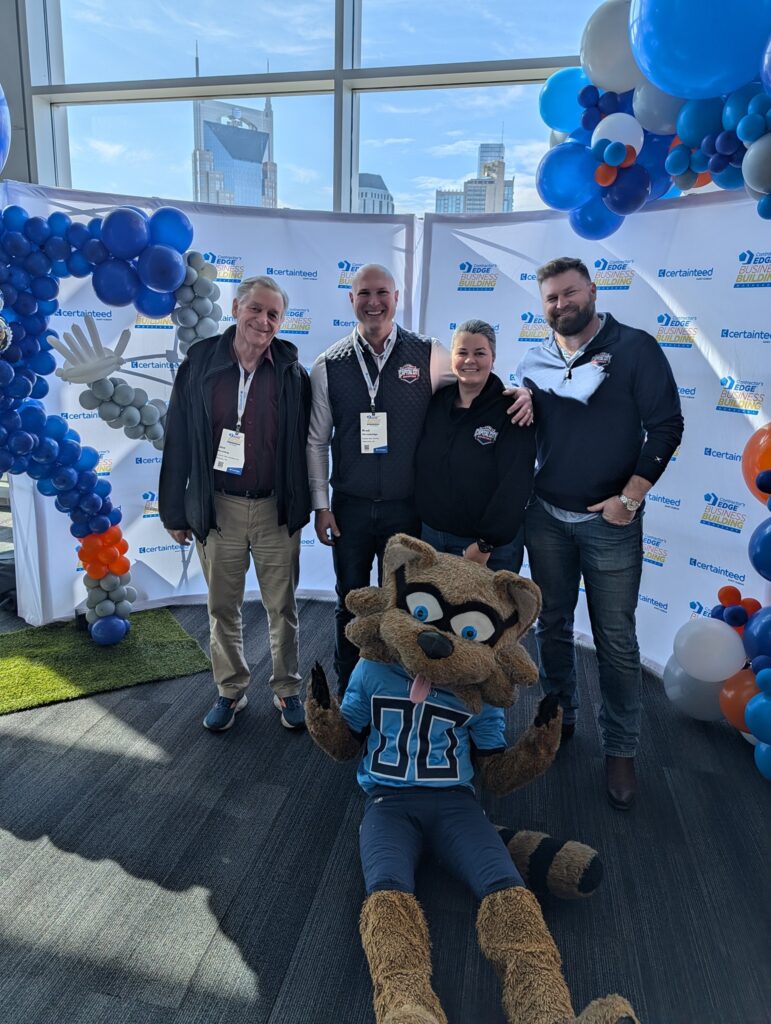
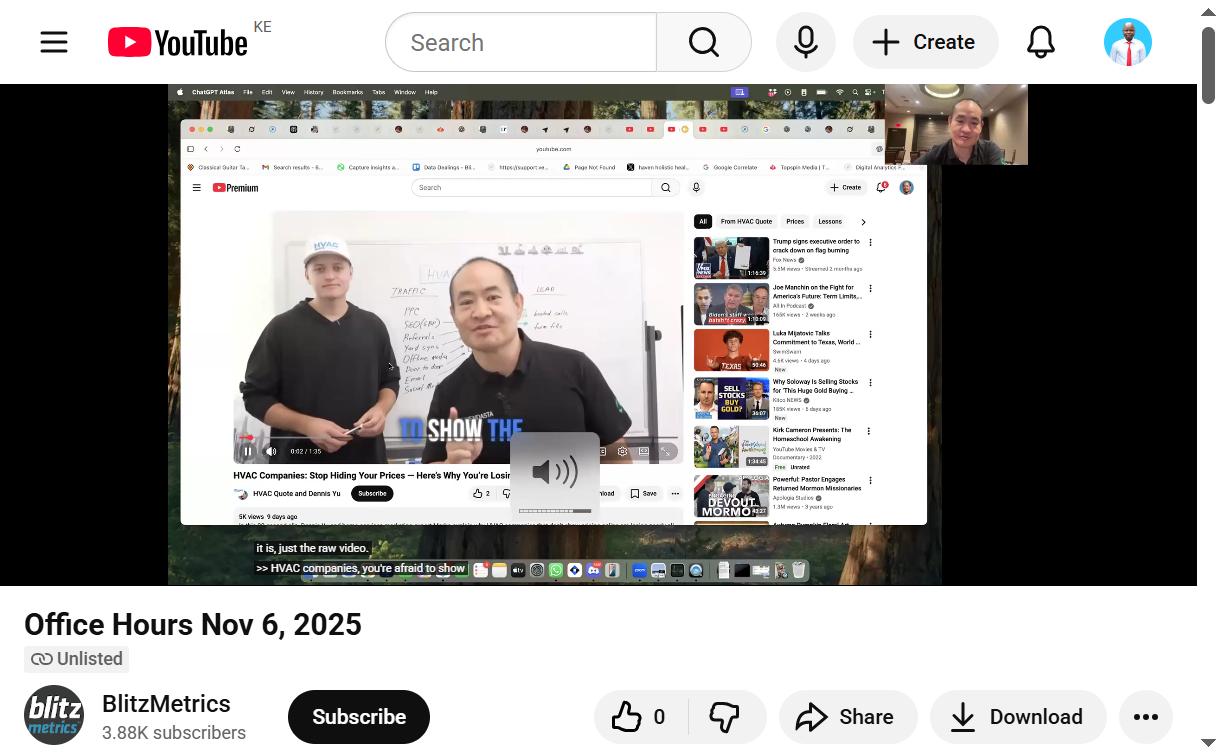
While Dennis Yu was in Minneapolis, Minnesota, he sat down with Jack Wendt and myself, Dylan Haugen, to record an in-person Local Service Spotlight podcast focused on one topic contractors keep asking about: AI.

The conversation wasn’t about tools, shortcuts, or automation promises. Instead, they walked through what “real AI” actually looks like for contractors, what misconceptions and outright lies are being sold in the market, and how AI should be used in a way that supports reputation, visibility, and long-term growth. Drawing from real contractor examples, audits, and hands-on experience, the discussion focused on what works in practice, and what quietly causes damage when used the wrong way.

The Big Idea: “Real AI” Doesn’t Generate—It Processes And Amplifies

The cleanest way to explain real AI for contractors is this:

AI is useful when it takes real experiences and turns them into marketing assets faster.
AI is harmful when it “creates content” that isn’t tied to real work.

Dennis and I kept coming back to the same point: contractors already have what most marketers don’t: real proof.

  • Real photos from real jobs
  • Real videos from the field
  • Real reviews from homeowners
  • Real stories about problems solved
  • Real service areas and real local context

AI should help you turn that proof into:

  • Website updates and service pages
  • Blog posts and FAQs
  • Social posts and captions
  • Ad variations and creative testing
  • Better organization and follow-up

That’s why they used language like “process and translate” rather than “generate.” Because “generate” implies you’re making it up. “Process” implies you’re taking what already happened and packaging it so people can actually see it.

If you want one sentence to remember:

AI doesn’t replace credibility. It helps you distribute credibility.

Why Contractors Are Confused: The Loudest Voices Are Selling Magic

Contractors aren’t confused because the topic is complex. Contractors are confused because the market is full of salespeople.

Dennis compared it to weight loss pills: people sell the dream of no effort, and the product is built around the dream, not around reality.

Here’s what that looks like in marketing:

  • “Pay $X/month and we’ll handle your blog completely automatically.”
  • “We have proprietary AI that writes SEO content every week.”
  • “You don’t have to lift a finger.”
  • “Guaranteed rankings / guaranteed leads.”

He shared a real example of a business owner paying $9,000/month for “AI blog content,” only to find it was hurting rankings. Why? Because the posts weren’t tied to real experiences, real locations, or real community credibility. It was content “about” the business, not content that came from the business.

That’s how contractors get burned: content that looks “professional” but has no local proof behind it.

Quick Reality Check For Contractors

If someone tells you their AI marketing system is “hands off,” ask this:

  • What inputs do you need from me every week?
  • Where will the proof come from?
  • How are you showing real jobs, real locations, and real outcomes?
  • What happens if the content is wrong or misleading? Who checks it?

If the answer is basically “don’t worry about it,” you’re the product.

The “Ingredients” Rule: If You Don’t Bring Proof, Nothing Works

Dennis used a simple analogy: a restaurant.

A real chef can do a lot, but you still need ingredients. If a restaurant says, “Come in, we don’t need to have anything, the meal will just appear,” you’d laugh.

Contractor marketing is the same:

They need the ingredients.

Those ingredients include:

  • Photos and videos from job sites
  • Details about what you actually do (and don’t do)
  • Examples in specific cities and neighborhoods
  • Proof your team exists and does the work
  • Reviews and customer outcomes

AI is the chef’s assistant. It can prep, organize, and speed up the process. But it can’t create a real meal out of nothing.

This also connects to Google’s quality standards (the “E-E-A-T” concept that I referenced): experience and trust show up when the content reflects real-world work, not generic text anyone could publish.

Common AI Scams Contractors Should Watch For

Contractors don’t need a technical background to avoid scams. You just need a few filters.

Red Flags

  • Guarantees
    • “Rank #1 in 30 days”
    • “Guaranteed leads”
    • “Guaranteed cost per lead”
  • Proprietary/secret language
    • “Our PhD-built AI system”
    • “CIA-level technology”
    • “You wouldn’t understand”
  • Tool-first selling
    • They talk more about the software than your jobs, your reviews, your service areas, and your customers
  • No need for your input
    • They don’t ask for photos, videos, job examples, offers, locations, or clarity
  • No proof they can do it
    • Their own site doesn’t rank
    • Their own ads are invisible
    • Their own online presence doesn’t match their claims

Dennis also made a blunt point: don’t judge credibility by conference booths, personality, or “who knows who.” Judge it by whether they can actually do the thing.

A Practical Due Diligence Checklist

Before paying an agency or buying “AI SEO software,” check:

  • Can you Google them and find evidence they rank for relevant terms?
  • Do they have a visible body of work (articles, videos, case studies) that matches what they sell?
  • Can you inspect their ads publicly (Facebook Ads Library)?
  • Do they show real examples of contractors’ proof being amplified, not just generic content output?

If they’re selling “authority,” but they don’t have it, that tells you everything.

How AI Fits Into SEO (Without The Hype)

One of the most useful lines from the conversation was Dennis quoting Damon Burton:

AI is basically another search engine.

People act like AI is separate from search. It’s not. These systems rely on data sources—often the same ones search engines use. And that means the same fundamentals matter:

  • Do you have real proof tied to real locations?
  • Do you have consistent content that reflects real services?
  • Do you have reviews and community credibility?
  • Do you have pages that match what homeowners search?

What AI Actually Helps With In SEO

AI is good at following simple instructions and doing repetitive tasks quickly. In practice, that means:

  • Turning a video transcript into a blog post draft
  • Creating FAQ sections from real customer questions
  • Writing first drafts for service pages (based on your real job notes and photos)
  • Suggesting titles, meta descriptions, and internal links
  • Summarizing reviews into themes (what customers praise most)
  • Helping organize and label media by service + city

AI helps with execution speed. It doesn’t replace what makes a page trustworthy.

What Hurts SEO

The trap is mass-producing “SEO content” with no proof.

If your blog becomes 14 generic posts that could apply to any roofer anywhere, you might publish more content, but you’re not strengthening relevance. You’re just filling your site with noise.

Dennis’ point was simple: if the content doesn’t reflect real work, it’s not “AI SEO.” It’s automated filler.

The Content Factory Explained For Contractors (And Why AI Makes It Easier)

The Content Factory model came up repeatedly, and it’s worth spelling out clearly because this is the practical framework contractors can actually implement.

Stage 1: Produce (Real Proof)

This is the hard part, but not because it’s complicated, because it requires habit.

Contractors already have proof, but it’s scattered:

  • Techs have media on their phones
  • Office has customer emails and reviews
  • CRM has job notes
  • Someone posted a few photos on Facebook months ago
  • Nothing is centralized

Your goal is simple: get proof into one place.

Stage 2: Process (Turn Proof Into Assets)

This is where AI shines.

Processing means you take one job and create multiple “formats”:

  • A short write-up (what problem, what fix, where)
  • A few captions for social posts
  • A Google Business Profile post
  • A service page update (if relevant)
  • A short video edit + title + description
  • A few ad variations using the same core footage

Different platforms require different formatting. AI makes that formatting faster.

Stage 3: Post (Publish Where Homeowners Actually Look)

Posting is distribution. The mistake contractors make is believing that “one post” is the work. The work is making proof consistently visible.

  • Google Business Profile posts
  • Website service pages
  • YouTube
  • Facebook / Instagram
  • Ads (when you find winners)

Stage 4: Promote (Boost Winners And Follow Up)

Promotion is where the results compound.

Dennis gave examples like:

  • Running lightweight ads (Dollar a Day) on proven content
  • Saying thank you and staying in touch with customers
  • Following up to request reviews
  • Running seasonal winners again instead of starting over

This is also where contractors waste a lot of time: they create content once, post it once, then throw it away.

The Consistency Problem: Why Most Contractors Quit After A Few Posts

Contractors don’t quit because AI is hard. They quit because they don’t see immediate payoff, and they don’t have a simple system that creates feedback.

Dennis’ answer was not “post every day” or “grind more.” It was:

Use a weekly review loop so you can learn what’s working and do more of it.

He used the MAA idea:

  • Metrics: what happened (calls, leads, review velocity, rankings, traffic, cost per lead)
  • Analysis: why it happened (what content drove it, what offer worked, what targeting worked)
  • Action: what you’ll change next week (make more of the winner, test variations, fix gaps)

What This Solves

Instead of posting randomly and hoping, you start running your marketing like the rest of your business:

  • Find what works
  • Repeat it
  • Improve it
  • Stop wasting effort on losers

This is where AI can become truly valuable long-term, because AI can help you produce variations and repurpose winners quickly, but you still need the human judgment to decide what to scale.

AI Ads: Good For Attention, Bad As A Replacement For Real Proof

We also touched on AI-generated ads (Sora-style, highly produced visuals) and the right way to think about them.

The simple view:

  • AI can help you dress up a message (like an Instagram filter or auto-tune)
  • But the ad still needs real credibility behind it: real warranty, real team, real experience, real footage

A contractor ad that’s entirely synthetic raises an obvious question for homeowners:

“If you’re so good, why don’t you have any real footage of your work?”

The best ads usually mix:

  • Real B-roll (your crew, your trucks, real job sites)
  • Clear offer and clarity (what problem you solve, where, and how fast)
  • Edited packaging (music, captions, hooks, variations)

AI helps with packaging and variations. Your proof carries the trust.

AI Apprentices: The Shift From “Worker” To “Manager”

A major theme in the back half of the conversation was how roles change when AI does more task work.

Dennis’ point was blunt:

AI will beat most “doers” at repetitive production tasks.

So the advantage shifts to people who can manage:

  • coordinate inputs (proof collection)
  • direct systems (what gets made, for whom, and why)
  • review outputs (accuracy and quality)
  • analyze performance (what’s working)
  • make decisions (what to scale next)

That’s the concept behind AI Apprentices: training people to become operators and managers, not just task workers.

And for contractors, that matters because most owners don’t want to be in the weeds of posting, editing, formatting, and tracking.

They want the business to grow while the work stays high quality.

Local Service Spotlight’s View: Reputation First, Tools Second

The Local Service Spotlight approach described in the conversation was consistent with everything above:

  • spotlight the contractor who deserves to win
  • amplify real reputation
  • make it visible across channels
  • connect it to systems that produce measurable ROI

Dennis emphasized that the reputation starts with the owner. Even when a team does the work, the owner carries the accountability when things go wrong.

That’s why authority-building for contractors is local and directional. You’re not trying to be a national influencer. You’re trying to be the trusted choice in your city for your service.

The First Step Contractors Can Take This Week

Don’t start by buying software.

Start by organizing proof.

Here’s a simple first move that almost every contractor can do:

  • Create one shared folder (or central place) where job photos/videos go
  • Make it easy for the team to upload (no complex rules at first)
  • Each week, pick one job and push it through three places:
    • Google Business Profile post
    • Social post (Facebook/Instagram)
    • Website update or short blog post

Then use AI for what it’s best at:

  • Turning that job into drafts, captions, FAQs, and variations quickly

That’s real AI. Practical. Repeatable. Built on the truth.

Scroll to Top