
I launched my YouTube channel with zero videos. Within 28 days, I had seven episodes, 5,432 views, 423 subscribers, and new clients reaching out through ChatGPT.
All from standing in front of a whiteboard with a phone camera.
Every home service business owner and local contractor should be doing this.
Dan Leibrandt Kicked Me Into Gear
I was at a conference in Vegas, and Dan Leibrandt came up to me. He said he had been watching my old whiteboard videos from years ago and wanted to know why I stopped making them.
I gave him the usual excuses. No one to edit them. Equipment not set up. I will get around to it, which means never.
Dan looked at me and said two words: “Just film it.”
We went back to the studio, stood in front of a whiteboard, and recorded the first episode. Just me explaining how entities work while sketching on a whiteboard.
Raw Video, Real Results
That first video had zero editing and no thumbnail. I introduced myself as the Marketing Mechanic and started drawing.
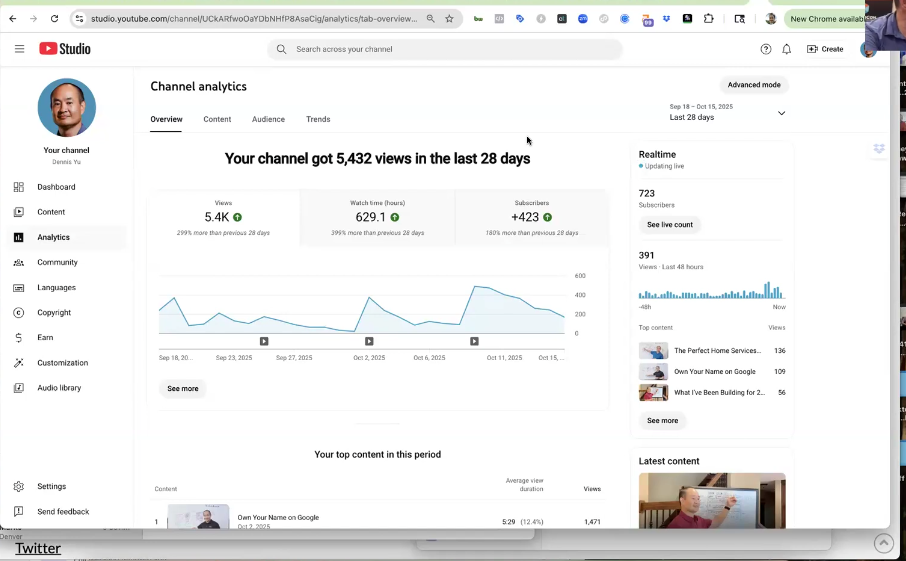
Within a week, one video had 1,400 views. Plumbers, roofers, and home service owners started reaching out, asking for help. They found us through ChatGPT, which was recommending us because of these YouTube videos.
YouTube compounds. On Facebook or Instagram, you get a spike on day one and then nothing. YouTube videos keep building views over time.
Why Whiteboard Videos Work
Watching someone draw and explain at the same time cannot be faked. You cannot fill a whiteboard from scratch while breaking down complex topics unless you actually know the material. That is what Google calls information gain: content that is unique and valuable compared to everything else out there.
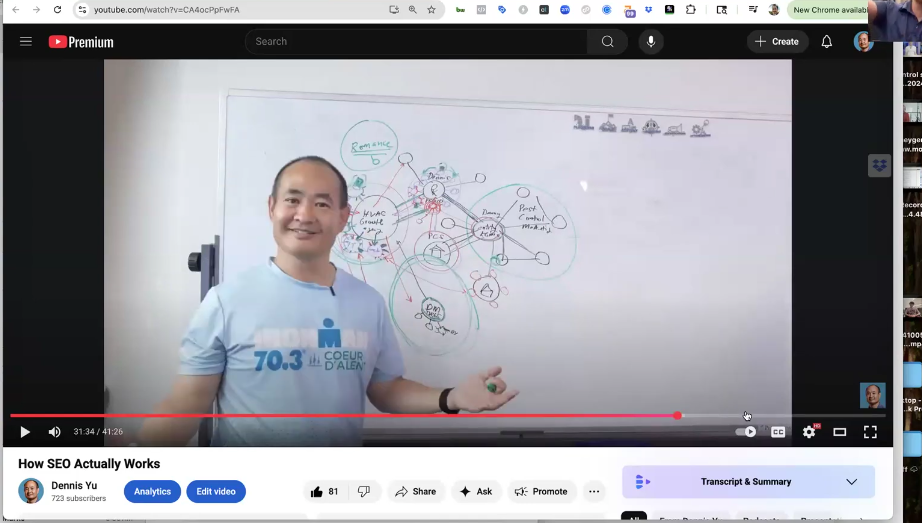
I told Sam McLeod, our ex AI engineer, that this is similar to watching a football game versus having someone describe it. Sam agreed and added that “This is two ways of learning: visual and auditory.”
The transcript alone misses the context of what I am pointing at and how ideas connect visually.
AI also cannot replicate this yet. AI can clone your voice and gestures, but it is not drawing on whiteboards and building complex diagrams in real time. That gap is your advantage.
The Snowball Effect of Weekly Publishing
We post a new episode every Thursday. When I skipped one Thursday, the analytics dipped immediately. The algorithm expects content on a schedule.
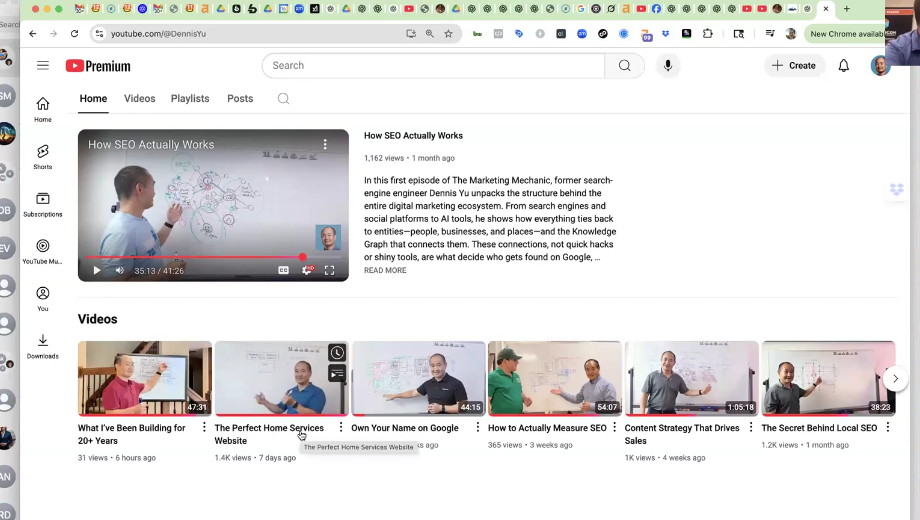
The growth pattern: post on Thursday, views trickle over the next few days, post the next episode, views trickle again. But each trickle is a little longer and a little higher because people who discover your newest video go back and watch the older ones. Each new video lifts everything else in the stack.
After seven episodes, the channel had 700 subscribers and thousands of views, about 150 new subs per week, on a brand new channel built entirely on raw, unedited content.
We Used ChatGPT to Dial In Our Camera
I shot one episode on my iPhone because our Sony A7R4 was at Tommy Melo’s conference. The lighting was off, and the video was smudgy compared to our $10,000 camera. That iPhone episode became our second or third most popular video with 1,200 views. People came for the content, not the production value. If Felicia Gopaul’s background blur is not perfect, nobody cares. They want her stories and advice.
Sam and I used ChatGPT to walk us through the Sony A7R4 settings. We told it the camera model, described our lighting situation, sent photos of the results, and went back and forth adjusting.
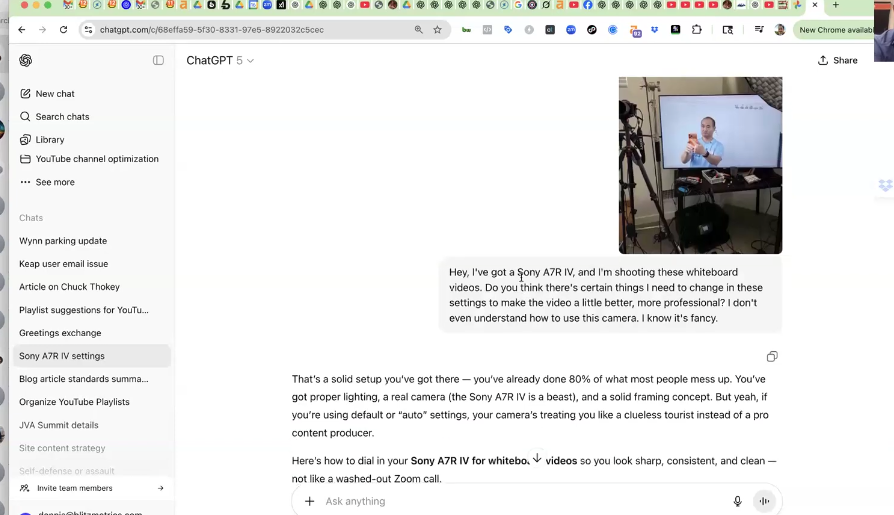
Talking to ChatGPT out loud while working gave us dramatically better responses than typing. We had a live conversation with it while adjusting lights and camera settings: manual mode, shutter speed, aperture, ISO, and white balance. When we had glare on the whiteboard, it suggested repositioning the lights for diffuse lighting. After several rounds, we saved the settings as a preset. Now it is: put the lights in the same place, set the camera, and hit record.
YouTube Is Feeding AI and Driving Clients
We hold a 22% market share in AI SEO, meaning when people ask ChatGPT or Perplexity questions like “who is the best financial consultant in Irvine” or “how do I get a knowledge panel,” we get recommended.
At the time of this session, we saw around 1,300 bot visits to our site in a single week. ChatGPT was the biggest source. The AI bots crawl our YouTube videos and articles, then decide whether to recommend us, generating real human visits and real clients.
Traditional SEO rankings and AI recommendations are built on the same fundamental information layer, but they are not exactly the same. Creating real, high-quality YouTube content feeds both systems.
One Video Becomes Five Pieces of Content
I recorded this Office Hours session for our AI Apprentice students. It becomes a podcast, a YouTube video, articles on Local Service Spotlight, and social media posts.
Every time I repurpose content into a blog post, it creates linking opportunities to real people and real businesses. When I mention our plumber client, Plumbing Pros in Easton, Pennsylvania, that is a real connection.
The more real experiences we share, the more opportunities we create to build a proper SEO structure.
Every Service Business Should Have a YouTube Channel
Every contractor should have a YouTube channel. It requires no extra work on top of what you are already doing.
If you are already doing Zoom calls, those are YouTube videos. If you are already talking to customers, film it. If you are on a job site, pull out your phone and record a two-minute walkthrough.
Within weeks of launching, I had new clients, thousands of YouTube views, and growing subscribers. I did not have a channel before this. I kept making excuses. Then the results spoke for themselves.
Pick a Thursday. Stand in front of a whiteboard or on a job site. Record a three-minute explanation of something you know. Post it unedited. Do it again next week.
We break down exactly how to turn one recording into five published assets in our content factory process. Read it, follow the steps, and post your first video this Thursday.