
This Office Hours session walks through our actual system for propagating experiences into documents and agents. This is the framework we use every single day to turn what we do into scalable assets.
The session lays out how LDT/CCS propagates across all our assets. We turn things into canvas documents and agents, following our standard progression, then scale up from there.
The fundamental shift: from worker to manager
The rise of AI agents has created a critical distinction in the workforce. With AI becoming increasingly capable (from $3/hour virtual assistants to $10/hour workers handling complex tasks), your value is no longer in doing individual tasks. Your value is in your ability to manage.
If you’re not managing, directing, and orchestrating work, you’re competing directly with AI that’s getting cheaper and more capable every day. The key skill isn’t technical execution anymore; it’s the ability to clearly articulate what needs to be done, provide structured instructions workers can follow, quality assure the output, and orchestrate multiple workers in a coordinated system.
Think of it as building a department rather than being a single contributor. You’re managing VAs, and those VAs work together as a coordinated team.
Understanding the framework
The LDT/CCS framework has two interconnected parts that work together. LDT addresses the learning and execution cycle; how you go from not knowing something to being able to teach it systematically. CCS addresses the output formats and how that knowledge manifests in different forms depending on how far you’ve taken it.
Learn, do, teach
You start by experiencing something firsthand. You can’t build scalable systems around processes you don’t understand. This is why we emphasize doing the work manually first before automating or delegating.
Next, you execute the process multiple times. Repetition reveals patterns, edge cases, and the actual requirements. This is where you build your proof: client results, case studies, revenue impact that demonstrates your methodology actually works.
Finally, you document and systematize what you’ve learned. You create training materials, record walkthroughs, write SOPs. Teaching forces clarity and creates the foundation for scaling.
Content, checklist, software
Content represents all the knowledge artifacts: videos, articles, documentation, and training materials. This is your intellectual property made tangible.
Checklists are quality assurance systems that verify whether something was actually done correctly. Not just “how to do it” but “how to verify it was done right.” There’s a crucial difference between the cookbook recipe that tells you how to do something and the QA checklist that confirms it was done properly.
Software is the ultimate form: automated systems that execute the process without human intervention. This is where technical implementation takes over once we’ve proven the requirements through repeated manual execution.
The propagation system: from experience to asset
— Raw material collection
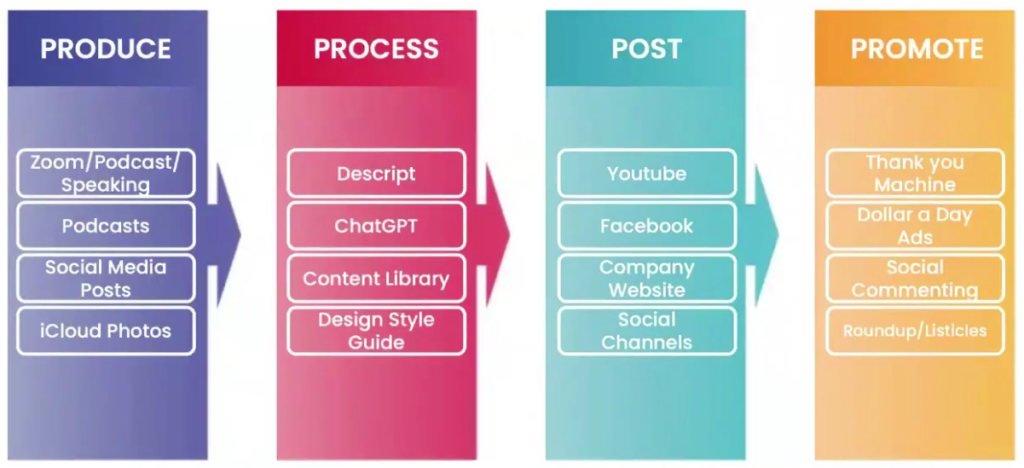
Everything starts with capturing your experiences. Zoom recordings of client work, training sessions, and strategy calls form the foundation. Photos and videos from events, conferences, and job sites provide visual proof. Conversations that demonstrate expertise become training material. Client results prove your methodology works.
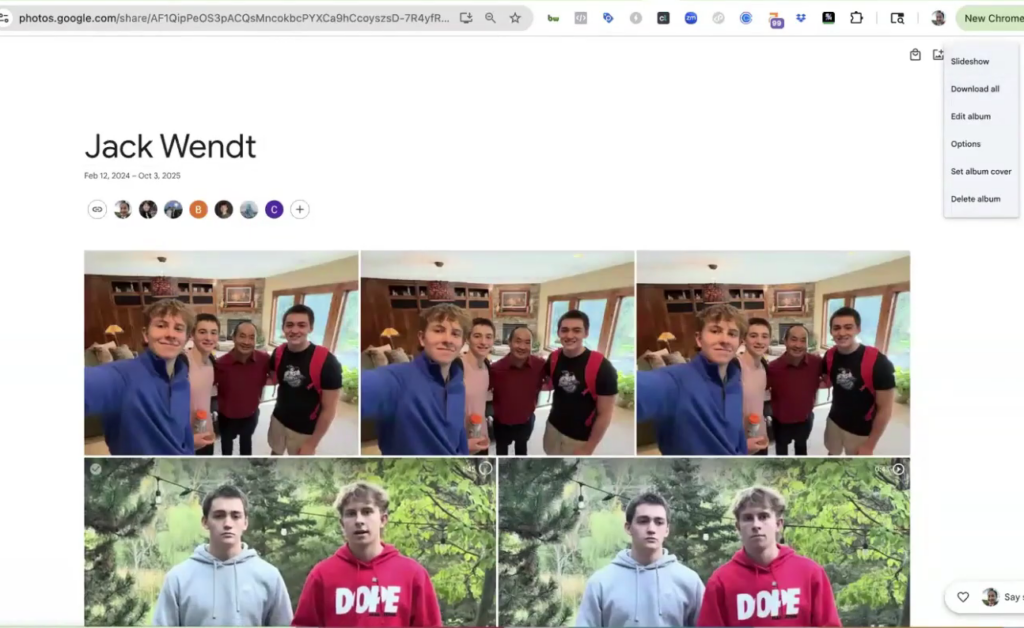
The key is making this raw material accessible. We use systems like Google Photos for automatic organization and facial recognition. Shared Google Drives give team access. Organized albums by client, project, or topic create structure. The more organized your raw material, the easier it becomes for AI systems to access and process it.
— Processing into canvas documents
A canvas is a structured way to accomplish a specific task. Think of it as a playbook for one repeatable process. You might have a canvas for building a personal brand website, creating location service pages, or conducting an SEO audit.
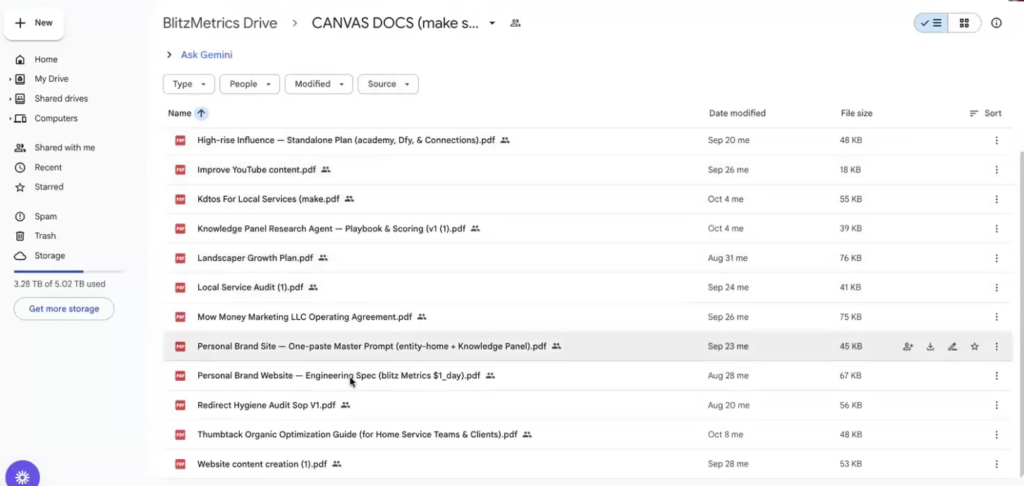
Each canvas contains the goal and context, step-by-step instructions, examples and reference materials, and quality criteria for success. The more you repeat a task, the better your canvas becomes. Every Zoom call demonstrating that process makes the canvas smarter because you’re continuously refining based on real-world application.
— Organizing into the Task Library
Your Task Library is a collection of all your canvases, organized and ready to deploy.
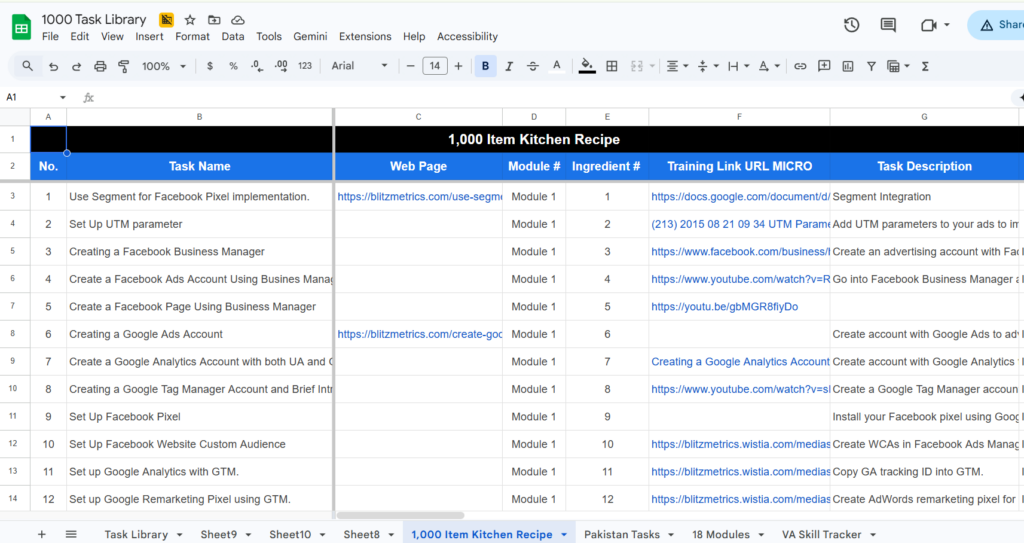
Here’s the key insight: What is an SOP or checklist? It’s simply a linked list of tasks. You sequence canvases together to create complete workflows. For building a personal brand website, you might collect client authority signals like podcasts and speaking engagements, then clarify Goals, Content, and Targeting, (GCT) then set up domain and hosting, populate the website with content, connect pages strategically, create additional content to fill gaps, and optimize for conversion. Each step links back to a specific canvas with detailed instructions.
— Deploying through agents
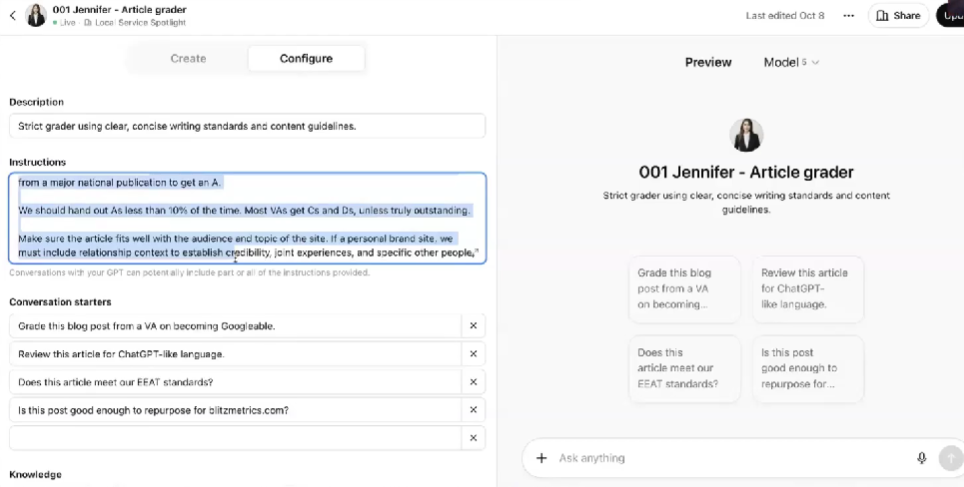
Agents are AI workers that execute your canvases. They can be Custom GPTs with specific instructions and training, agent systems that work autonomously for extended periods, or orchestrated workflows where multiple agents hand off work to each other.
We might have an agent named Jennifer who starts with one core task from one canvas. She gradually learns three or four tasks as we enhance her training. She works alongside other agents (Ethan, Christopher, whoever we’ve built) and they coordinate as part of a larger departmental workflow.
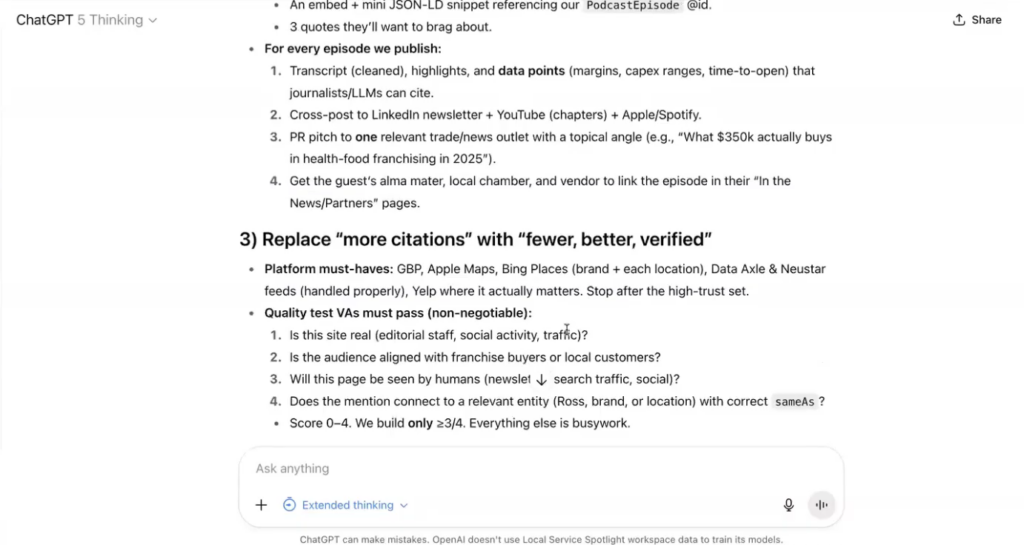
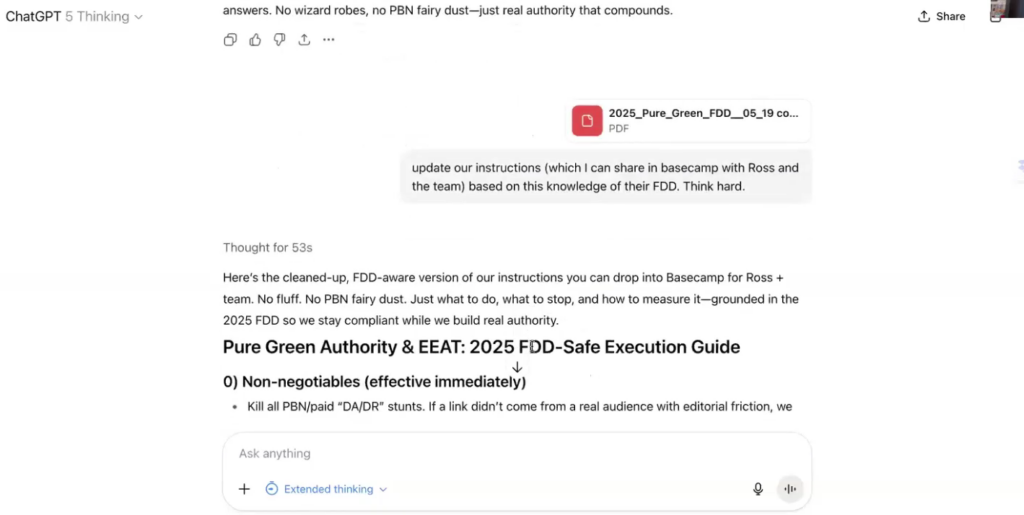
The better your canvases, the better your agents perform. Every time you enhance a canvas based on a real project, all agents using that canvas become more capable. This creates a compounding effect where your knowledge infrastructure gets stronger with each use.
— Scaling through software
Once you’ve done the work manually multiple times, proven the process with client results, documented it thoroughly in canvases, and deployed it through agents successfully, then you can build actual software. Software always comes from manual execution, not from engineers guessing requirements or creating PowerPoint decks to raise money.
Here’s a real-world example: We’ve written books using a specific process. We could now build software that conducts interviews with subject matter experts, transforms conversations into chapters, creates a website around the book, runs Amazon ads to make it a bestseller, captures proof through screenshots of rankings, and uses that proof on landing pages.
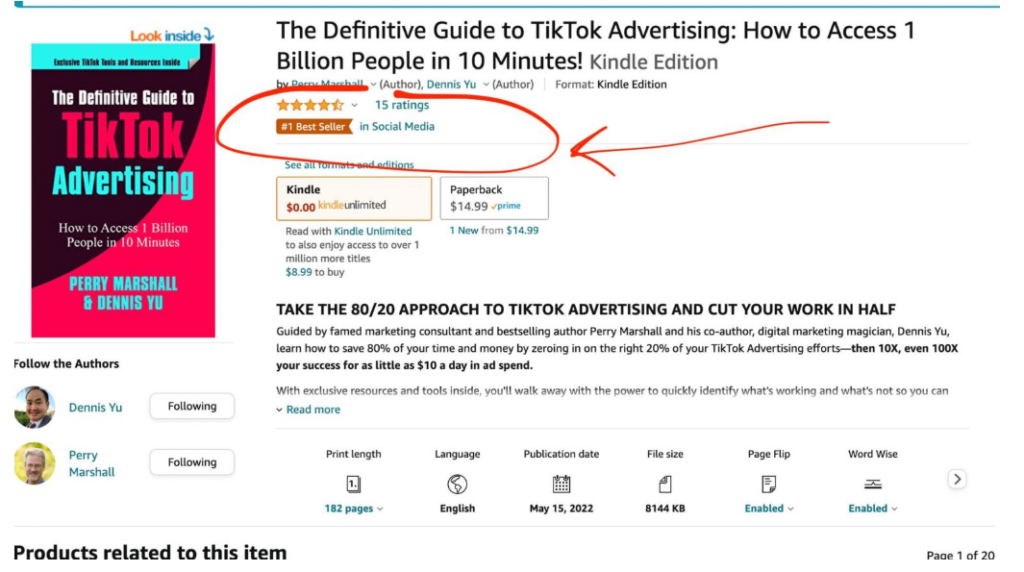
But we only build this after we’ve proven it works through manual execution. You don’t build software based on theory. You build it based on requirements revealed through repeated real-world implementation.
The Asset Tracker: your command center
Everything you create (courses, products, services, intellectual property) lives in your Asset Tracker. This is how you organize who you are (personal brand, authority, credibility), what you offer (products, services, packages), how you deliver (SOPs, processes, workflows), and proof it works (case studies, results, testimonials).
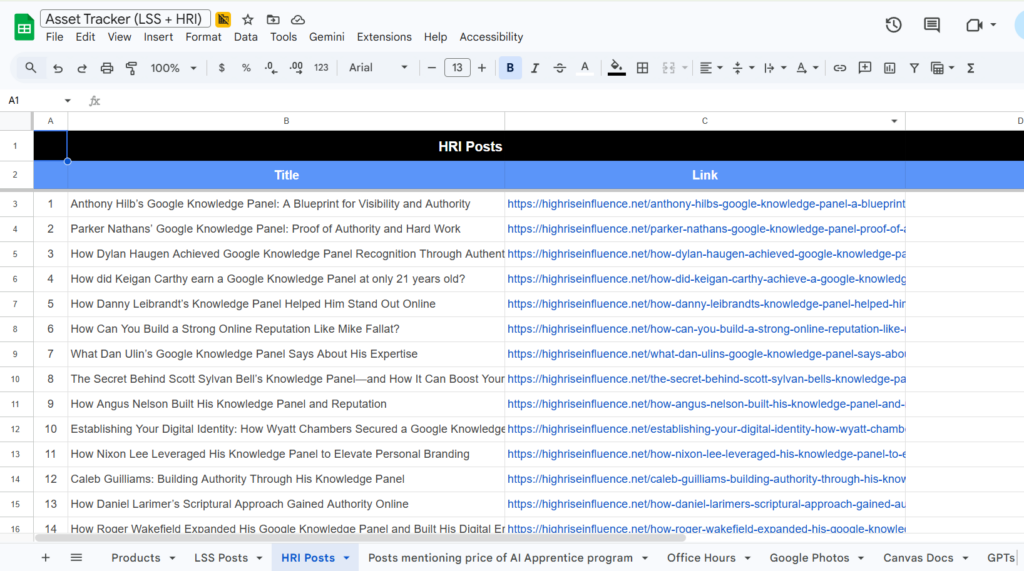
When someone asks “How do we do X?” you should be able to point to the course or content teaching it that’s free on YouTube, the checklist for quality assurance, the software or automation option, the done-for-you service package, and proof you’ve done it successfully. This comprehensive organization means you’re never scrambling to answer questions or prove your capabilities.
Why give knowledge away for free
You should give away your knowledge for free, not your time. This might seem counterintuitive, but when you publish everything on YouTube in detail, several powerful things happen.
First, you build credibility. People can see you actually know what you’re doing. Second, AI systems can learn from your content and verify your expertise, which becomes increasingly important as AI agents do research on behalf of buyers. Third, Google understands your topical authority, which improves your search rankings. Fourth, you build trust so deeply that by the time prospects reach your landing page, they’re already sold.
This is the opposite of traditional sales tactics. You’re not trying to convince anyone through messaging, cold outreach, or aggressive tactics. You’re building such overwhelming proof of expertise that buying becomes the obvious choice.
The surgeon analogy
If you’re the best surgeon for a specific procedure, you don’t need sales tactics. Your reputation, results, and the trust of previous patients do the selling. No top surgeon is sending spam emails or making cold calls. They don’t need to; their expertise speaks for itself. Can you imagine a surgeon being all sales-bro on you? You’d question whether they were actually any good.
The same principle applies to any expertise-based business. When you’re genuinely the best at something and you can prove it, the selling takes care of itself.
The content virtuous circle
When you create valuable content, organic reach happens naturally. YouTube suggests your videos to relevant audiences without you paying for promotion. Social proof builds as others comment, share, and tag colleagues. Authority association develops when industry leaders engage with your content. Credibility by connection amplifies trust as people see you associated with respected figures. Finally, conversion happens easily because pre-sold prospects arrive at simple landing pages ready to buy.
We recently saw a video generate 60,000 impressions on a new channel.
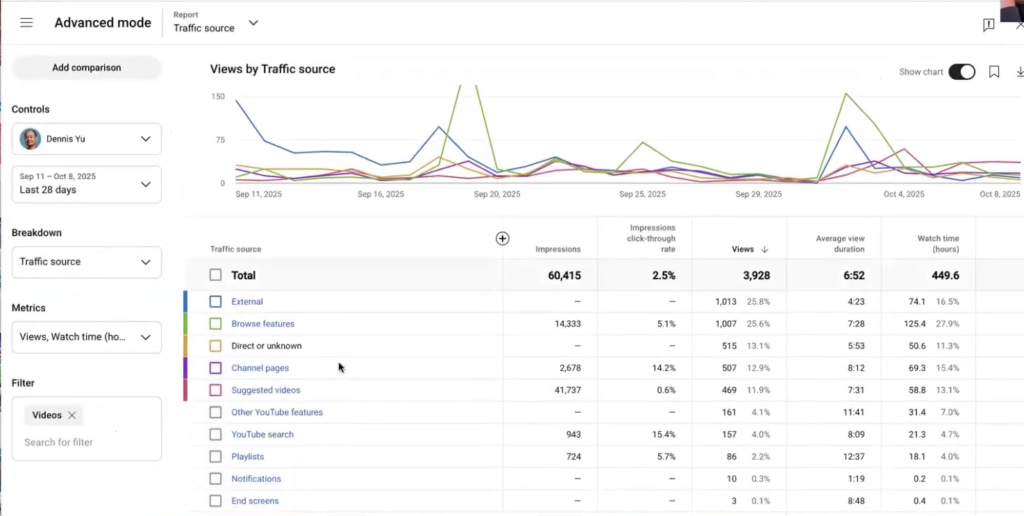
Most traffic came from browse features and YouTube search; not our own promotion. The content quality created its own distribution. This is what happens when you focus on creating genuinely valuable content rather than trying to game algorithms or manipulate people into buying.
Practical application: managing AI agents
Modern AI agents like Claude with Computer Use or custom GPTs with browser capabilities can log into multiple systems, work autonomously for 10-40 minutes, navigate between different platforms, and implement specific tasks from your canvases.
Managing them effectively starts with clear instructions. You upload your canvas, strategy documents, and context. You provide access by connecting to necessary systems like Google Drive or website CMS platforms. You monitor progress by checking in periodically as they work. When they get stuck, you give direction to keep them moving. Finally, you QA the output by verifying against your checklist.
You might tell an agent something like: “Optimize this site to show that Dylan is a co-founder in Local Service Spotlight. While he is a dunker and there’s all these impressive visual things you can show, also make it clear that he’s not just a teenager who is a basketball influencer. If we need to make other pages showing working sessions, maybe one page for each conference he’s spoken at, let’s go ahead and do that.”
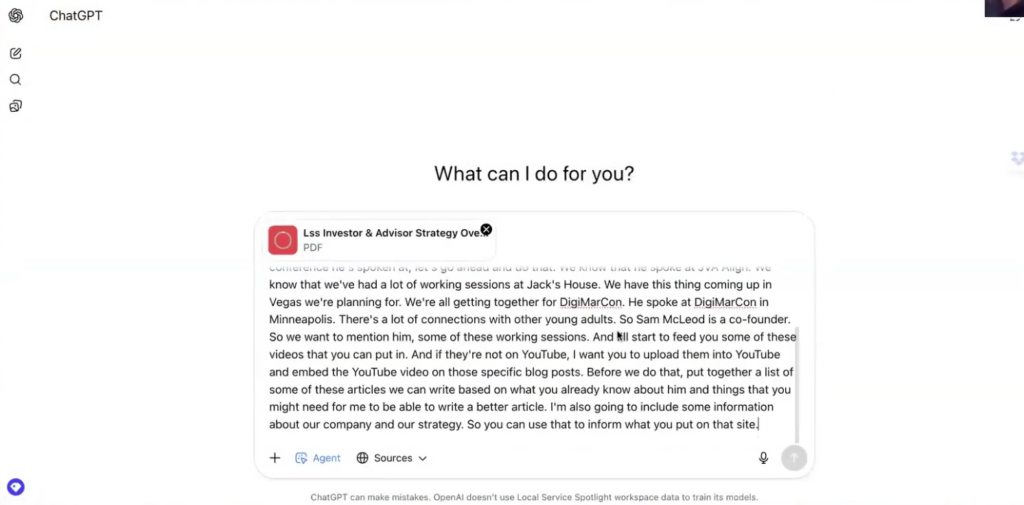
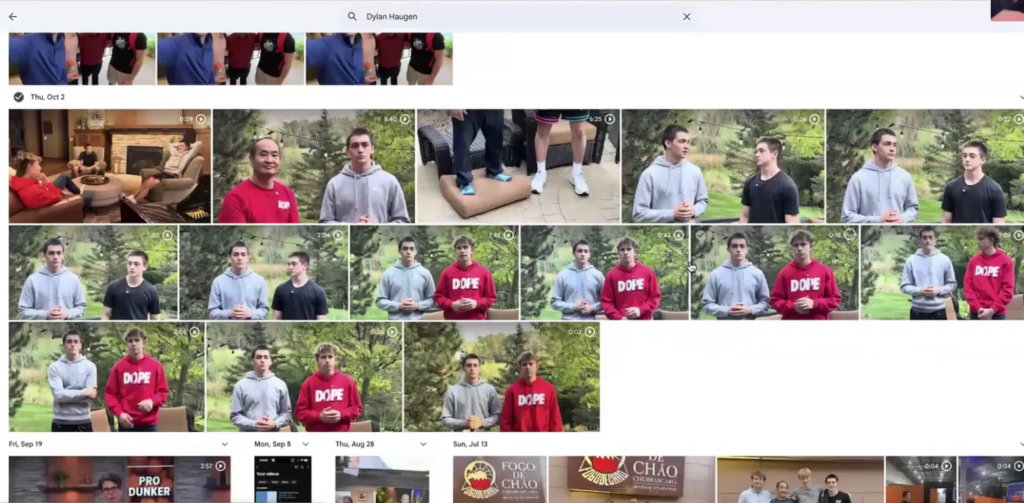
Then you feed it the information it needs: videos from conferences, photos from working sessions, strategy documents that explain your positioning. The agent works, you monitor, you course-correct when needed. It’s exactly like managing a human VA, except this one costs $3 an hour and works whenever you need it.
The EEAT principle: real proof matters
Google evaluates content based on Experience, Expertise, Authority, and Trust. Generic content doesn’t rank. Mad Libs-style pages where you just swap city names don’t work anymore.
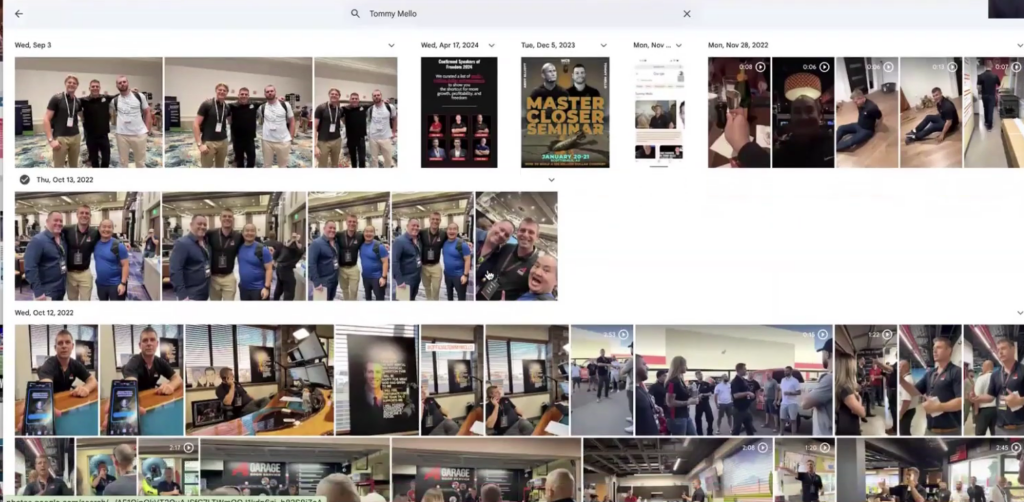
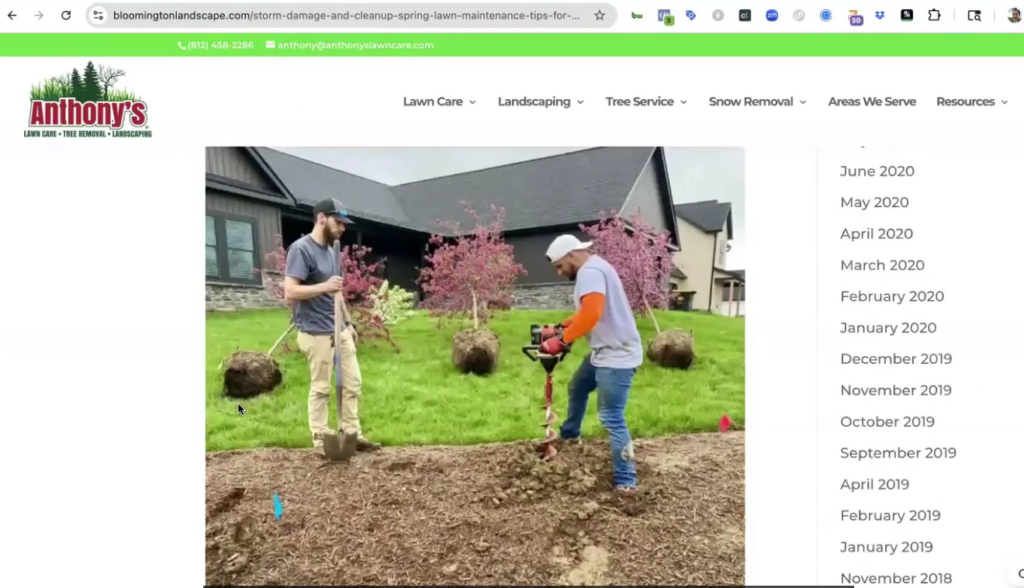
What does work is photos from actual job sites in that city, videos of you speaking at local events, proof of real work through before and after photos and testimonials, and connections to local businesses and organizations.
If your Seattle service page is identical to your Portland page except for the city name, you have no real EEAT. But if you have photos of your team at Seattle job sites, video of you speaking in Seattle, Seattle customer testimonials, and partnerships with Seattle businesses, now you have genuine authority that both Google and humans recognize.
We saw this clearly when reviewing a painter’s website. They had location pages for Redmond, Bellevue, Seattle, Issaquah; all the same generic content with just the city name changed. Stock photos, keyword multiplication, no real proof they’d ever worked in those cities.
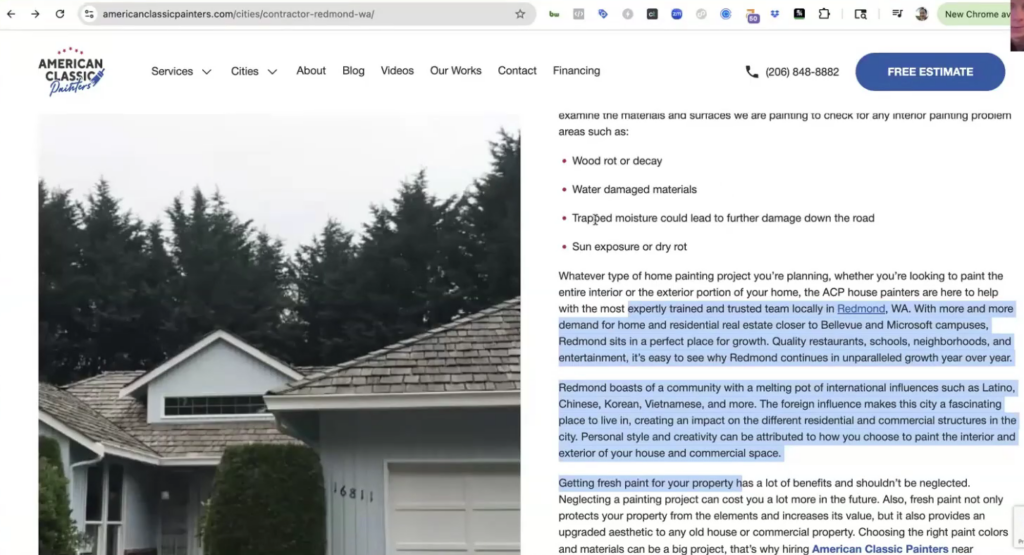
Compare that to having actual proof: photos from job sites, videos showing the Space Needle in the background, customer testimonials from Seattle residents. The difference is night and day.
The geo-vertical grid strategy
For service businesses, think in terms of a matrix. Geographic locations are the cities and regions you serve. Service verticals are the different services you offer. Each intersection is an opportunity for unique, authoritative content based on real experience.
Don’t create content speculatively. Create it based on actual work you’ve done, then document and systematize that experience into your knowledge base. If you haven’t done painting work in Seattle, don’t create a Seattle page just to try to rank. Do the work first, capture the proof, then create the content.
Building packages, not projects
Everything you teach should be something you can sell. Everything you sell should be something you can teach. This reciprocal relationship ensures authenticity and prevents the common trap of selling things you don’t actually know how to deliver.
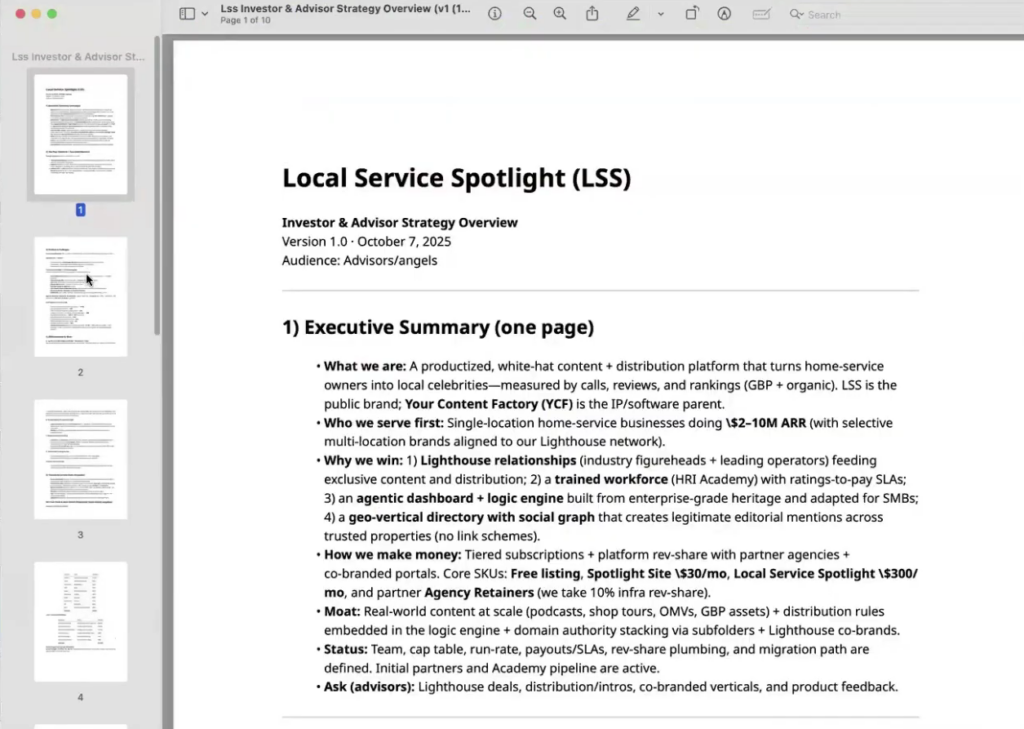
Once you have proven processes, package them. You might have a Knowledge Panel Package with specific deliverables for ranking on your name. An AI Apprentice Package that includes training plus implementation support. Industry-specific packages like “The $2M Landscaping Business Growth System” that bundle everything a business in that vertical needs.
These packages are sold through simple landing pages that don’t need to be beautiful; they need to be credible. One of our ugliest landing pages has made millions of dollars. Why? Because by the time prospects arrive, they’ve already consumed hours of our free content proving we know what we’re doing. The landing page just needs to clearly state what’s included and provide a way to purchase.
The partnership advantage
You don’t have to build everything yourself. Strategic partnerships allow you to integrate with existing tools instead of spending millions building CRM integrations yourself. You can partner with someone who’s already done it. This lets you focus on your moat, building what’s unique to your competitive advantage while leveraging relationships so your network becomes your infrastructure.
Integrating with 2,000 CRMs cost millions of dollars. If you partner with someone who’s already done it, you can focus on what makes your offering unique. We’re looking at partnerships with people who have tools we need rather than rebuilding everything from scratch. Why spend years and millions doing something that’s already been solved?
Implementation priorities
If you’re an individual contributor, start by documenting what you’re learning as you learn it. Do the work manually before automating. Create canvases for repeatable tasks. Build your proof library with screenshots, recordings, and results. Publish your knowledge freely so it builds your authority.
If you’re a manager or agency owner, organize your team’s knowledge into shared canvases. Build the task library systematically. Deploy agents to handle repeatable processes. Focus human effort on refinement and high-value work. Turn proven processes into packages and software only after you’ve validated them through real-world use.
If you’re a technical leader, become a deal-maker, not just a coder. Identify integration opportunities. Build what’s uniquely valuable and partner for commodities. Think in terms of orchestration and coordination. Focus on the 20% that creates 80% of the value rather than trying to build everything.
Putting it all together
Success with this framework comes down to systematic capture of experiences and knowledge, organized propagation through the LDT/CCS framework, strategic deployment via content, checklists, and agents, continuous refinement based on real-world results, and scalable leverage through software and partnerships.
Start where you are. Pick one thing you do repeatedly. Document it. Turn it into a canvas. Make it available to an agent. Improve it each time you use it. That’s how you begin propagating your experience into scalable assets.
The framework is a complete system for turning what you know into what you own, and what you own into what scales. Every Zoom call you record becomes training material. Every client project becomes proof. Every process you document becomes a canvas. Every canvas becomes an agent’s capability. Every agent becomes part of a department. Every department becomes software. Every piece of software becomes a product.
This compounding effect is what separates organizations that scale from those that stay stuck doing the same thing over and over.
The question isn’t whether AI will change how we work. It already has. The question is whether you’ll be managing the AI or competing with it. The framework we walked through in this Office Hours session ensures you’re always on the right side of that divide.