
I manually audited a contractor’s website while sending the same URL to two AI assistants (ChatGPT agent and Grok Super Heavy).
ChatGPT produced a report in seconds, flagging missing phone numbers, inconsistent NAP, and recommending reviews and trust badges. It even suggested improving meta descriptions and adding internal links.
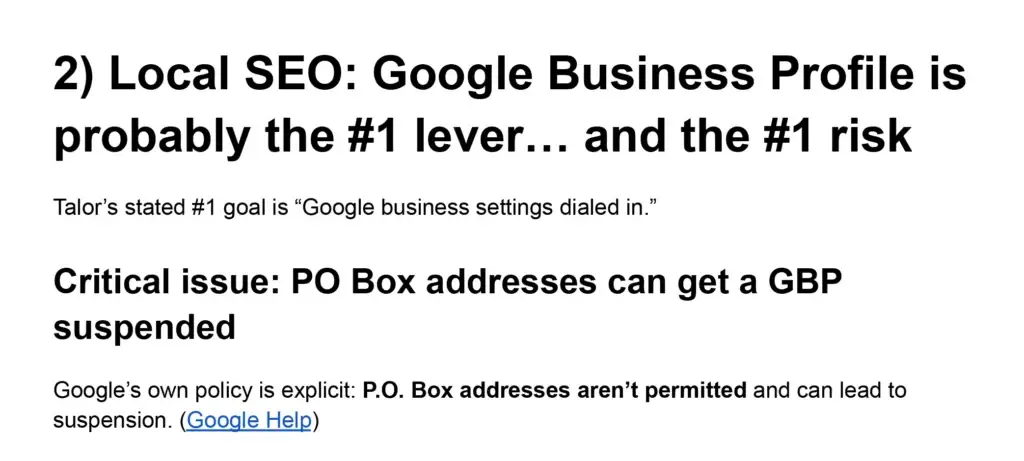
One insight surprised me: the assistant warned that the contractor’s Google Business Profile (GBP) could be suspended. According to Google’s guidelines, misrepresentation (like false addresses or irrelevant service areas), duplicate listings, non‑compliant categories, or inconsistent information can trigger a GBP suspension.
“V1 catches a high-stakes GBP suspension risk. This guy was using a PO box, and that’s a big no-no,” ChatGPT explained.
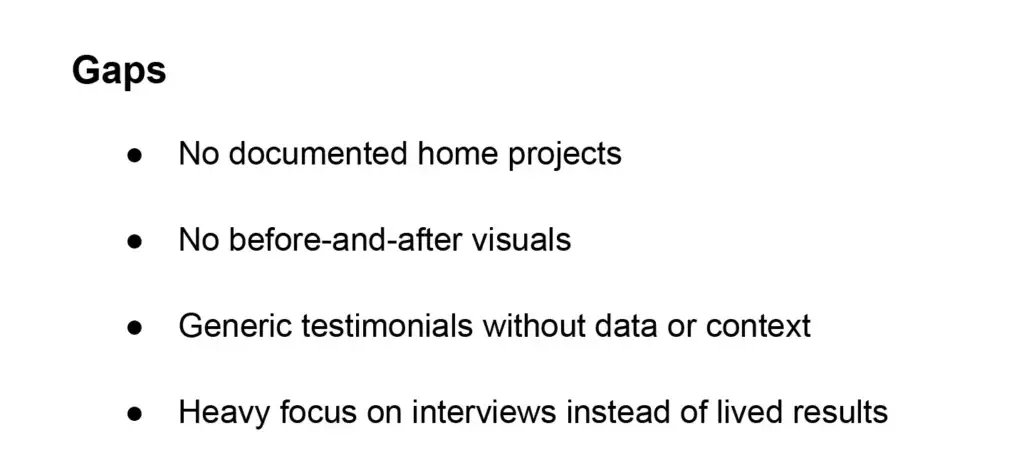
Grok pulled in posts from local customers about slow response times and a lack of photos. It noted that the business wasn’t active on social channels and suggested sharing before‑and‑after photos of jobs, replying to customer questions, and highlighting testimonials to build trust.
Both AI reports matched many of the issues on my checklist. They beat me on speed and breadth, proving that AI frees us to focus on higher‑value work instead of checking boxes.
Becoming a manager, not a worker
The experience forced me to shift from worker to manager. AI handled the mechanics, but it lacked context, prioritization, and sequencing. Human judgment still matters:
- Business context. AI guessed service areas but didn’t know the owner’s specialties. My notes from discovery calls helped prioritize recommendations.
- Connecting the dots. AI flagged technical issues without understanding revenue impact (e.g., schema markup is less important if the Google Business Profile isn’t claimed).
- Sequencing. AI lists tasks without considering dependencies or budgets; a human must build the 30/60/90‑day plan.
Our role is to guide AI, capturing real evidence and directing it – exactly what we teach in our AI training program.
Why raw evidence still wins
We always start with a Quick Audit because Google’s E‑E‑A‑T guidelines demand proof. Companies that feed LLMs only generic prompts get generic output. Instead, feed AI your reviews, podcasts, photos, and customer stories so it can structure them into blogs and ads.
This philosophy powers our Content Factory: local service businesses already have insights into sales
- AI multiplies your workforce. It executes repetitive tasks faster than any human but still needs direction; think of it as an apprentice.
- Your unique data is your moat. AI beat me because it had our checklist and public data. Feed it your call recordings, reviews, and photos; that evidence separates you from competitors and helps LLMs recommend your business.
- Managers make the difference. The biggest gap in the AI reports was prioritization. You decide which opportunities matter, in what order, and how they tie back to revenue.
What this means for you
If you’re a local service business owner or marketer, don’t worry about AI taking your job. Use it and become a manager. Capture proof of your work: record estimates and calls, collect reviews, and take photos. Then let AI process that evidence into content. We covered the full picture in our podcast episode on AI for contractors: what’s real, what’s fake, and what actually works.
Our Quick Audit is the perfect first step – it uses a custom AI to analyze your website and deliver a concise report with a 30/60/90‑day plan.
For more on AI in marketing, read The Future of Organic Search in an AI‑First World and Using the Content Factory to Process Real Work With AI.
Final thought
When the AI assistants beat me, I realized they’re ready to handle the tedious parts of marketing. That frees us to focus on strategy, human connection, and revenue. The future belongs to those who capture Human vs AI: A Quick‑Audit Challenge That Turned Me into a Better Manager.