George Paladichuk isn’t your typical college student. At 22, he’s scaled Nail AI to over 100 clients while still attending classes. His approach has everything to do with relationships and showing up prepared.

Are you a young adult trying to grow your SaaS or agency? If you’ve ever thought “I could never have a podcast,” “I don’t have the connections,” or “I don’t have wealthy parents funding everything,” this conversation is for you.
The power of showing up in person
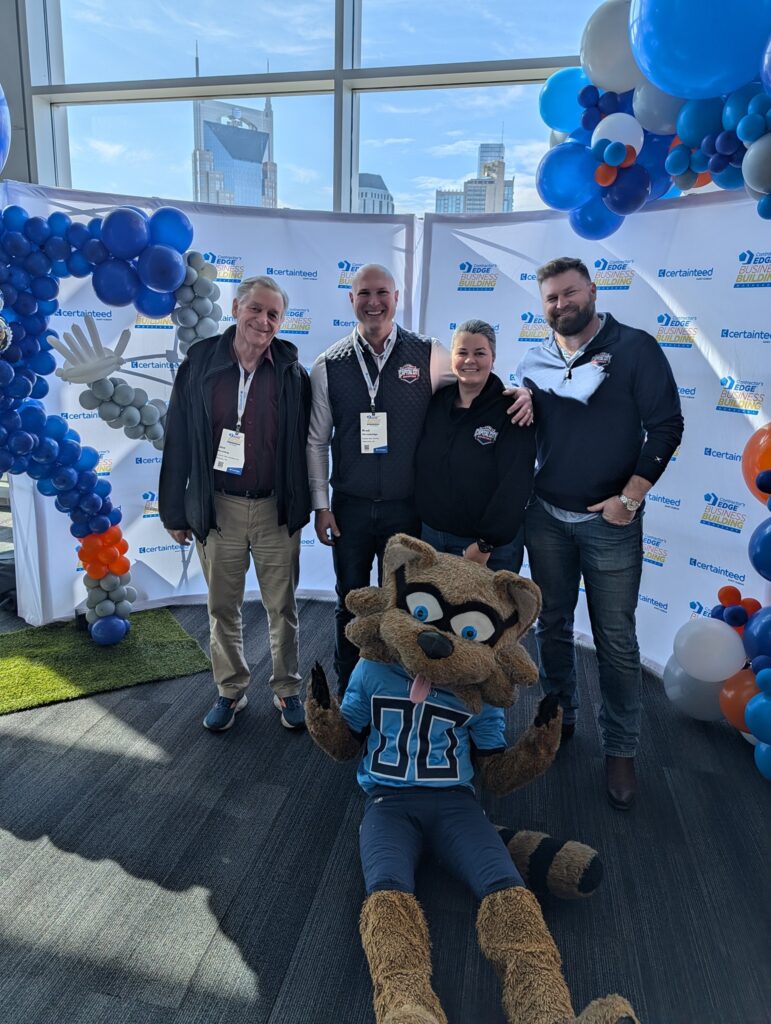
George and I recently flew to Atlanta to meet with Brad Strawbridge of Capital City Roofing.

We could have done a Zoom call and saved the hassle of flying and hotels. But something special happens when you show up in person.
There’s a different kind of connection that gets formed when you show up to that person’s office. You can meet their wife, the co-founder, their ops manager, sit in on their level 10 sales meeting, and see how they actually run their day to day. The depth of connection you get when you’re in the business rather than looking through a screen is incomparable.
The excuse most people make
Most people think they don’t have the guts to reach out to someone running a $10 million roofing business, a mortgage business, a software company, and a nonprofit while running for political office. They assume they’d get rejected. That even if the person said yes, they’d be too nervous and act like a fool. That the executive would realize they’re a nobody with three YouTube subscribers and laugh at them.

The exact opposite happened with Brad. He was extremely inviting and hospitable, spending the entire day with us. He welcomed us with open arms to train his team, sit in on meetings, and go to lunch together.
How George gets influential people to say yes
When George started his first agency, he reached out to prominent business owners for his podcast. His first few episodes included a business coach doing over $10 million a year, when George’s agency was making negative money. Another early guest was the co-founder of the biggest seamless gutter franchise in the country who sold to PE and did $100 million a year.

All of them said yes.
When I told George to start podcasting again with his new show Nail It, George reached out to his top 10 people. Eight responded. All eight said yes.

These weren’t small names. This was Dan Antonelli, the biggest name in home service branding. Lance Bachman. Randy Brothers. The who’s who of the roofing and home service industry.

What magical words did George use? Nothing special.
He simply said hi, my name is George. I have this podcast. It’s a new show. I know you have a big audience and you’ve done these cool things. I did a little research and I love how you do this specific thing. Would you like to come talk about it on my show?
That’s it.
The more people you have on your show, the more people want to come on your show. Then people like Brad reach out and say let’s do something together. And you end up in Atlanta hanging out with awesome business owners of the same mindset.

People don’t judge you based on your age or follower count. They judge you based on how you show up.
Preparation relieves anxiety
George’s biggest tip is preparation. You relieve your anxiety through over-preparing. Anxiety comes from the fear of the unknown. How do you alleviate that? Prepare for everything.
Before any podcast George researches heavily who he’s talking to. Who am I sitting next to? What are they all about?
Think through scenarios. What could happen? What would you do? Bring your own equipment in case they don’t have the setup. Condense your questions in case they have less time. Find one thing you genuinely love about their work.
George did a ton of research on Dan Antonelli before their episode, figuring out where he came from, what his original sign business was back in the early 2000s when he first started. He brought all of that up in the intro.

When guests see that you’ve done your homework, a mindset shift happens. They see you’re serious, you’re prepared, and when they see that, they give more.
Practice makes podcasting easier
The only way you get better at something is by doing.
Practice in the mirror. Record yourself pretending you have a guest. Ask a friend or spouse to be a pretend guest. Record it on your iPhone. You don’t have to publish it.
George’s favorite practice method is mock interviews with ChatGPT using the voice model. He tells it to do all the research it can on the person, then assume their role. He presents podcast questions and ChatGPT answers as that person. He asks it to be harder on him, try to trip him up, give critiques along the way.
This works for sales calls, job interviews, negotiations, anything where you need to prepare for a conversation.
The vibe matters more than the words
George and I had a meal with Brad before the podcast. Being able to break the ice and have the initial awkward conversation before you get on camera is a game changer. It opens up the relationship and makes both people a lot more comfortable.

We got to learn about what Brad did in his day to day, what he was up to, what he was planning for the future. We learned everything about what he had going on before even hopping on the podcast.
By the time we got on camera, George already felt like Brad was a buddy. That’s what made the conversation flow seamlessly.
George contrasted this with a podcast he did with Chris Lee where they didn’t have time to chat beforehand due to scheduling. “I could tell there was a different dynamic in the podcast because of that. The episode was still good and Chris was a great guest, but the circumstance of the day led to a less open and friendly feel.”
The vibe is more important than the actual questions and words being said. The vibe dictates the questions and what’s actually being said.
If you’ve never met someone before and you jump straight into “So Dennis, what do you do?” both people put up a wall. The responses and the way you ask questions becomes extremely rigid and structured. The way they answer becomes very artificial and prepared because they don’t have the comfort to relax and feel like they’re just talking to a friend.
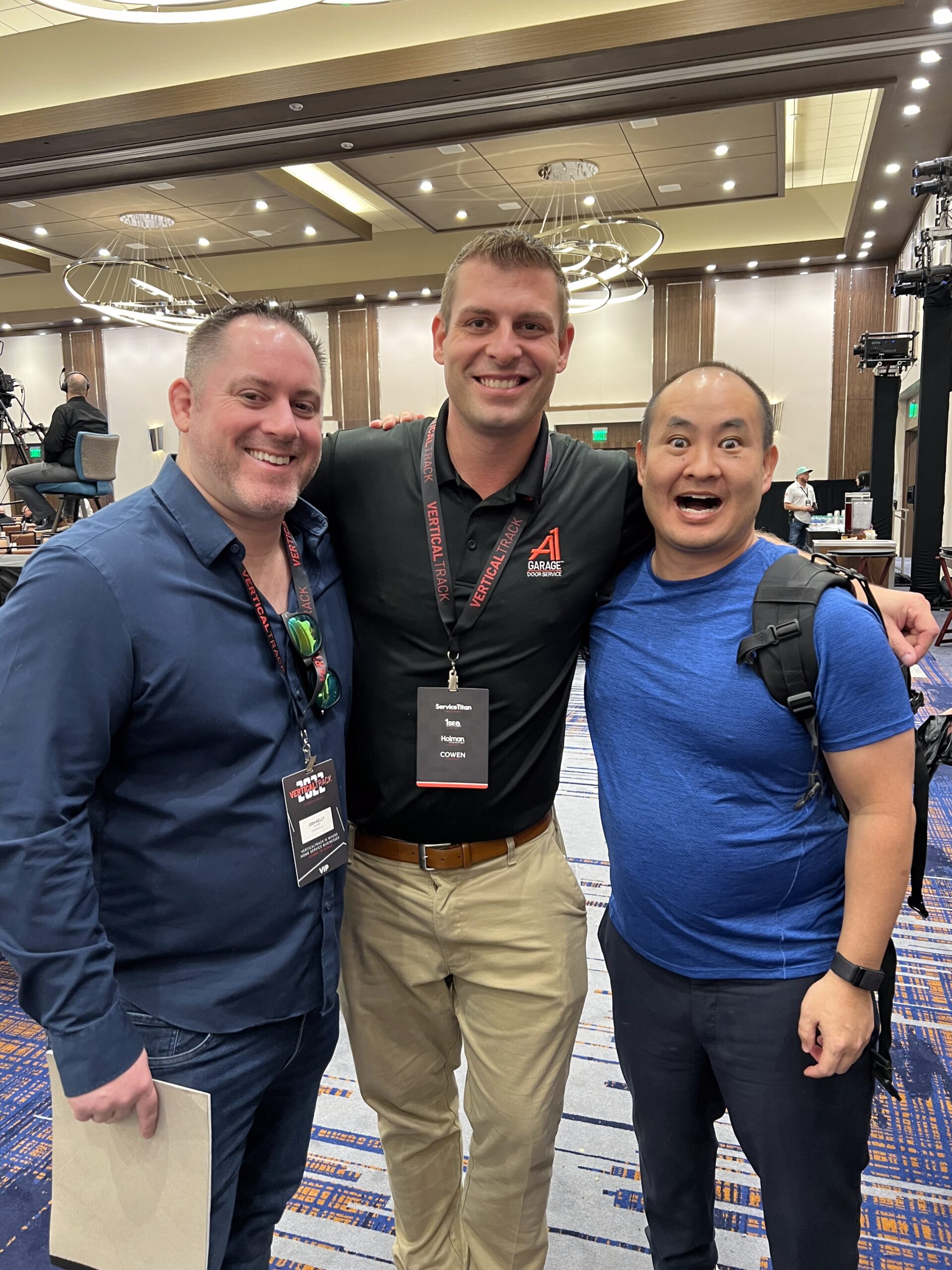
Even at conferences you can create this dynamic in two or three minutes. You start a conversation at a booth, build rapport quickly, then say “This conversation is so good, can we film a quick five-minute podcast?” You’re just continuing the conversation you already started.
Other people get interested because they see someone with microphones and wonder what’s happening. They listen in. You finish and someone else has a question. It multiplies.
The opening that changes everything
My biggest pet peeve from coaching young adults who start podcasts is when they begin with “So, tell the audience who you are.”
In the very first sentence of the podcast, you need to say who this is for and why this is valuable. Then tie that into why this person can answer that question. Then, to show respect and honor, you share four or five quick stats about that person.
When you do that they realize you’ve done your research. You’ve set the framework for how it’s going to go. You’ve seeded where this is going. The guest is already ready for your first question.
I opened the conversation with George by saying “You’re a young adult. You have an agency or a SaaS that you’re trying to grow. This is the power of podcasting and building relationships, especially in person.”
I’d already set the tone. Now when I asked the first question, George was already ready for that because he could assume what’s coming next. I was very specific about who I was talking to. I said agencies and SaaS companies, using the acronym because the audience already knows what SaaS is.
You can see the shift in guests when that happens. Brad said afterward “That was the best intro I’ve ever gotten. I’m gonna clip that and use that for the rest of my videos.”
Those are the types of reactions you get when you come with a structured, prepared opening. I stood there for 30 seconds to two minutes before the podcast to think about what I was gonna say and who this is for. It sets the tone.
Positive mentions are better than testimonials
When you’re with good people and you say something genuinely complimentary, if they’re a good person, they will reciprocate. They’ll say something good about you.
If you’re listening carefully, you’ll pick up on those positive mentions. Gather them and sprinkle them across your marketing. Put them in your intros, in your speeches, in all your content.
Then magnify it further. When someone says something complimentary, ask “Can I quote you on that?”

They always say yes. And they usually go even further with the compliment. I’ve done this several thousand times.
A positive mention captured naturally is more powerful than a testimonial. A testimonial is a forced confession where you hop on a Zoom call and ask someone to say how good your products and services are. It comes off as fake.

George got his first testimonial ever and it was so bad and awkward he never published it. The client put his hat on and sat there. George asked “Can you tell us what we’ve actually done for you?” The response was flat. “You guys built me some stuff. We use some agents. It’s been good.”
How believable is that? The vibe is more important in communication. That’s what a podcast brings out. And that’s why when possible, you want to meet people in person. The vibe is just 10 times stronger.
Using one positive mention everywhere
All you need is one person who says something good about you. You clip that, turn it into a Facebook post, a YouTube short, a Twitter post, a LinkedIn post. You can boost that dollar a day on every single channel.
In George’s case, he can boost it to other people who are members of the National Roofing Contractors Association, people who use roofing software, people who have been on his podcast before, people who have watched an episode before, or people who have been to his website using a retargeting pixel.
You use the podcast as a vehicle to collect high influence, high credibility moments. Then you use AI to process it, to distill it, to concentrate the power of that. And you use that to drive more sales for your agency and your software product.
The face socks strategy
I have a philosophy and company that prints out Nike Elite quality face socks with people’s faces on them. Usually you want it to be the person’s face.
When George attended the Ignite 26 Conference for Empowered Brands, he took this concept and executed it perfectly.
He found the list of all the executives of this big brand company that owns different home service franchises. He printed out a pair of socks for each executive plus every brand president for every single brand of the franchise.
Then he went further. He spent 30 minutes on each person researching about them, listening to their podcast, looking at their social media, reading their articles. He found one thing he liked about their work.
You don’t have to know everything about them. Just find one thing.
Sometimes it would take George five minutes because he found the person likable. Sometimes it would take 30 minutes because he didn’t know anything about what they were talking about and had to find something relevant.
Then he wrote a handwritten note. “Dennis, I love how you run High Rise Influence and have such an emphasis on building up the next generation instead of just living your luxurious life and going to parties. I love how you build up people around you and have this unsatiable thirst of giving back.”
Put that in a note. Throw a pair of face socks in there and that person will never forget your name.
George handed them to Scott Zeid, the CEO of Empowered Brands, a billion-dollar corporation. Now Scott has a pair of socks with his face on it and a note from George Paladichuk and the Nail team. He will never forget that.
Real examples of this working
Dan Leibrandt and Marko S. Sipilä are my two favorite examples of this playbook working.

Dan’s first episode was rough. He eventually asked me to delete it because once he had all these big names on the show, that first one didn’t make him look good.
I did a throwaway podcast with Dan just to get him started. We’d already been talking for 45 minutes on Zoom, so I said why don’t we just do a 15-minute podcast and I’ll interview you on what you already told me.
Dan turned himself into one of the most prevalent faces in pest control. He’s written a bestselling book, grown a $30 million agency, has major partnerships.

You go to Pest World, their big industry conference, and he’s a celebrity. People come up to him and want to take pictures.

Would you have known three years ago he was a nobody? He started the same way George did.
Same thing with Marko. When George first met Marco at an HVAC conference, he thought “Marco’s gotta be somebody because he’s here with Joe Crisara, with Dennis, with Lance Bachman.”

That’s what happens when you build influence.
Becoming media opens even more doors
Media is often hard to get because you have to establish the first credential. But once you’re established, it compounds.
I’ve been going to CES as media for many years. Because I’m media at CES, I can go as media at other conferences.
A couple months ago at CES, I interviewed the CMO of Samsung. Samsung has produced 200 million TVs, more TVs than anyone on the planet. I met folks from Hyundai, from Lego, from Bosch. I interviewed C-level executives at billion-dollar companies. I’m just a guy with an iPhone and a tripod.

When I ask interesting questions to demonstrate I understand their business, then say “I would love to feature this on my YouTube because we serve a lot of contractors,” something interesting happens.
They’ll say “Yeah, I could answer, but let me go get our CEO.”
They bring the CEO over. I say “I was just talking with your associate about how you’ve launched AI and how cool that is. I’d love to talk to you about that.”
Then I ask “Can you hold the phone?” So the person who just said they needed to get the CEO becomes the camera operator.
You tell them it’s five minutes and they’ll always say yes. But then they might say “I can go for 10 minutes” and now you’ve doubled the window.
I take that video and post it to Facebook and YouTube, targeting people that work at that company. The employees forward it to the CEO. It gets to the PR people and comes back to me with thanks or minor corrections. I’m totally gracious about edits.
They don’t judge you just because you have an iPhone. People care about how you show up.
The call that changed everything
George saw a Facebook post from me about six or seven months ago. The post said “We have this AI Apprentice program where we teach young adults how to use AI in their businesses or how to use AI in other people’s businesses.”

George thought “I’m a young adult that uses AI for other people’s businesses. This is interesting to me.”
He just wanted to see what it was all about. So he messaged me.
George was prepared to be sold to. He expected the typical sales process with questions, answers, “I think you’d be a great fit,” here’s the cost, where would you like to move from here.
I had this energy saying “I really don’t need to be on this call right now, and I don’t need you in my program.” Genuine. “I’m not here to convince you to join this thing. I don’t need your money. This program provides a lot of value to people who are in it.”
That came extremely off guard for George. Towards the end of the call, George asked “What do we do? Where do we go from here?”
I said “Here’s the cost to join and if you wanna join, great. If not, just let me know.”
George sat there for 30 seconds. He wasn’t planning on joining at all. But he felt called to join. And he did.
What George got from the program
George expected it to be like any other coaching program with a curriculum, login portal, exercises, and videos to watch.
What surprised him was when he hopped on the weekly call. I said “George, this is your first call. What’s going on in your day to day?”
George told me his problem, where he wanted to go, where he was, and what he thought was stopping him.
I told him “Yeah, that is what’s stopping you. Why aren’t you going and doing it?”
George gave excuses. I told him those excuses were stupid and he should just go do it anyway.
George thought “You know what, you’re right.” He went and did the thing. That’s how we ended up sitting together doing this podcast.
George was able to sit down with Jack Wendt and me and say here’s what I’m actually doing, here’s my problem. And I had actual real advice that came from lived experience. George was able to put that in action.
The momentum effect
The connections George has been able to make have multiplied tenfold because of momentum. All you need is one.
One person who says yes. Then you can say “Okay, they said yes, so why won’t this other person say yes?”
People see the podcast online and think they’re just sitting down doing a podcast. But they don’t see everything else happening. They don’t see the positive mentions that Brad gives you. They don’t see the repost that Brad posted of George’s story. They don’t see that Brad might be running for office in the future.

It’s a much longer game than what most people play.
Why influence matters more as AI grows
The credibility signals you’ve been generating because of your associations become even more valuable as everything becomes more AI-generated.
AI makes all these software things look the same. There are probably 50 other companies that do voice agents. If you run an agency, there are thousands of other agencies that claim they can do what you do.
Leveraging relationships and the positive mentions that other people give you is more powerful than any ad. More powerful than any cold DM. More powerful than anything.
I play an unfair game because on my team, I only want eight players who I know are gonna win. There are certain people where you just know that no matter what, they’re gonna win.
What you can tell from being around these other people is that there’s an esprit de corps. Everyone lifts each other up.
If you pay $50k to go to a mastermind, you’re there because you are with other people and you’re being held accountable with these other people. The program or the figurehead is just a catalyst. It comes from the community.
Josh Nelson talks about this all the time.

The most powerful thing that happens at all of the Seven Figure Agency conferences is the quality of people he brings to the table who are all there to learn from each other.

You need to be okay with being told no
A lot of people are too scared of being told no. Even George admits it happens to him even today. It happens to everyone.
Here’s the thing. People tell you no a whole lot less than what you think they do. And when they do, you think “Oh, that kind of sucks” and then you move on. Life continues moving.
Finding the right mentors
Entrepreneurship is like driving through the fog. You have to be willing to drive further along the road. But when you have mentors, it’s the high beam. They’ve driven this road before. They can see ahead further than you.
George has leveraged relationships with people like me, Jeff Lopez, Charles Rera, Frankie Fihn.

Even Sean Drennan back in the day helped him get up off his feet.
Finding someone who believes in you, who has the expertise you need, and who has gone where you want to go is invaluable.
The more specific you can be about your visualization of that goal, the more you can find the right mentor.
George has me for enterprise clients and SaaS strategy because I’ve worked with enterprise clients and SaaS companies. George has Jeff Lopez as a mentor because Jeff is a genius when it comes to one-to-many selling and webinars.
It’s a cheat code. You just follow the playbook.
The harder you work, the luckier you get
George always knew that something was gonna happen. He didn’t know what it was gonna be, but he would do it. He has had that mindset since day one.
He doesn’t know what the next five years are gonna look like. He has goals. He wants to sell the SaaS. He doesn’t know how he’s gonna do that.
But he knows for a fact that if he keeps working hard and keeps putting forth the effort, he will get lucky enough to do what he wants to do.

Because when you’ve done the hard work, you’ve got the right pieces in the right places. You have the right people in your corner. You have friends who have already walked the path and successfully exited.
There are levels to this game. You’re meeting the people at the next level. And when you hit that level, there are other people I want to introduce you to. It just gets more and more fun the more you ladder up.
George admits “When I’m in late at night, I think about what’s after today? And it daunts me because it’s a black void.”
But it’s reassuring to have the right people in the corner. If you do things the right way and build your influence, the next door will open and it’ll be a whole lot bigger than the one you just closed.

Broadcasting your intentions creates reality
Don’t be afraid to reach out.
On the internet, you can literally just comment and someone will see it. Even if nobody saw it, there’s still intention because you are telling people that this is your goal.
Until you say your goal, until you put that intention out there, it doesn’t organize in your mind. When you start putting it out there, it allows your subconscious mind to organize towards the thing you want.
It sounds spiritual, but this is coming from a search engine engineer. It’s true.
Otherwise you might as well just watch cooking videos for entertainment but never actually cook. We’re here to actually cook.
It’s still early for podcasting
Most people think they’re late to podcasting. It’s super early still. Everyone still says yes when you invite them.
Everyone and their mom will say they have a podcast. But who actually goes out and puts forth the effort and does it the right way?
If you actually go out there and put forth the effort, do it the right way, honor the person, do it in person, have real conversations and bring value, that’s how you stand out.

The harder you work, the luckier you get.