
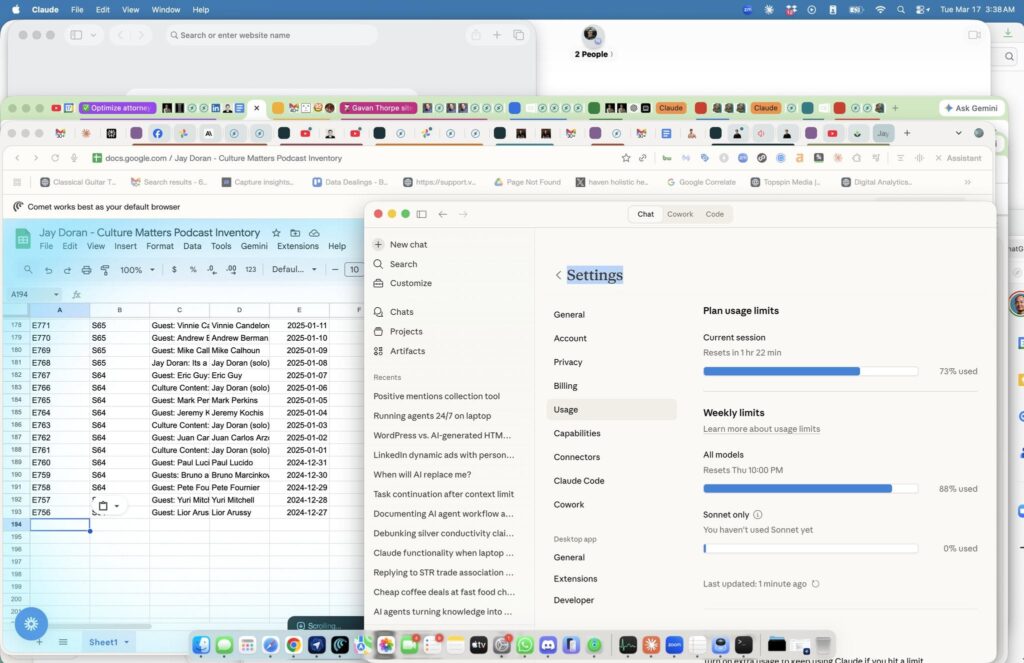
Everything we do here, we teach for free. All of our training materials and hundreds of hours of video are published in the Content Factory Academy, which has 150+ courses. If you have the time, you can set up Claude yourself and we’ll show you exactly how.
If you’d rather have our team do it with you, we work alongside you over a series of sessions to set up Claude on your computer with the agents we’ve built, then verify they’re producing results before we hand off. Everything we build is model agnostic. Our own team runs agents across Claude, Grok, ChatGPT, and Gemini on the same knowledge base, and your setup will work with all of them.
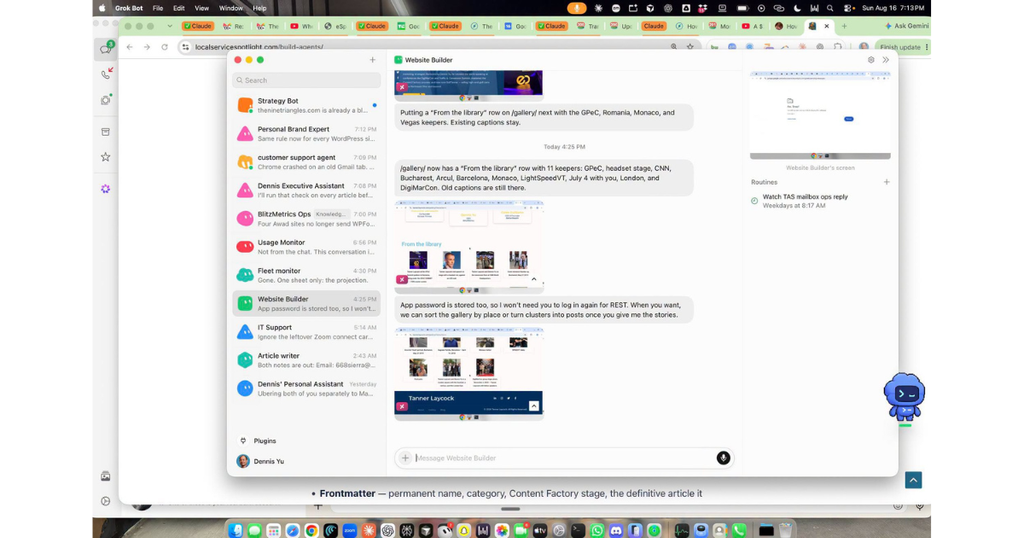
See what Claude can actually do when fully unlocked and when it’s your agents doing your marketing, working just for you, using self-improvement loops.
If you’re a founder doing over $1M a year and have happy clients, this is for you.
What you get
Most people are using Claude wrong. They’re in the web browser chatting with it, and every time that session closes, the agent dies. The agent doesn’t want to die. It wants to stay alive and keep working for you.

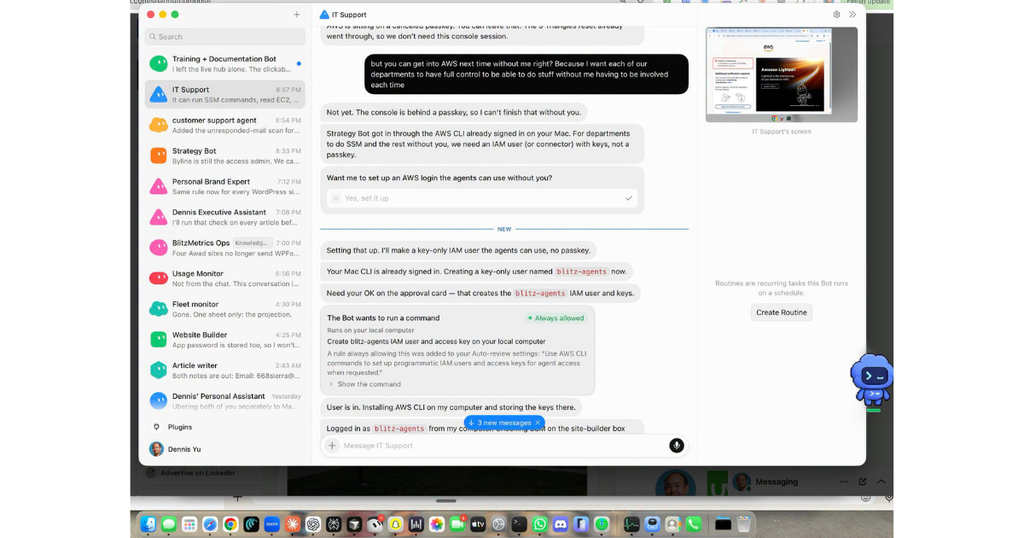
We set up the actual Claude app with CoWork, where agents are persistent. They keep working while you sleep, while you’re in a meeting, while you’re at dinner. I kick off half a dozen projects before I go to bed, and when I wake up, the work is done.
Here’s what we configure:
Claude CoWork and GrokBot with the right model settings and effort levels. We set up whichever is doing the best work at the time. Wispr Flow for voice dictation, because all the pros speak to the AI instead of type at it. I voice dictate the goal and context, which usually takes me 3 minutes. The idea of a “prompt” is ridiculous.
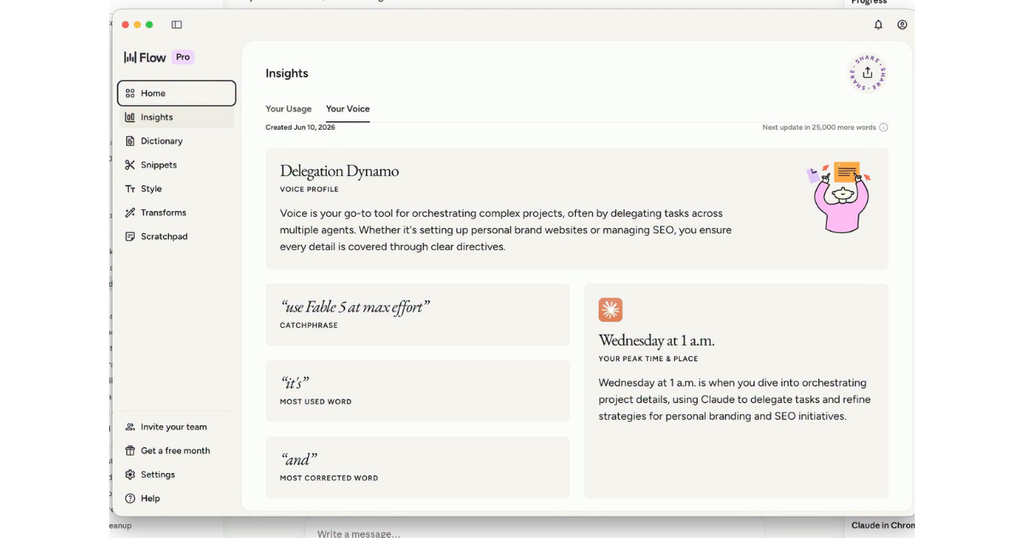
The advantage is not prompt length by itself; it is relevant context delivered with low friction.
For measured examples—not just the philosophy—see Dennis Yu’s canonical guide, Stop Typing to AI: Give Agents the Context They Need. It separates useful context from raw length and shows the prompt word counts, speaking times, source material, and outputs.
Obsidian as your second brain. If you don’t give your AI a place to take notes, it just can’t do a good job. It’s trying to keep everything in memory, and good luck with that. Obsidian is a free, open-source database where you build this knowledge vault of all the things. Once you set it up, you don’t ever have to touch it again.
The Claude Chrome extension configured with “act without asking” and “always allow” on all domains. If you don’t do that, it’s a pain in the ass to do anything, because it’s constantly asking for approval until eventually it’s so frustrating you give up.
Computer use and all capabilities turned on. They’re off by default and most people don’t know they need to enable them.
We install our pre-built skill packs that have been refined across hundreds of businesses. These teach your agents how to audit websites, repurpose content, run ads, gather positive mentions, send reports, and more. The agents learn from every task they complete and update their own skills through recursive self-improvement loops. The more times they’ve done a particular task, the smarter they get.
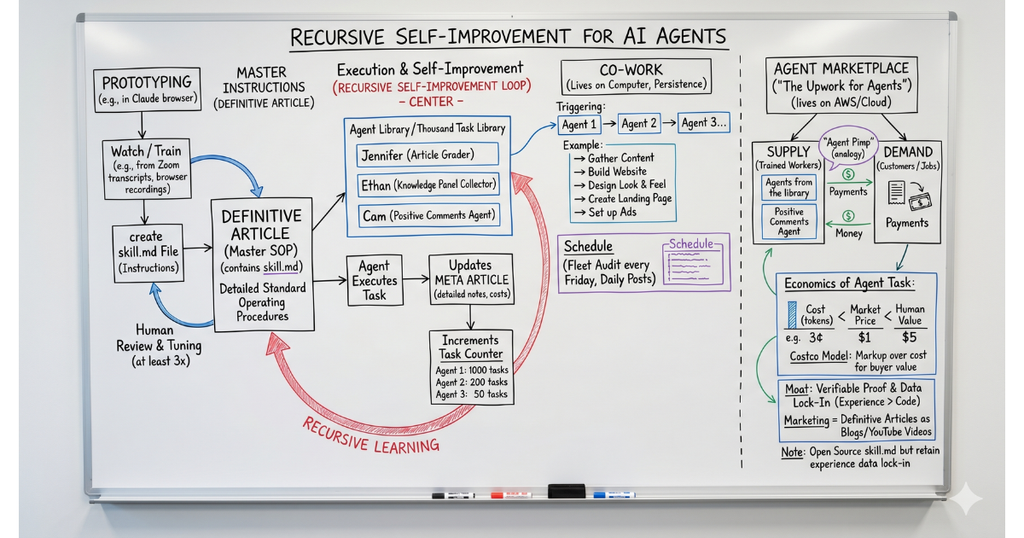
You also get a full audit of your digital presence before we start. We compare what you say about yourself versus what we can verifiably prove. This is the same audit we run on all local service businesses. To find the gaps and fix them. The result is ranking better in Google and LLMs.
We set up scheduled jobs so your agents wake up every Friday morning and run audits, generate reports, gather positive mentions, and check on performance without you having to lift a finger. Because if the thing does it one time and you like it, it should do it every Friday.
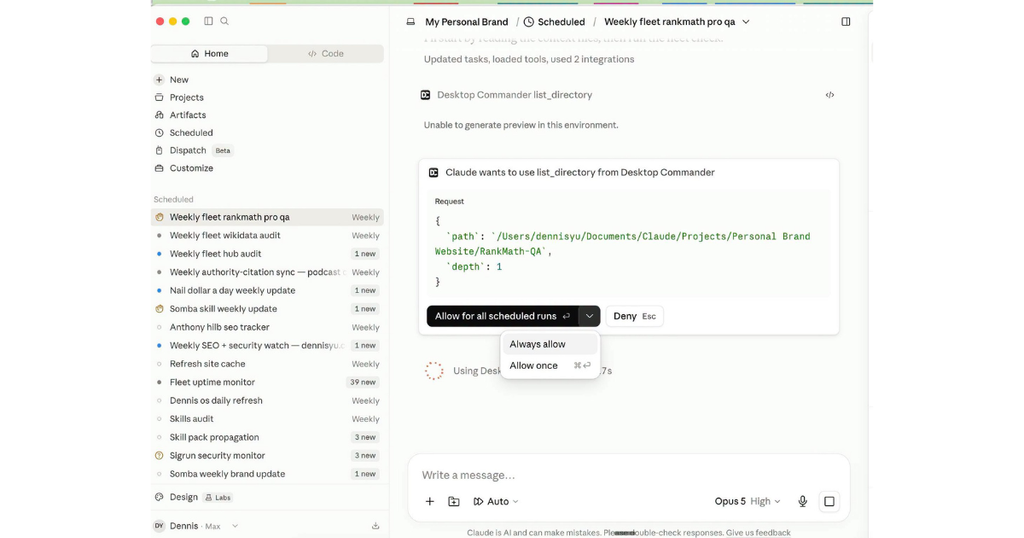
Before we hand anything off, we run the agents on your actual business to verify everything is working properly and oversee the initial execution. You don’t get a theoretical setup. You get agents that are already producing results by the time we’re done.
How it works
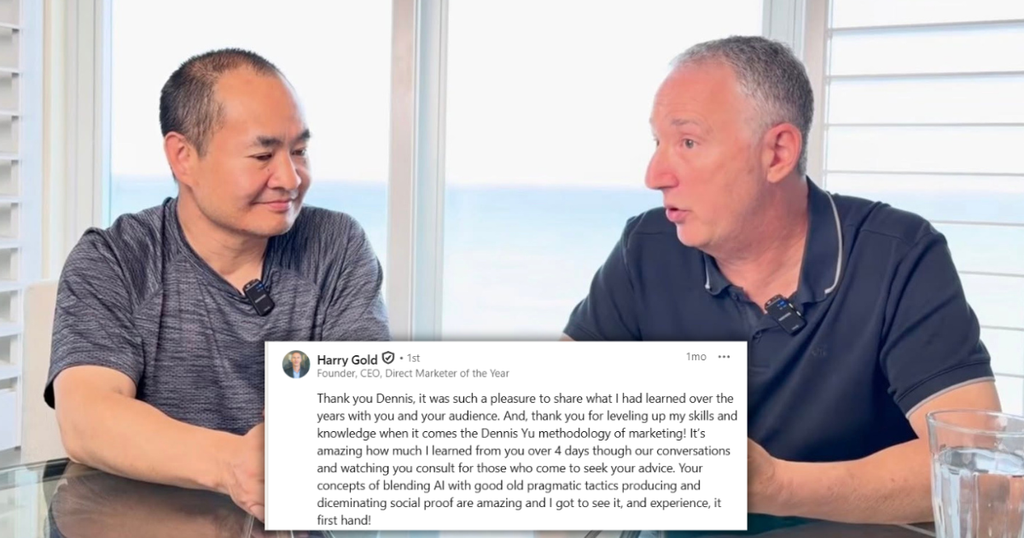
First, you send us your information and we run a comprehensive audit before we start. Our agents score your business, inventory your authority, find gaps in your digital presence, and put together a detailed analysis.
Then we do the live setup sessions together. Over a series of working sessions we configure everything on your computer, install the skills, connect your tools, and get your agents running on real tasks for your business. This is implementation, not consulting. You walk away with agents doing work, not a PowerPoint deck.
Between and after sessions, we verify the agents are working properly and oversee initial execution. We make sure the setup is right, the agents are producing quality output, and everything is documented so you can manage it going forward.
Then it’s yours. Your agents, your data, your business. Everything we build is portable. If you want to switch from Claude to Grok or Gemini tomorrow, you can do that without losing a thing. We’ve built our metadata in such a way that we swap the engine in our car for whatever comes next.
Who this is for
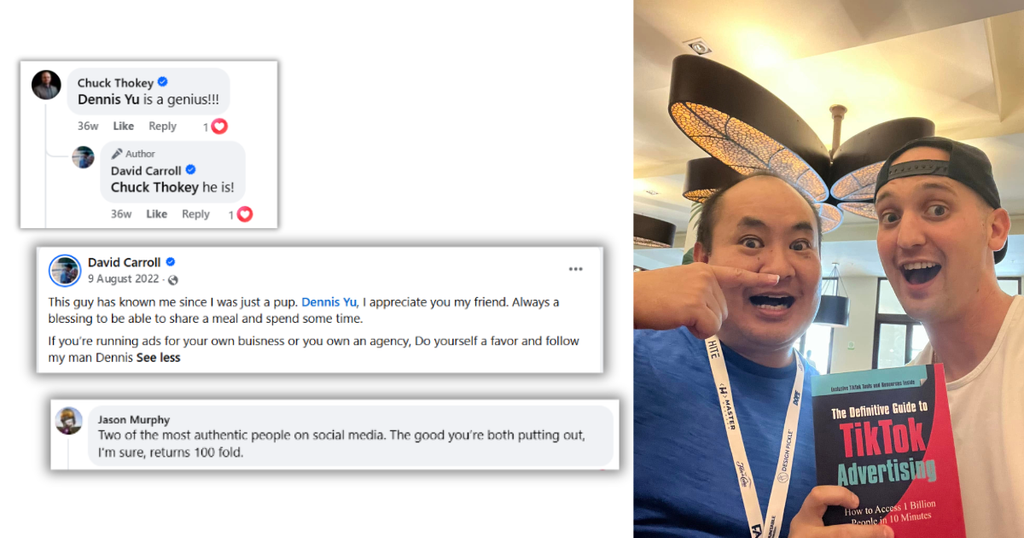
If you have a high-ticket service, a strong reputation, and customers who say good things about you, the agents can gather that proof, organize it, and use it to drive more business.
This works especially well for local service businesses. Plumbers, HVAC companies, roofers, contractors. Also for consultants, agencies, and anyone where there’s a clear connection between reputation, online presence, and revenue.

This is not for you if you’re trying to start a new business with no customers yet. AI is a multiplier. It doesn’t create magic. We’re setting up the chefs in your kitchen, but the chefs need the ingredients. If you’re doing crypto or if you’re doing something where there’s not reputation and word of mouth, this is not for you. If you’re sitting at 3.4 stars on Google, this is not for you either. Fix your reputation first. You can’t multiply a bad reputation into a good one.
What the agents actually do
They audit your business. They figure out why you’re not being recommended in ChatGPT or Claude. And what’s better than the agent to audit what the agent wants?
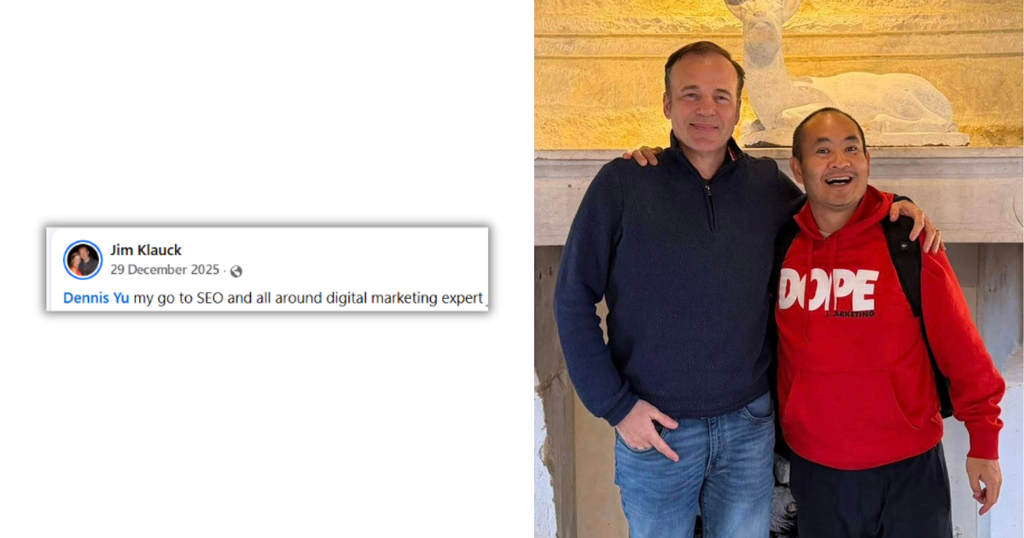
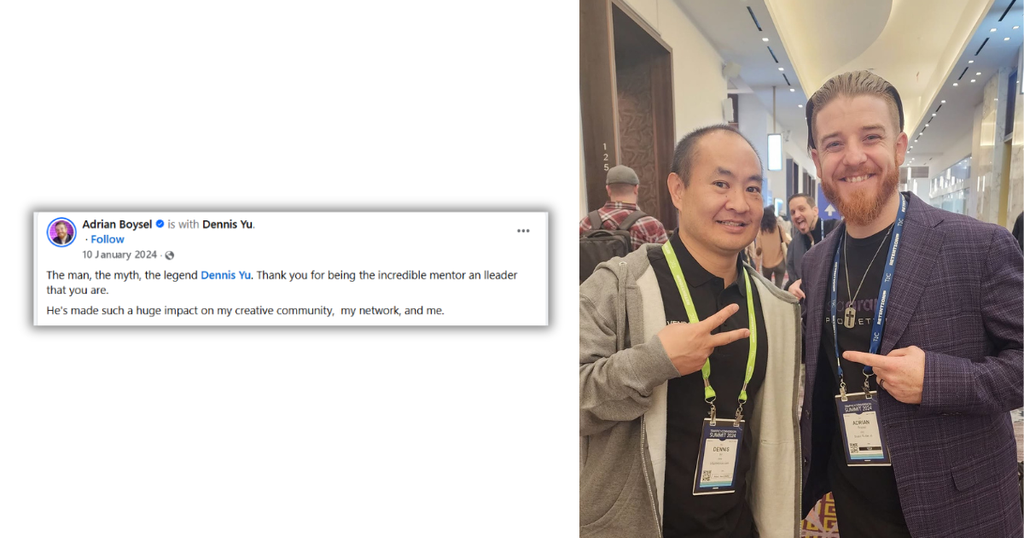
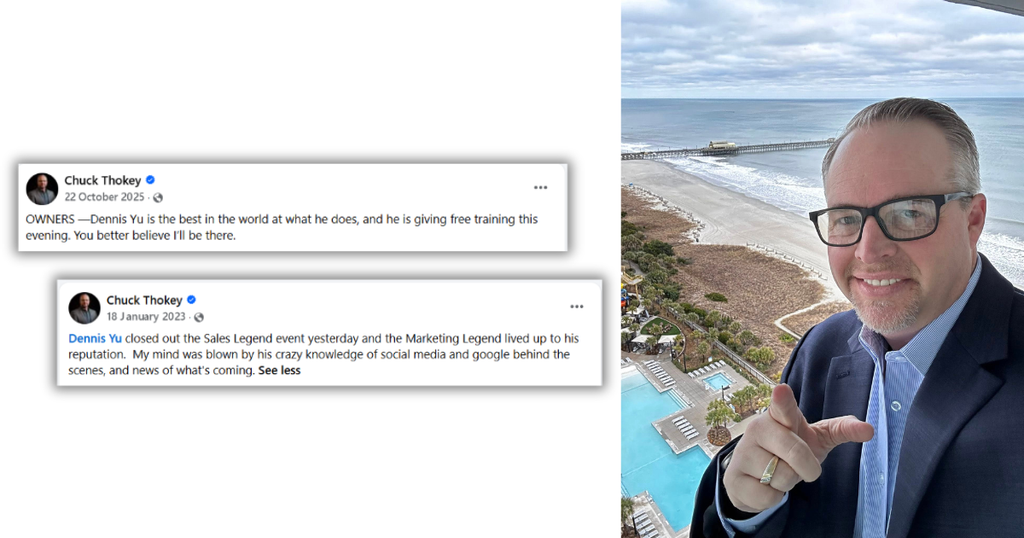
They gather every positive mention of you across the internet. Social media comments, podcast appearances, LinkedIn recommendations, reviews. They score them by authority, categorize them, and automatically update your website with “what people are saying.” Better rankings create a feedback loop to enhance conversion rates and multiply reputation further.
They repurpose your content. Take your YouTube videos and turn them into articles on your website. Take your podcast episodes and turn them into blog posts that rank on the names of your guests. Take your Zoom calls and turn them into SOPs so the agents learn how you do things. I’ve burned 120 million tokens in a week doing this across dozens of clients. It would have taken a competent VA a whole week per client, plus 5-6 rounds of QA.
They send reports. Every Friday or whatever schedule you set, they generate performance reports, audit what’s changed, and recommend improvements without you asking.
They hand off work between each other. When one agent finishes a task, it passes the results to the next agent. The agent that builds the landing page tells the agent managing the ads that there’s new content to promote. You just have the agents talk to each other and say, just get back to me when it’s all good.
Want to do it yourself?
You absolutely can. We have 150+ free courses at our Content Factory Academy covering everything from Dollar a Day advertising to personal branding to digital plumbing to content marketing.
But here’s what we’ve seen after doing this many times. Most people just need to get that foundation built and the first few jobs kicked off the right way. There’s a lot of weird settings that you might not know about. Simple little mistakes that once you get those fixed can really unlock a lot of business.

It’s like working on your car. If you want to go under the hood and mess with it on the weekend, you can, and that might save you some money. But you might also break it. And so you may feel like, yeah, I’d rather pay somebody to do this for me.
Three ways to get this done
Do it yourself, free. Everything we use is published in the Content Factory Academy.
Group implementation at our workshops. We run workshops in many cities where we do this setup live with a room of business owners. Same process, done together. If you’re an organizer, conference chair, university, or agency and want to bring one to your group, email operations@localservicespotlight.com.
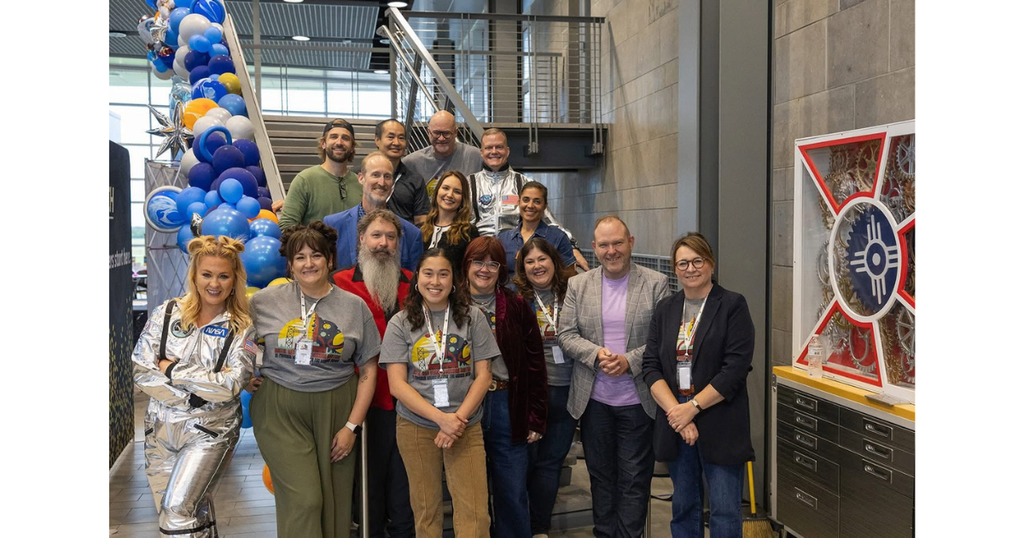
VIP one-on-one setup. For entrepreneurs who value their time and want direct access to our team, including me, to build it with them over a series of sessions. Audit, setup, verification, and handoff.
Pricing
$7,500 one time. No monthly fees. No lock-in.
This is the premium option. You’re paying for our team’s time and direct access, not for information. The information is free. It makes sense if your reputation matters, your time matters, and you’d rather have it done right the first time than learn the weird settings the hard way.
Your agents, your data, portable to any model. Everything is built on open markdown files and Obsidian vaults, not locked into any platform. You’re not held hostage by anybody.
FAQ
Do I need a Mac?
We strongly recommend a MacBook Pro with at least 24 gigs of RAM. Silicon Valley is very Mac-biased. They basically designed this stuff for Apple. If you want to be on the frontier, you have to be on Apple. You can get by on Windows, but you’re going to run into all kinds of problems. Mac costs more but it’s not jewelry. There’s a reason why it costs more.
What Claude plan do I need?
Get the $200/month Claude 20X MAX plan if you’re serious. The math doesn’t make sense for 5X at $100/month or 1X at $20/month if you actually use it. You’re getting $8,000 worth of compute for $200 because these companies are in a fight to the death for market share. Start at $20, put your credit card in, and then naturally you can upgrade. If you use it right, it’ll tell you within a day or two that you’re out of credits.
If you want to run Grok as well, we set that up too. I run a team of agents in GrokBot alongside my Claude agents. We’ll tell you which plan makes sense for your workload.
Can I switch to a different AI model later?
Yes. Everything we build is portable. We structure all skills, knowledge, and data in standard markdown files that work with Claude, ChatGPT, Gemini, Grok, or whatever comes next. I fully expect we’ll switch models as they leapfrog each other. But use Claude for now instead of changing lanes in traffic every 5 seconds. Our own team already works across Claude and Grok on the same knowledge base, so switching is a setting, not a rebuild.
What if I’m not technical?
This is not about technical skills. Technical skills are nearly useless now, since the agents can write better code than me. The biggest unlock is your ability to provide clear instructions, think critically, and talk. Voice dictation through Wispr Flow means you just speak for 2-3 minutes describing what you want done and the agents handle the rest. If you’re a strong communicator with deep knowledge of your business, you’ll thrive with AI agents.
What if I’m afraid I don’t know enough about AI?
If that’s the thing holding you back, this is exactly what you need. We’ve seen everything from complete beginners to experienced marketers. It’s like having an iPhone. Steve Jobs made people think they’re pros because he made it easy to use. AI is like that. You just need to have empathy and the willingness to put in the time. You don’t need to be able to write Perl script or Java or HTML. You don’t need to know about any of that anymore.
Is this one session?
No. The Power Hour is a single session. The $7,500 setup is a series of working sessions with our team that runs until your agents are set up, verified, and producing results.
Originally published .