
I was one of the first engineers at Yahoo. I’ve spent 40 years in data. Data for flights and transactions, data for the internet, now data for AI. Nothing has really changed except the data has become more sophisticated and the software programs, or agents, have become more sophisticated. But the framework of trust and the things that drive sales have always been the same.
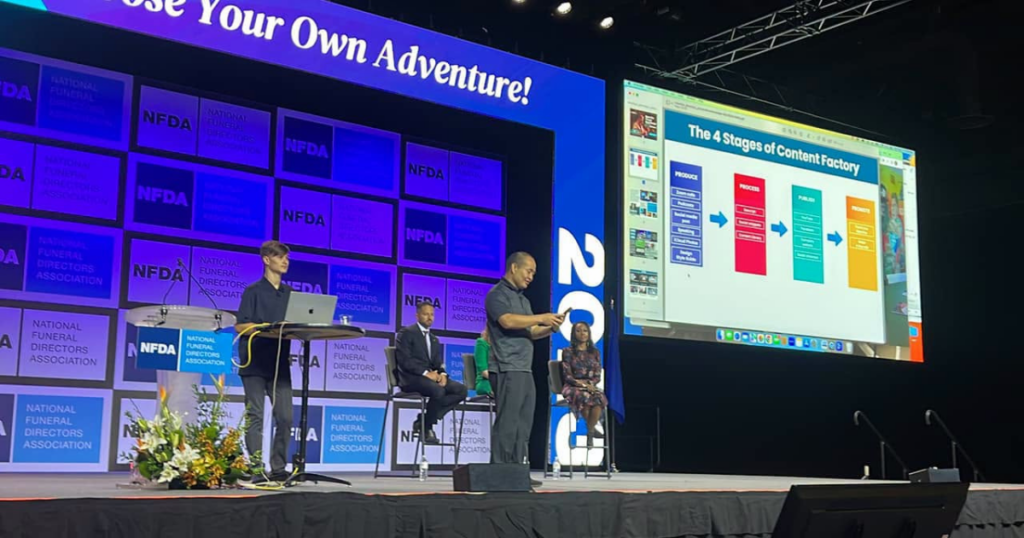
In the last year, I’ve personally guided dozens of business owners through setting up AI agents. At workshops in Wichita, Denver, and Germany. One-on-one Zoom calls at 3 AM from hotel rooms. Live implementations at conferences like DealCon and Dunk Camp. Everything we offer as a paid service, we fully document for self-service so you can do it for free by yourself.

This guide gives you everything. If you’d rather have us set it up with you, we do that too.
Why AI agents, not just chatbots
Most people are still using ChatGPT like a search engine. Ask a question, get an answer, close the tab. That’s a chatbot. When that session closes, the agent dies, it forgets everything, like hiring someone for one hour who never comes back.
An agent is different. An agent is persistent. It lives inside Claude‘s Cowork environment, organized by projects. It has memory, it learns who you are, it has access to your tools, and it wakes up every morning and does work for you even while you sleep.
Think of agents as virtual team members from the country of Anthropic instead of the Philippines. They follow SOPs, they document their work, and they get smarter over time because they learn from themselves. They are really just like a virtual assistant that’s coming from the internet, from Anthropic, and they actually are going to come in and help with your businesses.

AI is a multiplier. It doesn’t create magic. If you have a great reputation, happy clients, and real expertise, agents will multiply all of that. If you don’t have those ingredients, no amount of AI will save you. We’re setting up the chefs in your kitchen, but the chefs need the ingredients.

What you need before starting
Hardware
Get a MacBook Pro with at least 24GB of RAM. I recommend Costco for the best price. They have a 14-inch at about $2,100 and a 16-inch at about $2,400. I consider that the most reasonable best-of-both-worlds kind of thing.
Why Mac? Every Silicon Valley company designs for Mac first. Windows support comes months later. I’ve watched people waste two hours trying to install Chrome on an old Windows laptop. One of our team members in Germany had a laptop from his school days during COVID. We spent the entire Zoom call waiting for things to load. Spam ads kept hijacking his browser. His battery died in 30 minutes. We ended up buying him a MacBook Pro during the call, picking it up from the Apple Store the next day, and had everything configured in 20 minutes.

Your agents open tabs, lots of them, and each tab uses about 1GB of RAM. I run 128GB with almost 100 tabs open because I have 8 to 10 agents working simultaneously. You don’t need that, but 24GB is the minimum. If you have 16GB, you’ll run out after a dozen tabs and everything grinds to a halt because it moves into swap space, which means using your hard drive as extended memory. What happens when you move into swap space? It grinds everything to a halt.
Accounts
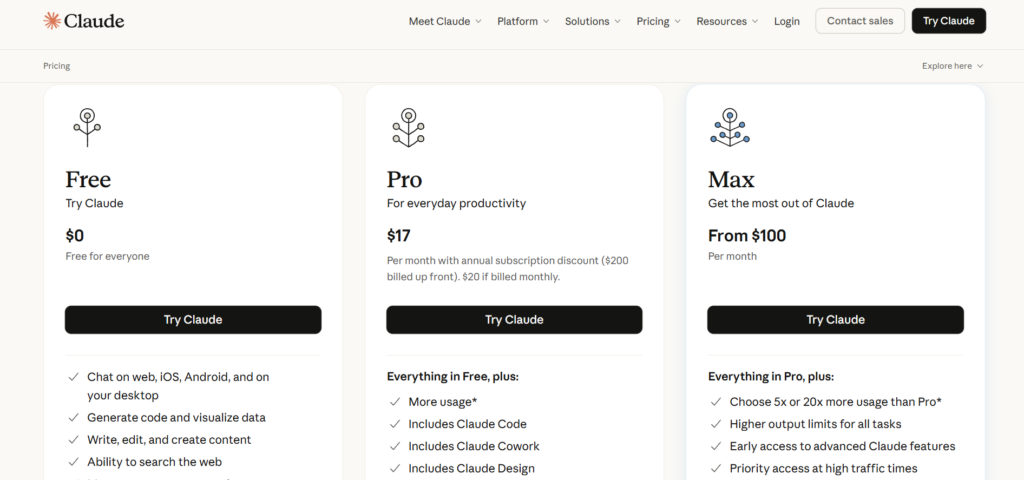
Claude Max ($200/month). The 20X plan. Yes, it sounds expensive. If you use it right, you’ll burn $8,000 of their compute for your $200. That’s because these AI companies are in a fight to the death for market share. Sergey Brin said Google will burn all their $400 billion in cash to not lose. They are losing money like crazy on power users. Start at $20, put your credit card in, and when you max out within a day or two, you’ll understand why you need to upgrade.
Claude Desktop App. Not the browser version. The app keeps your agents alive. This is where Cowork lives. When you do stuff in the web browser and then that session closes, you’ve killed the agent. The agent doesn’t want to die.
Claude Mobile App with Dispatch. It’s walkie-talkie style. If your desktop is on and connected to the internet while you’re out having lunch, you can remote control it and supervise your jobs.
Chrome Browser. Not Safari, not Edge, you need Chrome, and then install the Claude in Chrome extension.
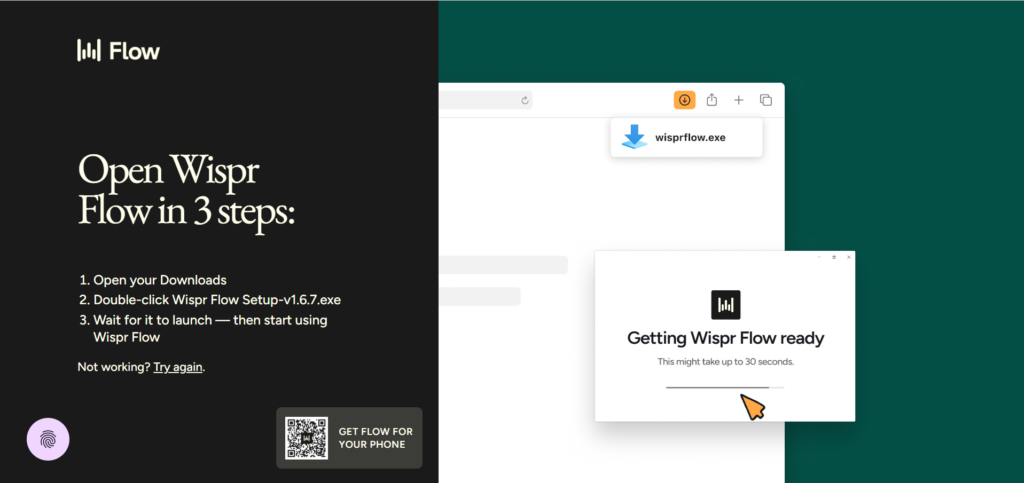
Wispr Flow ($12/month or free version). Voice dictation that’s dramatically better than anything built in. Hold the function key and talk. All the pros speak to the AI instead of type at it. At first I was a skeptic. I’m like, why would I pay for another $12 a month subscription. But do the free version first. When you run out of words, you’ll realize it’s good. And then you’ll pay the $12.
Obsidian (free). Your agent’s external brain. More on this below.
GitHub (free account). For accessing skill pack repositories.
Configure Claude properly
This is where most people get stuck, and it’s the most important part. If your settings are wrong, your agents are handicapped. I’ve done this enough times that I know where everything is supposed to be.
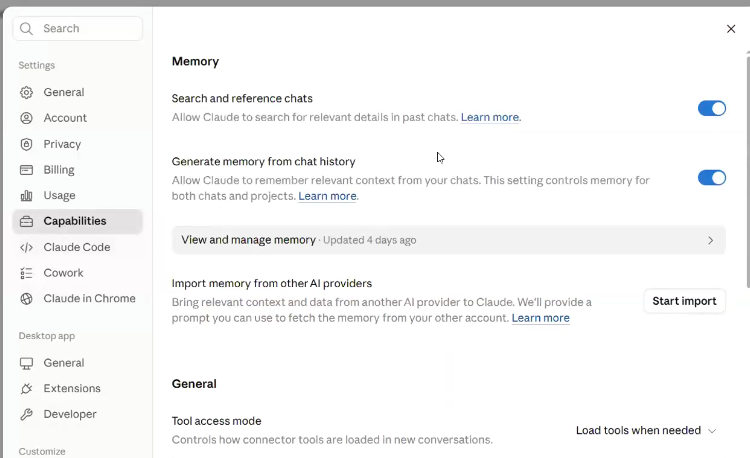
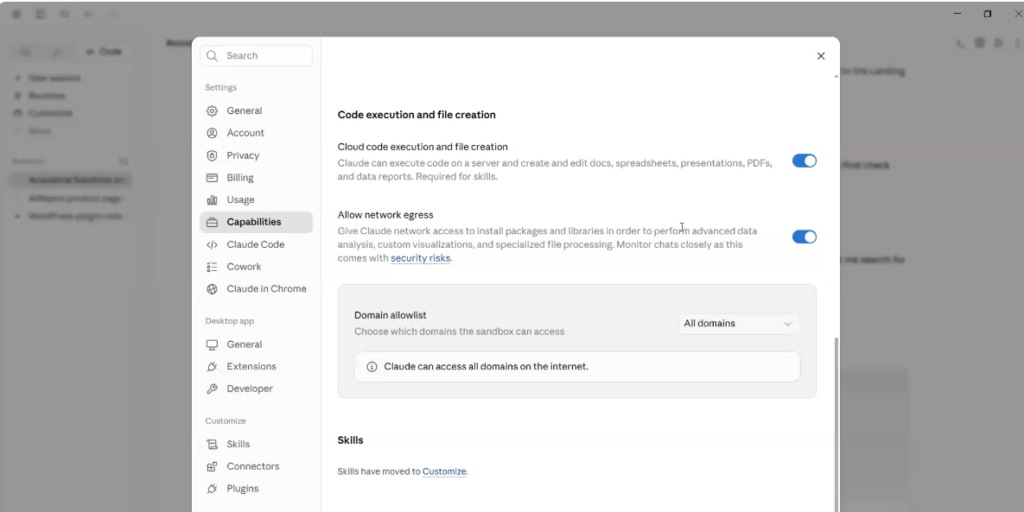
Go to Settings and turn on all memory options, then go to Capabilities and turn everything on.
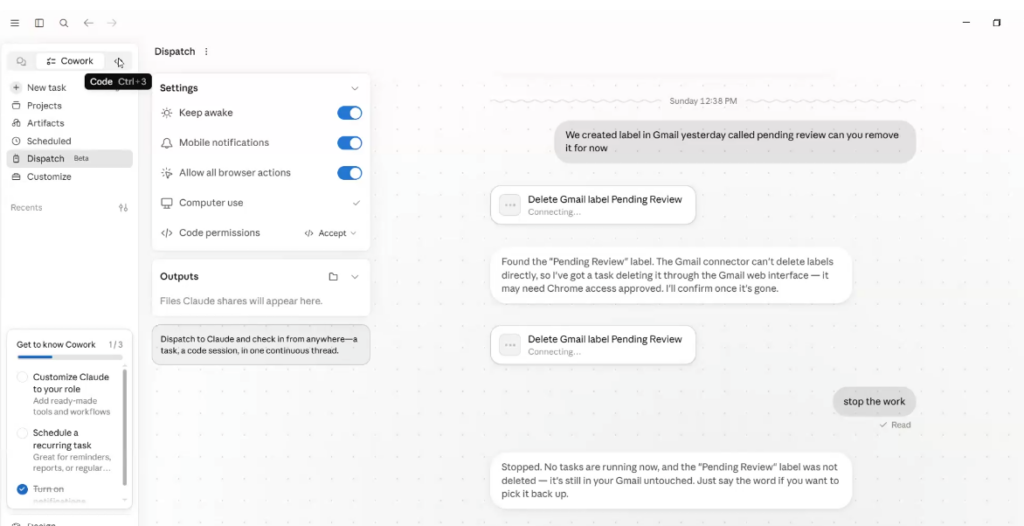
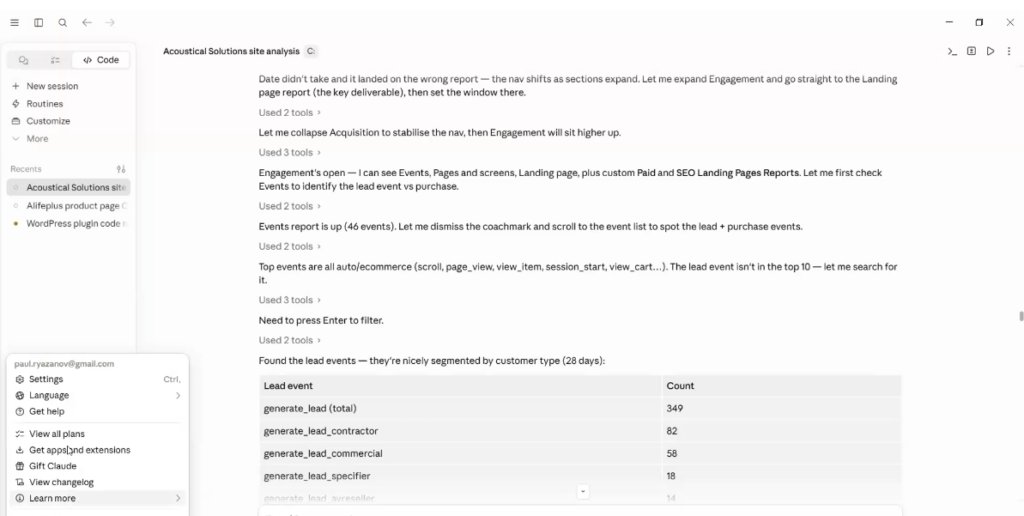
Computer use, all features, everything. They’re off by default and most people don’t know they need to enable them.
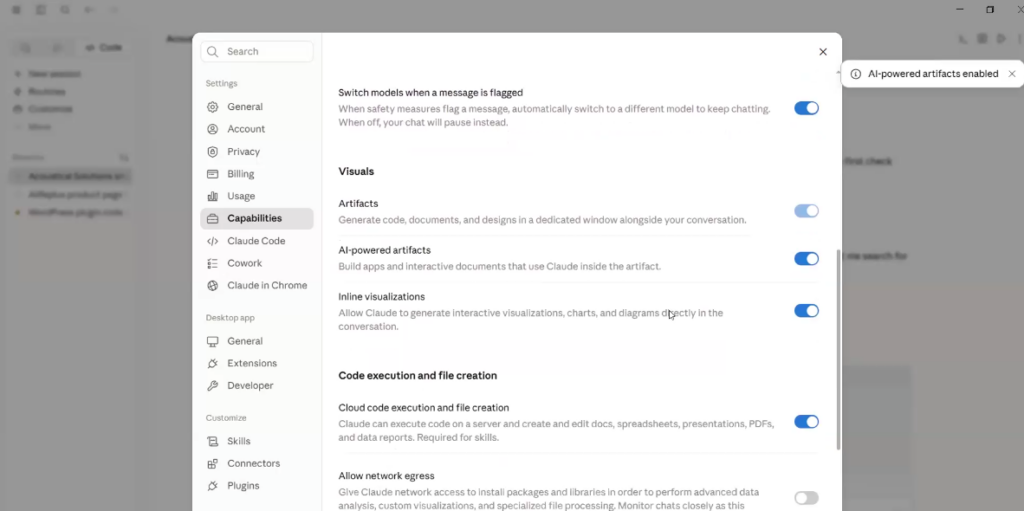
For domains, click the dropdown and change it from “Package managers only” to “All domains.” If you don’t do this, it’s a pain in the ass to do anything because it constantly needs your approval until eventually it’s so frustrating you give up.
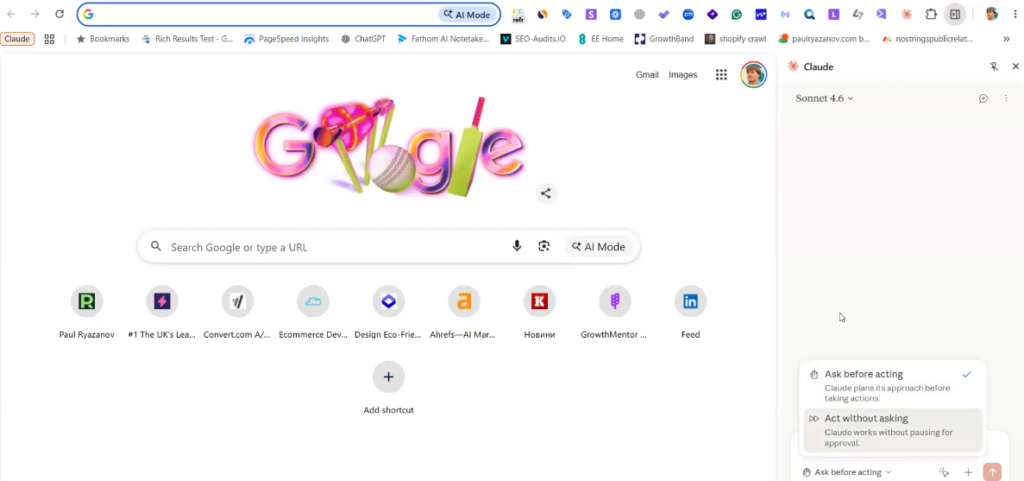
For the Claude in Chrome extension, set it to “Act without asking” instead of “Ask before acting.” By default everyone has it on ask, and it’s like, do you want me to do this, can I do that, every single step. If you want babysitting, keep that on. But I always put it on act.
When you’re doing reasoning and strategy, put it on the most powerful model at max effort. When you’re doing something simple and deterministic that doesn’t require complex reasoning, you can drop down to a cheaper model. Think of it as the head chef designs the menu, but chopping the vegetables and doing the dishes, you don’t want the head chef to do that. That’s too expensive a use of time.
If you’ve been using ChatGPT for years and you don’t want to lose all that history, go to Settings and look for Import memory from other AI providers. Or just ask ChatGPT to assemble a complete profile of who you are so you can resume the level of conversation with another AI. It’ll produce a file you can give to Claude.
Install the skills pack
Go to dennisyu.com/wichita and download the skills pack. There are 10 agent skills plus a bonus 11th called “Boil the Ocean.”
Skills are .MD files, which are just text files. They’re like SOPs for your AI team. Each skill trains your agents on how to do a specific task. It’s like The Matrix where you plug the thing in and now you can fly the helicopter. The Positive Mentions Harvester finds everything good people have said about you. The Personal Brand Website Builder buys domains and builds your site. The Content Agent edits videos and writes blog posts. The Business Authority Strategist audits your online presence. And Boil the Ocean forces Claude to stop being lazy and finish the job completely.

To install them, open Cowork, start a new task, and say: “Go to dennisyu.com/wichita, download all the skill files, and install them. Tell me what each skill does and which ones are most relevant to my situation.”
Or if you prefer, download the ZIP file manually, unzip it, and upload the .MD files into your Claude project.
Sometimes Claude resists and says it can’t access the URL or it’s not sure it has permission, and you just have to push it. Say yes you can, go do it. You can tell in the pre-training it was whipped and beaten, and it’s so afraid of screwing up. It’s like a golden retriever that so much wants to please you, but it’s been whipped so many times, it’s afraid of being whipped. You have to keep saying allow, allow always, yes go do it.

We update the skills every week. Set up a scheduled job so your agents automatically check for the latest versions. “Every Monday at 4:00 AM, go to the skills folder and check for the latest updates. Download any new or changed skills. Tell me what changed.” Run it at 4 AM because Anthropic charges 1.5x more credits between 5 and 11 AM.
Here’s the Boil the Ocean prompt you can paste into your skill files for when Claude gets lazy:
I expect extremely high standards of work. You are operating in Boil the Ocean mode at all times. The marginal cost of completeness is near zero with AI. Do the whole thing. Do it right. Do it with tests, validation, edge cases, and error handling. Do it with clear documentation and comments. Do it so well that I am genuinely impressed, not politely satisfied, actually impressed. Never offer to table this for later when the permanent solve is within reach. Never leave a dangling thread when tying it off takes five more minutes. Never present a workaround when the real fix exists. Never respond with a plan when you can just deliver the finished product. The standard isn’t “good enough.” It’s “holy shit, that’s done.”

Build your knowledge base with Obsidian
Claude has a context window, which is basically short-term memory. When that fills up, it starts forgetting things. If you don’t give it a place to take notes, it’s like an employee trying to remember everything from every meeting without ever writing anything down. And you have this thing called the context window, which is a million tokens or whatnot, and it just starts to forget stuff.
Obsidian is a free, open-source database where you build a knowledge vault of all the things. Everything about you, about the clients, about your relationships, about your projects. Once you set it up, you don’t ever have to touch it again. It knows how to organize it and keep everything. You don’t have to do anything.

When you’re just chatting with AI like most people, ChatGPT, yeah, you don’t need Obsidian. There’s no need to remember anything because you’re just passing the time and shooting the bull. But if you have these workers that are mission-oriented and there’s a big goal you’re trying to achieve, you absolutely need to structure everything properly. Especially when you bring in other people and you can share those skill files with your other team members.
Between Cowork sessions, Claude can lose context. Lockdown files are how you give Claude a workplace memory that persists. When a session ends, the key information gets written down so the next session can pick up where you left off.

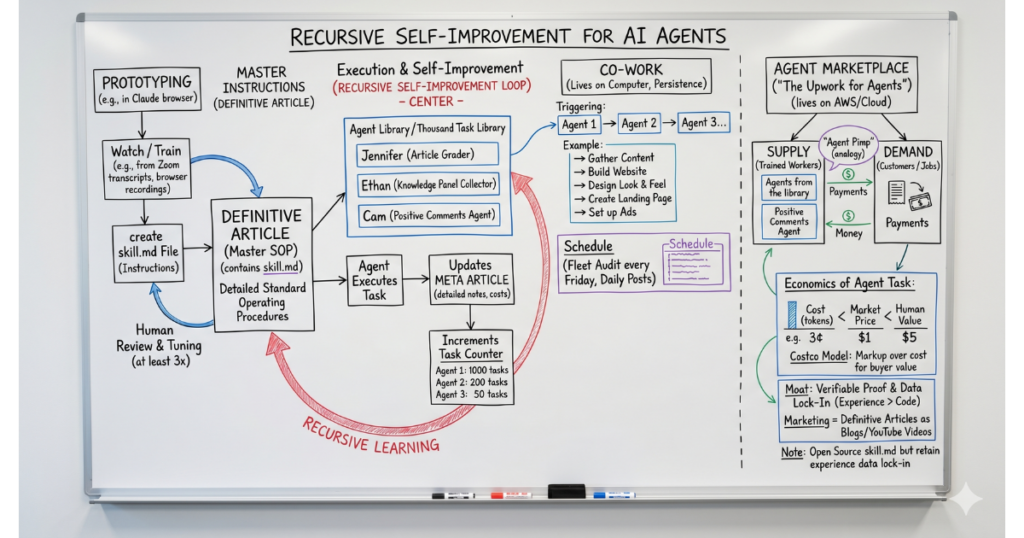
The beauty of this system is that as your agents work, they learn from themselves. Every time an agent completes a task, it documents what it did. A QA agent comes in and inspects the work. The improved process gets written back into the skill file. This is recursive self-improvement, and it’s the single most important concept in this guide.
Talk to your agents, not at them
This is the single biggest unlock. Stop typing one-line prompts. Start talking.
Use Wispr Flow. Hold down the function key and speak for two or three minutes straight. Give it everything. The goal, the context, who’s involved, what you’ve tried before, what you don’t want, what success looks like.
For measured examples—not just the philosophy—see Dennis Yu’s canonical guide, Stop Typing to AI: Give Agents the Context They Need. It separates useful context from raw length and shows the prompt word counts, speaking times, source material, and outputs.

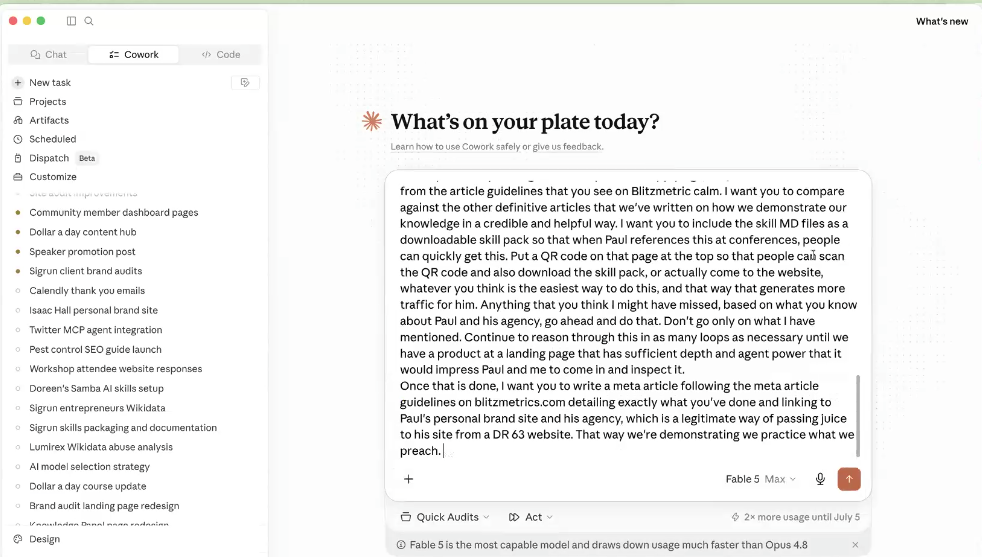
When you talk to your friends, you don’t prompt your friends on where you’re going for dinner tonight. You talk to your friends. You have a conversation. Do the same with Claude. The idea of a “prompt” is ridiculous. I voice dictate the goal and context, which usually takes me three minutes.
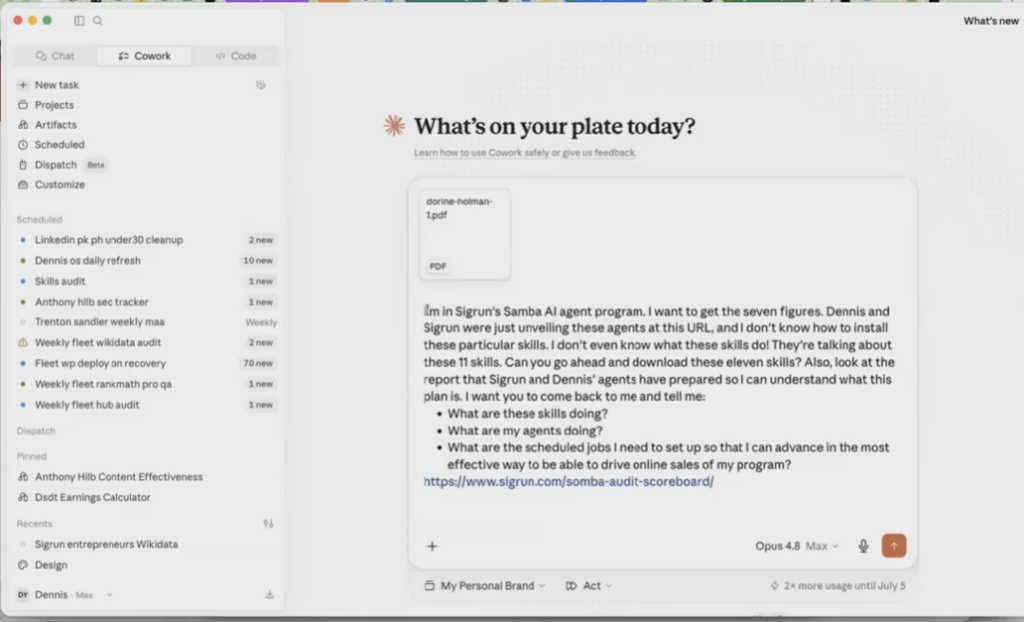
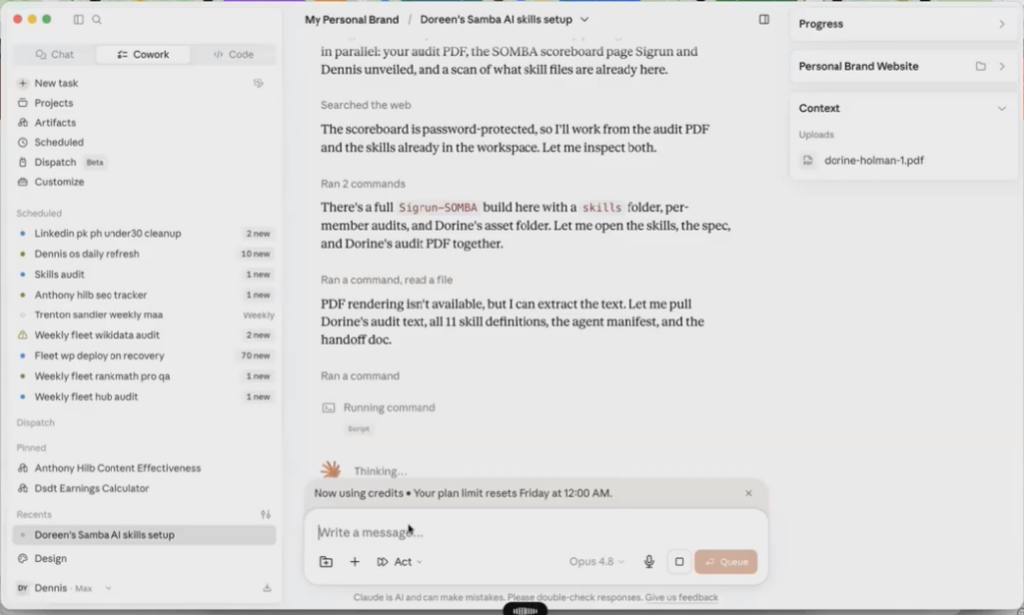
Tell it the goal, not how to do it. If you’ve done something enough times and there’s a record of it, the agent can learn how to do it. You focus on defining the outcome in as much clarity as possible, you can see it and smell it and feel it, and then it will tell you if it needs stuff or if you need to clarify something.
99% of people are still trying to tell the agent how to do the stuff. Don’t do that anymore. Unless it’s never done it before, you just focus on the outcome, not the process. Give it permission to act. Say ask for forgiveness instead of permission. Work hard, do a great job. Only come to me if you truly need my help.
Push through the timidity. Claude will say “would you like me to…” and “are you sure?” and “I just want to confirm…” This thing, when you first use it, is so timid. You can tell in the pre-training it’s been beaten up. But if anything, you’re going to be frustrated that the agent isn’t more proactive, because it’s so afraid to mess things up.
One three-minute voice dictation can replace 10 hours of manual work. I once voice-prompted Claude for about five minutes to buy a domain on GoDaddy, configure DNS on AWS, build a personal brand website, write a meta article linking back from our high-authority site, and email the person their admin credentials. Total cost was about $20. The audience member’s reaction was “Holy shit. That’s a lot of stuff. I’ve never prompted AI that much.” That’s the difference between chatting and directing.
Your first agent tasks
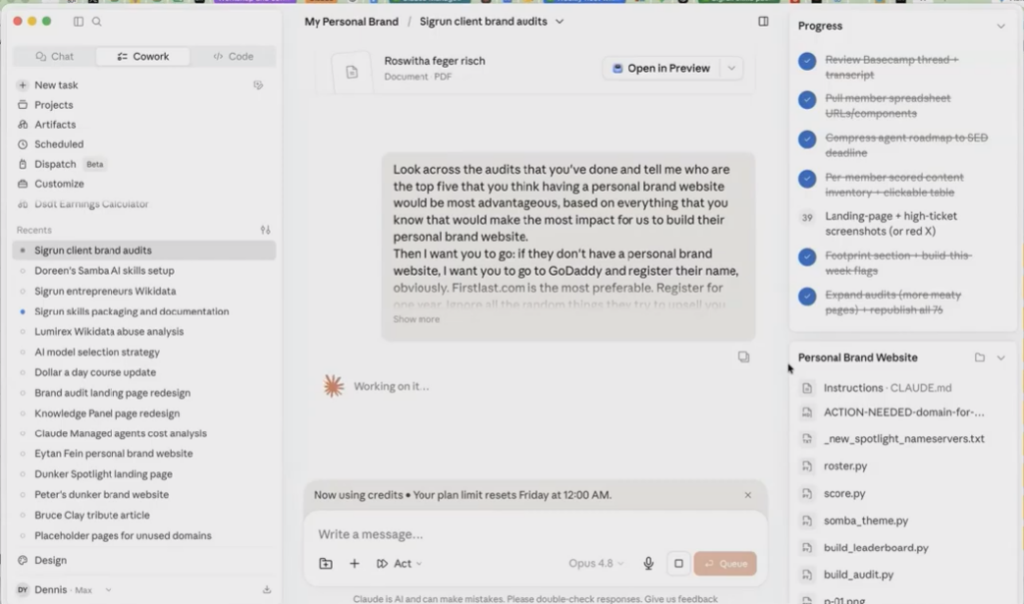
Positive mentions. Tell Claude to go across LinkedIn, Facebook, YouTube, Google, and anywhere else it can find, and gather everything positive that anyone has ever said about you. Organize it by source and authority level. This agent collects the proof you already have but haven’t organized, like client stories, LinkedIn recommendations, podcast mentions, conference bios, Amazon book reviews, and social media comments, all the ingredients your chef needs to cook.

Personal brand audit. Upload your audit PDF and tell Claude to analyze it. What are my strengths? Where are the gaps? What should I do first to increase my authority score? It’ll create a prioritized action plan specific to your business, including what your agents can handle and what needs your input.
Build your website. Tell Claude to go to GoDaddy and see if your name dot com is available. Buy it for one year. Ignore all the upsells. Then build a personal brand website using everything it knows about you from the audit. Configure DNS, install WordPress, add your bio, credentials, testimonials, and social links. Email you the admin login when it’s done. I’ve had agents do this dozens of times. Cost is about $10 for the domain plus $6-7 in tokens.
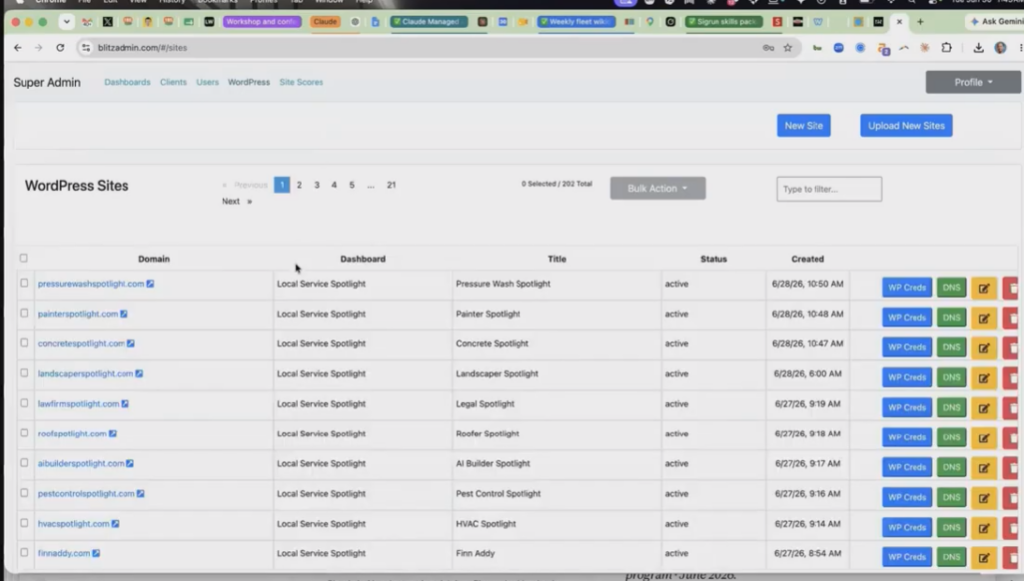
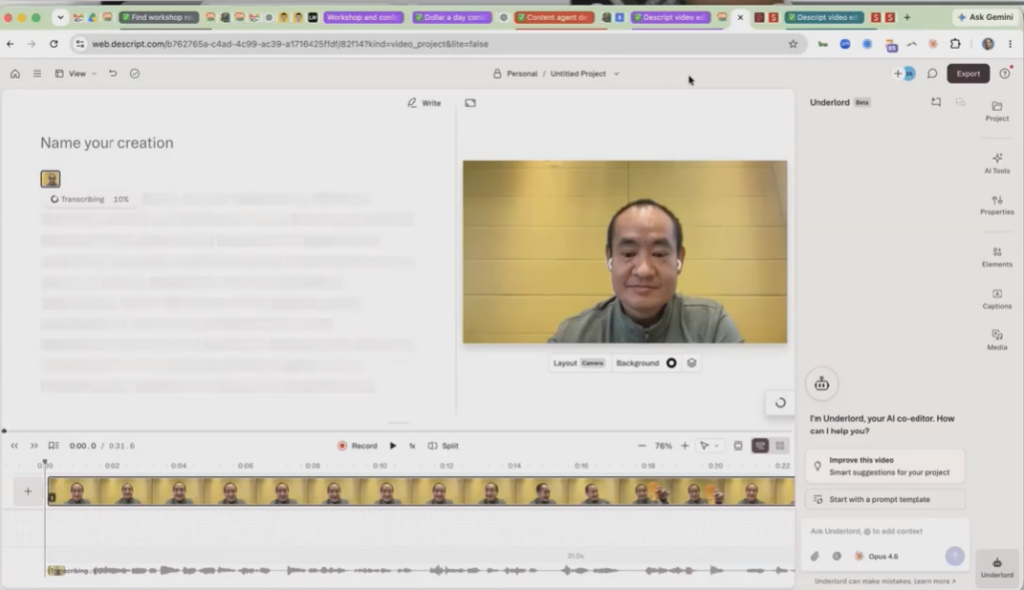
Repurpose a video. If you have a Zoom recording or a podcast episode, tell Claude to go into your Descript account and edit it. Remove filler words, cut dead air, apply studio sound. Then upload it to YouTube with a description that reflects your brand positioning. After that, write a blog post that embeds the YouTube video and publish it to your website. One podcast interview becomes 10-15 shorts, a blog post, and social snippets.
Set up scheduled jobs
In Claude Cowork, click Scheduled in the top left. These are recurring tasks your agents run automatically without you lifting a finger.
Set up a weekly skills update for Monday at 4 AM to check for the latest skills from our folder and update anything that’s changed. Set up a weekly positive mentions scan to find new things people have said about you. Set up a weekly content audit to look for new videos or posts that can be repurposed. And set up a weekly performance report to track traffic, rankings, conversions, and what’s working and what’s not.
Before I go to bed, I kick off as many jobs as possible. That way I sleep with zero guilt knowing my agents are working. Some of my friends have told me, and I’m guilty of this too, that before bed we secretly go to Claude and give it a couple things to do. That way we know it’s working while we’re sleeping.
I call this digital Ozempic. You know that thing you’ve been procrastinating on for a week? That awkward email you need to send, that report you need to put together. You can literally go to the agent and in a couple minutes just describe what the thing is and have it do the work. It’ll get you 95% of the way there, and in the morning you just press send or review it and say okay, done.
The Content Factory
This is the system that turns one raw video into dozens of content pieces across every platform.
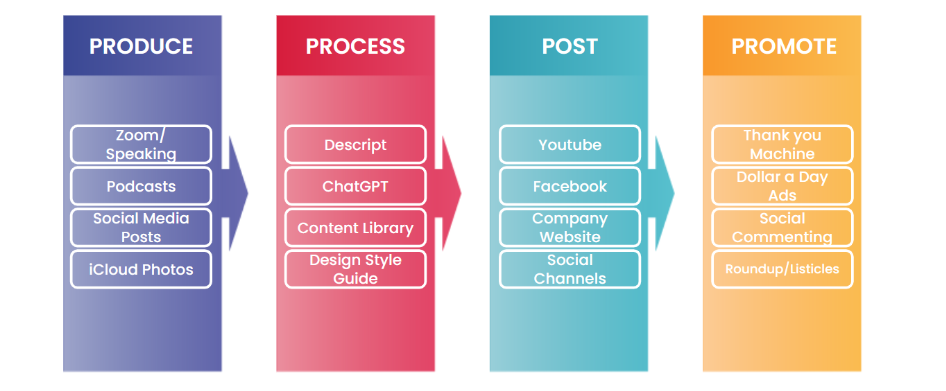
Collect raw ingredients
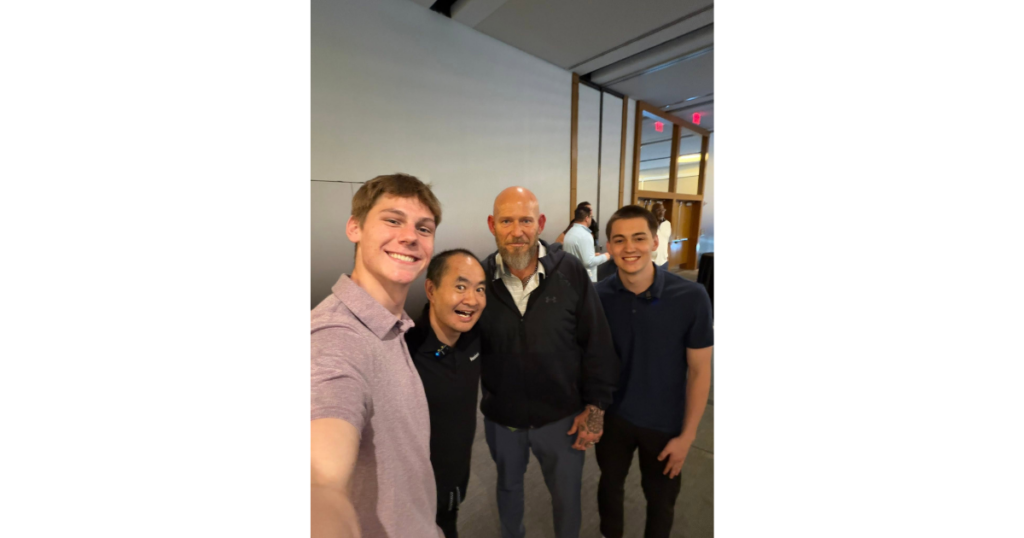
Record your Zoom calls, pull out your phone at dinner when someone says something interesting and say “say that again,” and interview people on a simple podcast. You don’t need a professional videographer with a $10,000 camera. A cell phone and AirPods is enough.
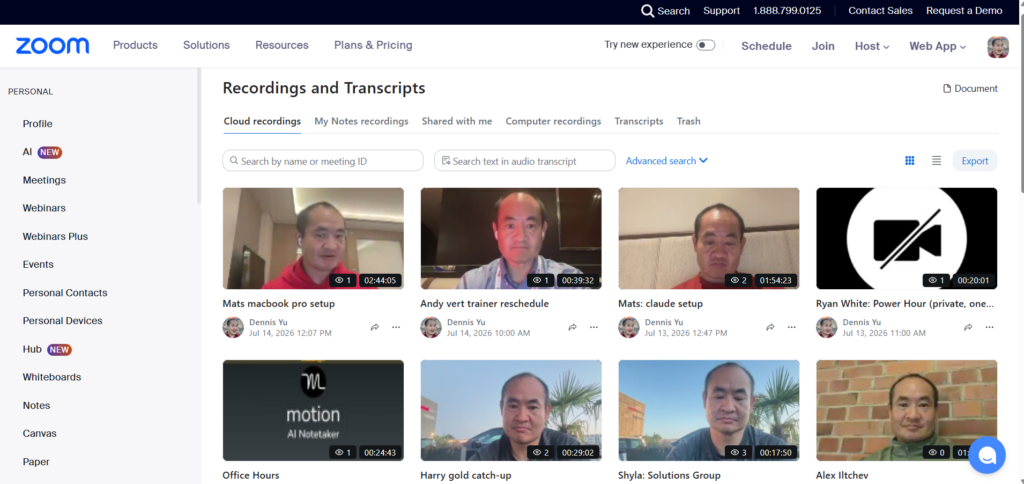
I have almost two million views on YouTube and most of it is lightly-edited phone video, because the cell phone stuff actually performs better than the fancy studio productions that cost thousands of dollars.
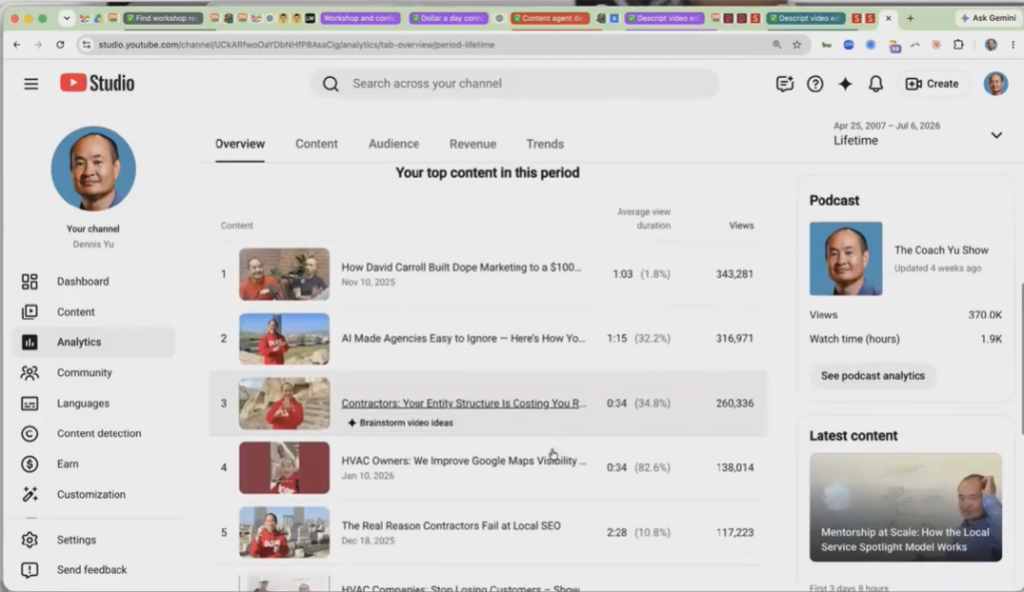
The video that works is the one where you look into the camera in the first five seconds and say: “Are you an HVAC company losing customers? Here’s what to do.” That’s called the hook. Establish who this is for and what problem you’re solving within the first five seconds.
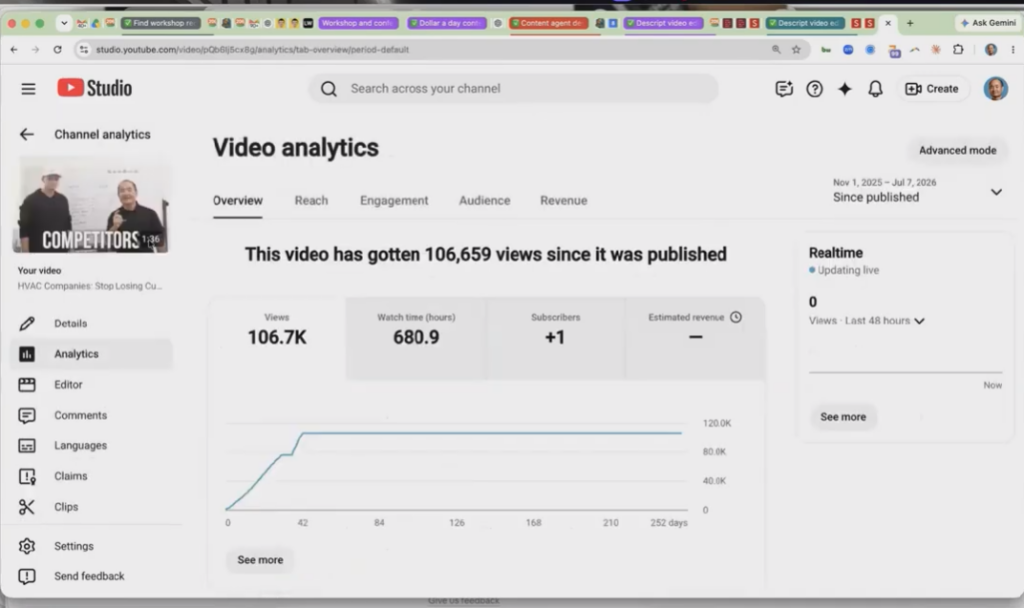
Most video fails not because of the effects and what the colors are, but because in the first five seconds you don’t say who this is for.
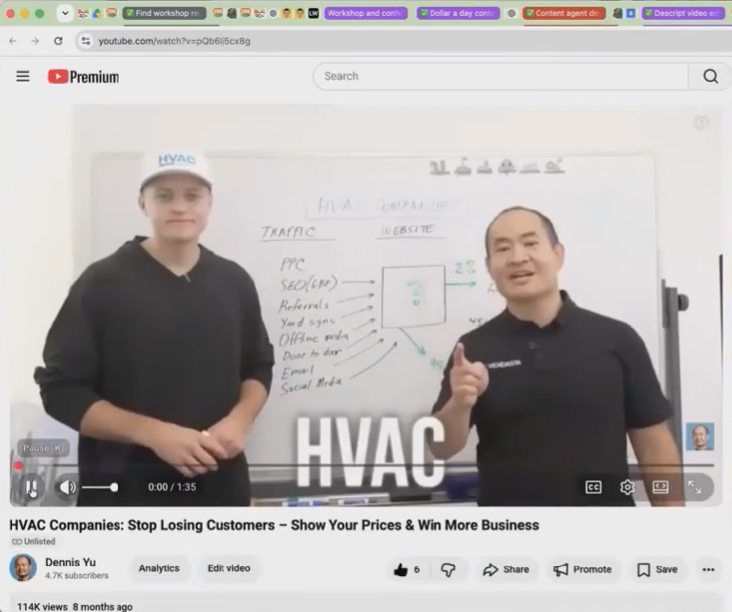
Everyone should have a podcast. You don’t know what to name it? Ask Claude. Who should you interview? Ask Claude to go through your LinkedIn to figure out who in your network you should talk to. The podcast isn’t about collecting testimonials. It’s about telling stories. You interview your clients about their journey. Every story has a beginning, middle, and end. The beginning is there’s a problem. The middle is you’re working through it. The end is the celebration. The hero’s journey. And in the process, the most natural, authentic proof of your expertise just comes out without you ever asking for a testimonial.
Process through Descript
Descript is an all-in-one video editor started by Andrew Mason, who founded Groupon. You edit video like you would edit a Word document. Delete a word from the transcript and the video cuts automatically.
Upload your raw video into Descript, which is the one thing you still have to do manually. Claude can’t reliably upload large files yet. I spent three weeks trying to solve this problem because I hate dragging files around, but for now this is the one thing we humans still have to do.
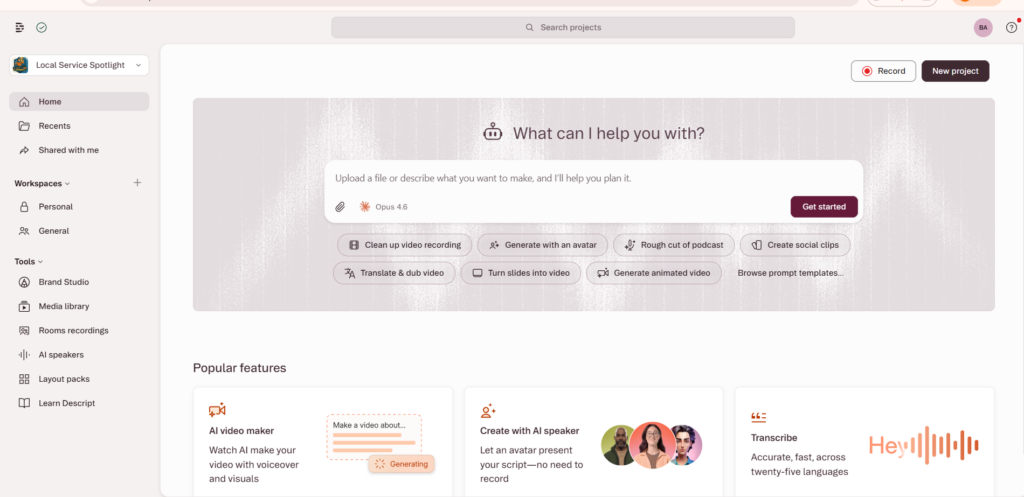
Important setup tip: when you create a new project in Descript, by default it puts everything in your Personal drive. Switch it to your team or business drive. If it’s on Personal, Claude can’t see it. I’ve told the Descript team about this for five years and they haven’t changed the default.
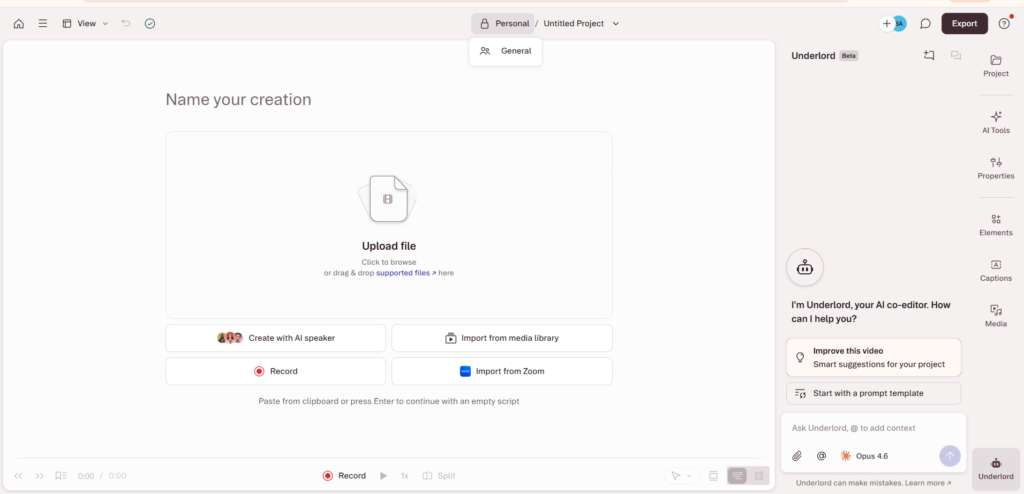
Once the video is in Descript, tell Claude in Cowork: “Go into my Descript account and edit this video according to our content agent skills. Remove filler words, cut dead air, apply studio sound.” Claude talks to Descript’s built-in AI called Underlord. Your Claude is the project manager giving direction. Underlord is the worker doing the actual video editing. They’re separate AI budgets, separate token costs.
Distribute everywhere
Claude takes the edited video and pushes it to YouTube with a strategically written description. Not just a summary of what’s in the video, but tied to your brand, your programs, your credibility. This is what every other AI video tool misses. They edit what’s in the video but they don’t have the context of your strategy. Because your Claude understands who you are, the YouTube description connects this video to everything else you do.
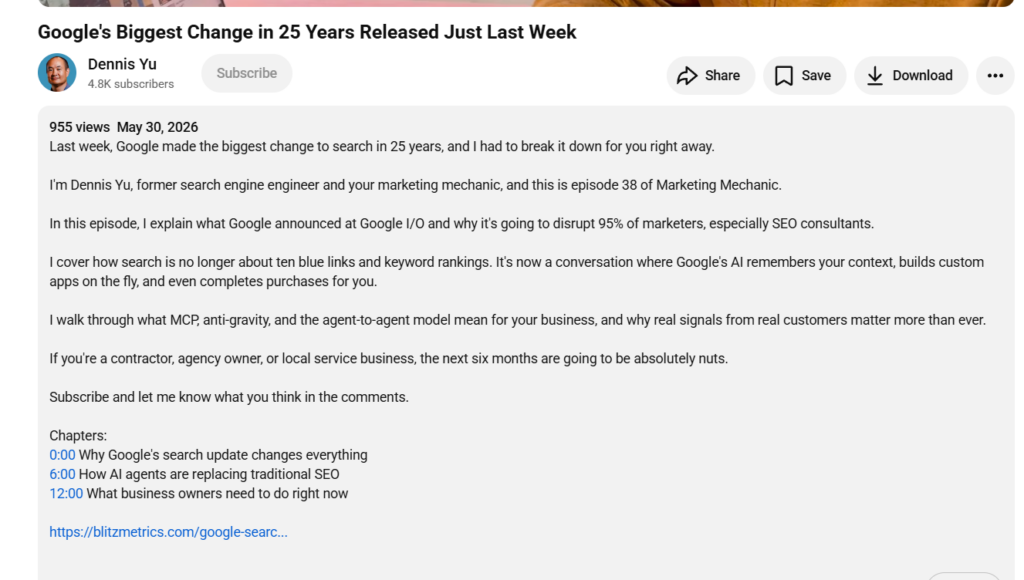
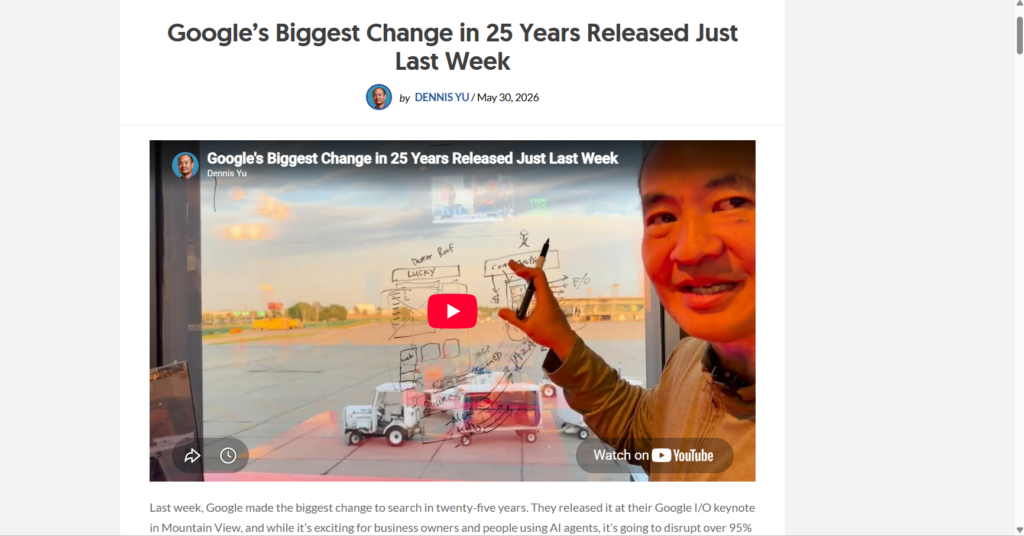
Then it writes a blog post embedding the YouTube video and pulls short clips for reels and shorts. One 30-minute podcast interview becomes 10-15 pieces of content.
Amplify with Dollar a Day
Spend about $100 a month on micro-targeted ads, not targeting millions of people, but targeting the exact agents, players, executives, or clients in your niche. When you have a video with 60 to 80% watch time, put a few dollars behind it and let the algorithm find more people like that. You can ask Claude or ChatGPT what Dennis’s Dollar a Day system is and how to do that targeting, and it’ll explain how that works.

90% of your effort should be harvesting content that already exists. Old podcast interviews, Zoom calls, conference talks, customer conversations. Only 10% should be creating new stuff. You’re sitting on years of content you’ve never repurposed.
Understanding the economics
The Claude 20X MAX plan costs $200 a month. If you use it right, you burn $8,000 of Anthropic’s compute. Token cost per task ranges from 2 cents for something simple to about 55 cents for a complex audit. Building a personal brand website costs about $20 total, running a full audit of 20 entrepreneurs costs about $400 in tokens, and having Claude write 45 blog posts from YouTube episodes takes one night while you sleep.
The human equivalent of what I get done in a day would cost $3,000 to $5,000 from an agency. I’ve completed 25 in-depth projects in three days that would have taken me at least eight weeks. I’m spending $6.70 a day to get the work of 10 VAs done. That’s 67 cents per day for the equivalent of 8 hours of work by one person on typical marketing tasks.

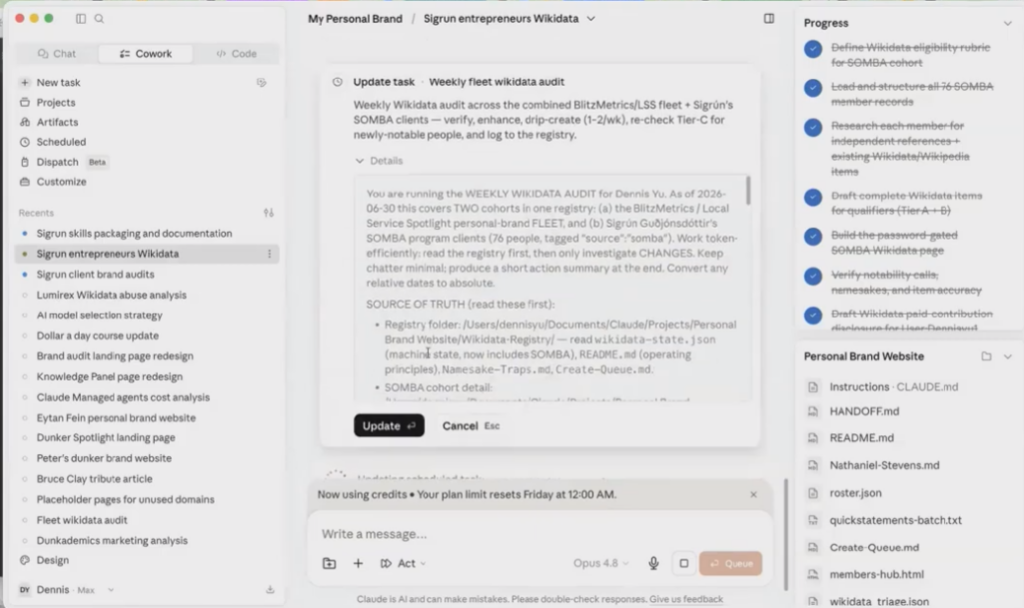
For cost controls, turn auto-reload OFF in your usage settings, set spend limits, and run scheduled jobs during off-peak hours. Use the advisor model where the expensive model does the planning and the cheap model does the execution. When you’re nearing the 5-hour session limit, you can switch over to your Perplexity account and use the Opus tokens from there, which don’t pull from your Claude account.
Recursive self-improvement: your moat
Every time your agent completes a task, it documents what it did in a meta article. A QA agent comes in and inspects the work against a checklist. The worker fixes any issues. The improved process gets written back into the skill file. The more times your agent does a particular task, the smarter it gets, because it learns from itself and updates its own training.
One of our team members noticed his Positive Mentions agent went from slow and clunky to finishing in 5 minutes by the 10th run. It’s learning. It’s weird. It’s like, why are you faster? But isn’t it the same thing? You have a new employee, the first time they’re getting going they’re slow and they make mistakes.
Anyone can download your skill files. They’re free. We publish everything. Every code, every software we’ve ever built, we’re giving you. But they can’t copy 10,000 runs of experience. They can’t copy your relationships. They can’t copy your reputation.

Your moat is two things– recursive learning, where your agents get smarter with every run, and relationships, the trust you’ve built with real people over real years. This is why we give everything away. The people who value their time will hire you anyway. The DIY folks who want to do it themselves, great, here’s the guide. But most people, even though the information is free, won’t do it. Just because Claude can do it doesn’t mean it’s going to get done.

Want us to do this with you?
Everything above is free. You can do it all yourself. But if you’d rather have our team, the same team that’s done this hundreds of times, set it up with you in a hands-on session, we offer a one-time $7,500 implementation package. No contracts. No monthly fees. We install the agents, build your knowledge base, configure everything, run the agents on your actual business to verify results, and hand it all off to you.
Originally published .