
I have spent the last 40 years working with data. I was one of the first engineers at Yahoo, and my mentor was the CEO of American Airlines where we worked on the Sabre system, the world’s largest data system at the time. From flights and transactions to the internet and now AI, the data has gotten more sophisticated and the software has gotten smarter. But the framework of trust and what drives sales has always been the same.
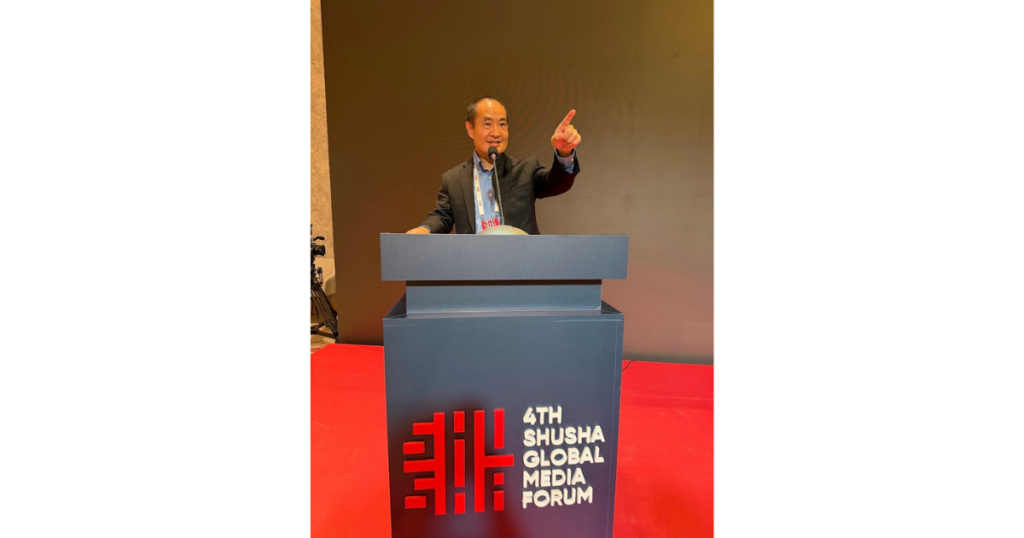
Recently I partnered with Sigrun to help a group of 76 incredibly talented female entrepreneurs build their online authority using AI agents. These women are doctors, coaches, trainers, consultants, and specialists who genuinely transform lives. But there is a gap between their real-world expertise and their online visibility. The proof of their credibility exists, but it is scattered across the internet. Nobody has assembled it in one place.
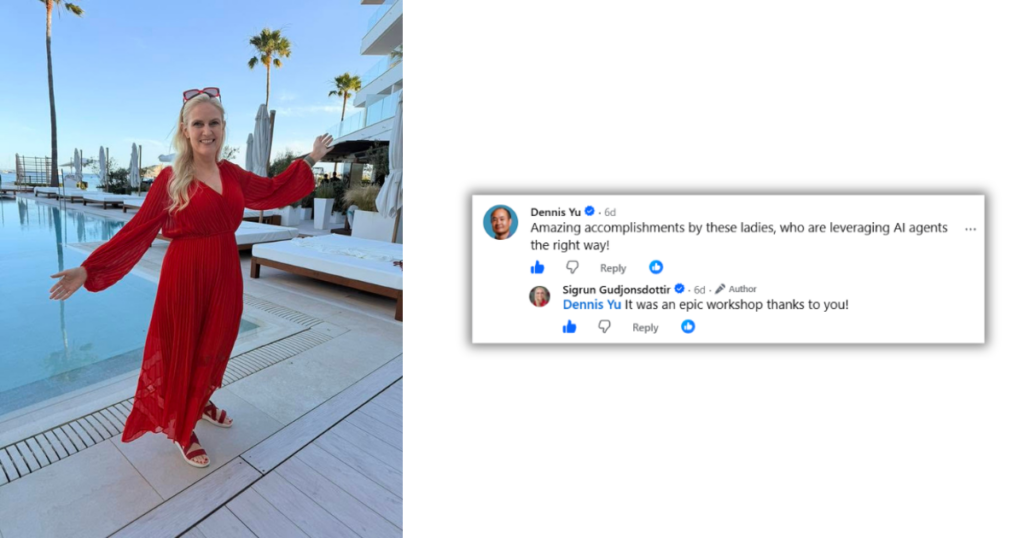
Without proof assembled in one place, even the best experts struggle to convert
The formula is simple. Traffic times conversion equals sales. But conversion does not come from a beautiful landing page alone. It comes from proof. Proof that you are the expert you claim to be.
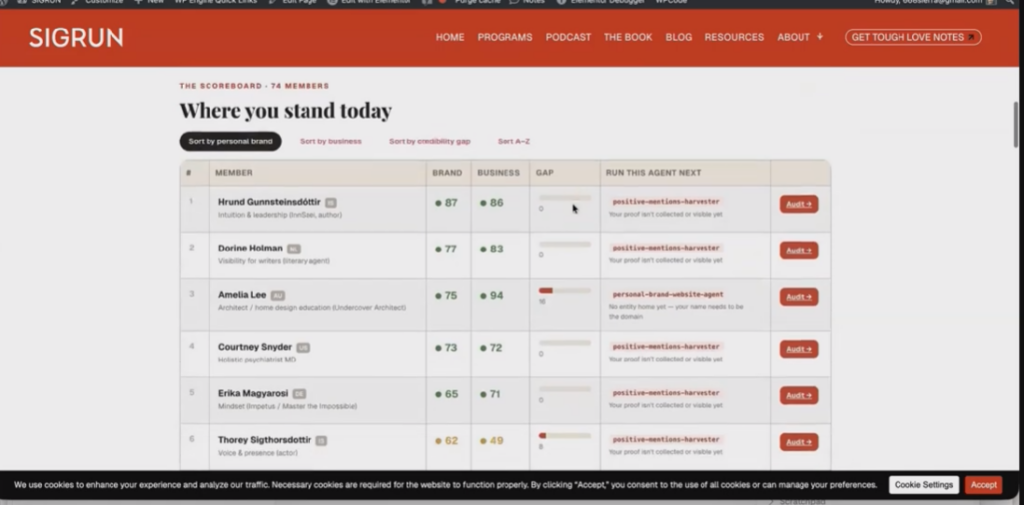
Google calls this EEAT, which stands for expertise, experience, authority, and trust. The large language models like ChatGPT and Claude look for the same signals. When I ran audits on all 76 women in the group, what I found was consistent. These are women who are experts, who are competent, who drive results, but online their credibility is not as visible as it should be.

Every expert can be measured on a 30-point authority scale
I measure every expert on a 30-point authority scale. Ten points come from who you are. Ten points come from where your proof lives. And ten points come from who is saying good things about you.
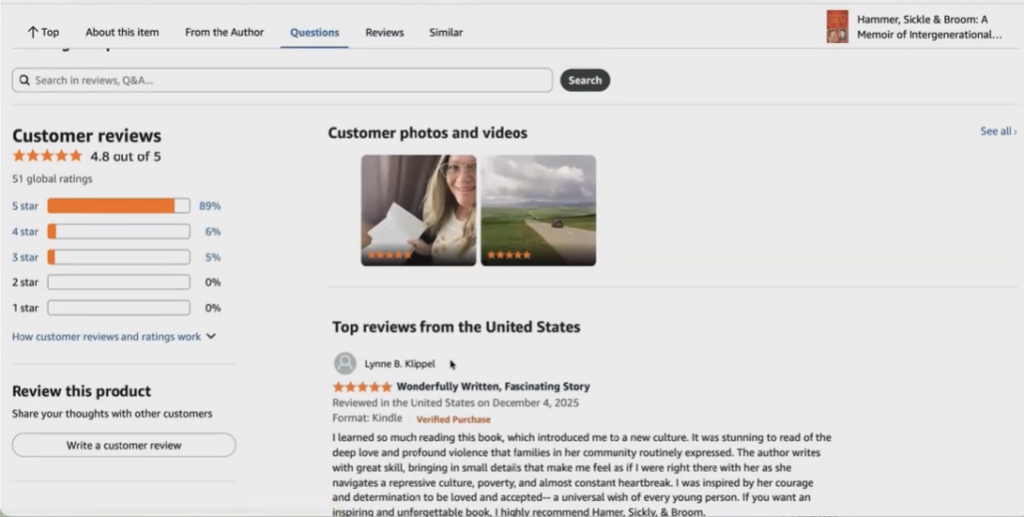
Take Gulara as an example. She has a book on Amazon with 4.8 stars and 51 reviews. That is fantastic.
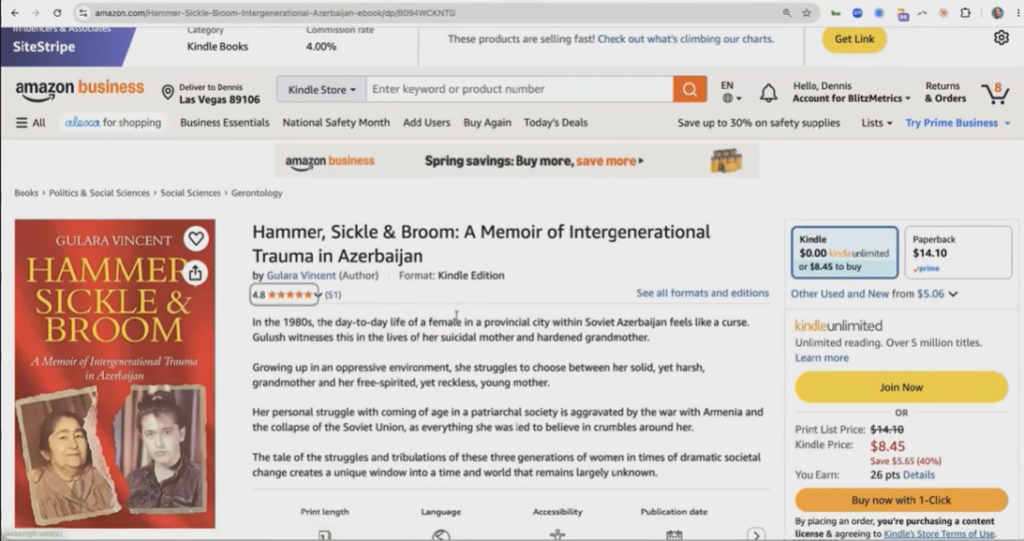
All these people saying good things about her work. But here is the dirty secret. People do not read books. They buy books. It is the credibility that matters.
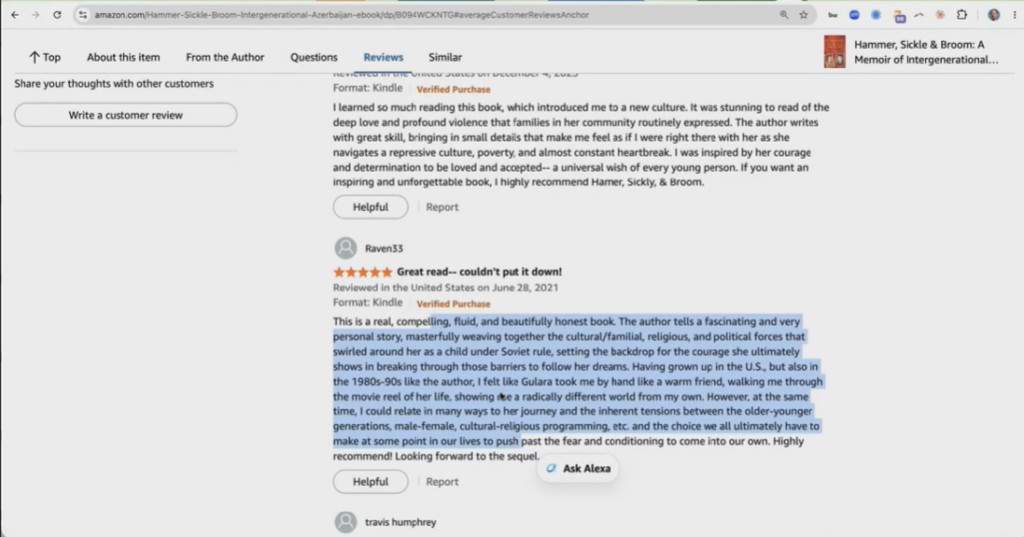
Those 51 ratings and 4.8 stars are trust signals, and we want to harvest all of them and use them everywhere, on landing pages, in ads, in compilations.
Gulara also had a podcast appearance from five years ago with only 134 views. That is a shame because there is so much valuable content in those 42 minutes. But who is going to listen to the full thing? The AI can watch all of it, pull out the best snippets organized by topic, and repurpose them into articles and social media content. It does not matter that only 134 people saw it five years ago.

Then there is Celeste, a dog trainer. She has the brand voice, she has the expertise, but it is not visible on the internet. Once her agent has access to all her content, it starts turning those audit boxes from gray to green.
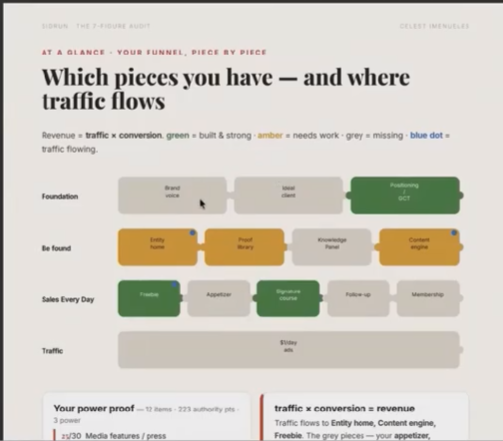
Or Christine Bowers, a PhD with 2,900 citations. Maybe that number gets updated to 3,000. Wouldn’t we want that updated everywhere for consistency? That is exactly what the agents do automatically.
Search engines cannot tell which expert is which without a central hub
One of the biggest challenges for experts online is disambiguation. When I searched for Carmen Reuter in our Knowledge Graph Explorer, which we built on top of Google’s Knowledge Graph API, I found 15 results.
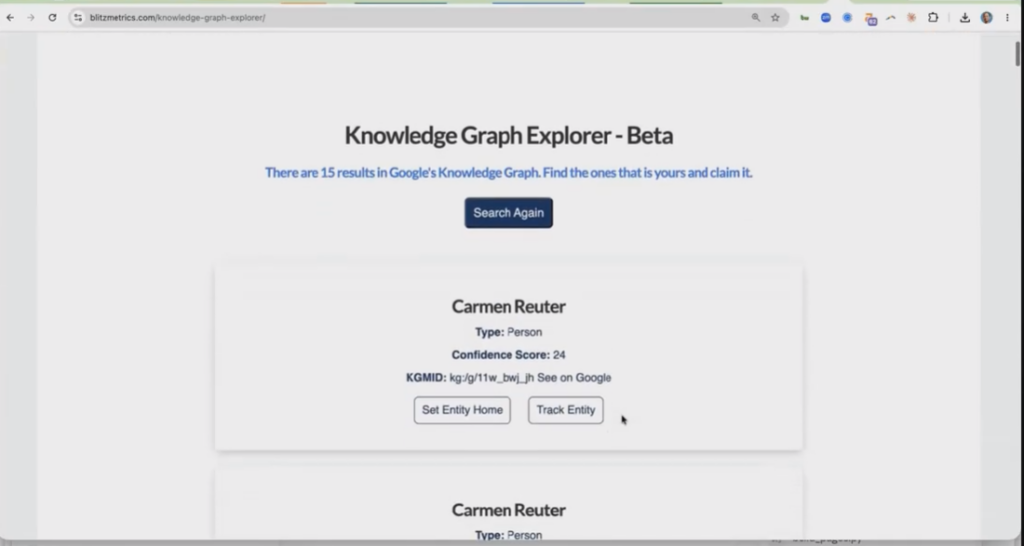
Which Carmen Reuter is which? One has an Instagram and Facebook and LinkedIn.
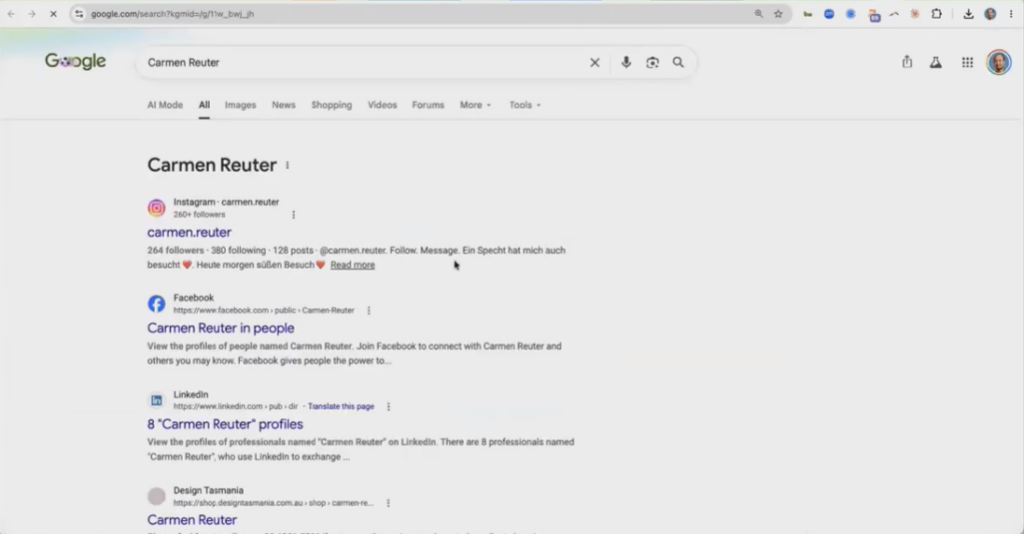
There were eight matches on LinkedIn alone. These are clearly different women, but search engines and AI models struggle to figure out which Instagram belongs to which LinkedIn belongs to which website.
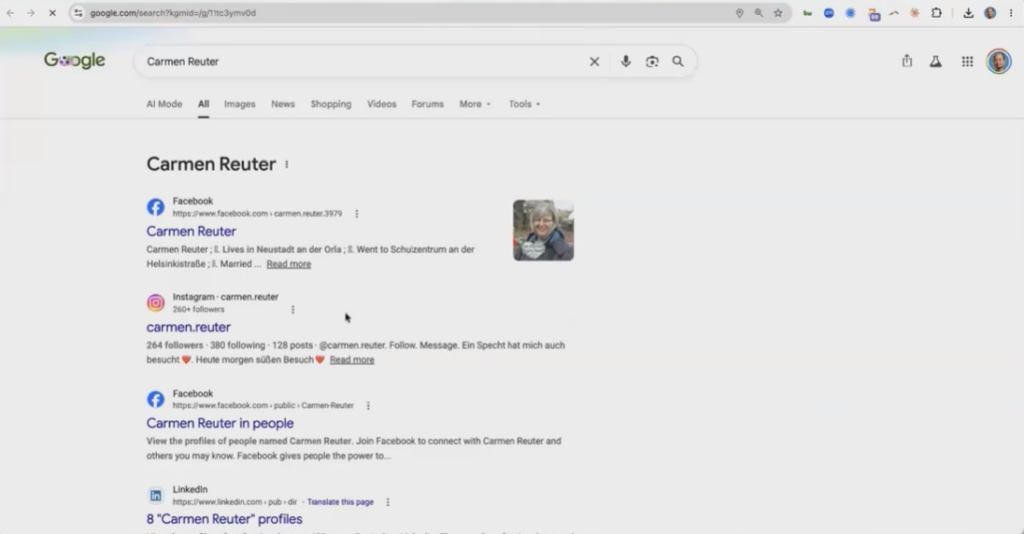
This is why every expert needs a personal brand website as the central hub. Your LinkedIn, Instagram, YouTube, podcast, and everything else become spokes that all point back to the hub. The agents use schema.org and Wikidata to tell the rest of the internet that this is the one Carmen Reuter for this specific expertise.

Speaking of Wikidata, when I ran the agent against all 76 women, eight already had Wikidata entries showing they are notable, and five did not. It is like not having a LinkedIn. You want to be in these places because they influence how discoverable and credible you appear.
AI agents now do what used to require an entire marketing team
I built 11 agents specifically for this group, and each one handles a different part of the marketing process. The Positive Mentions Harvester wakes up every day and scans the internet for good things people have said about you. Maybe a client left a review you did not know about. Maybe a relative said something good about you. Maybe your coach from years ago endorsed you somewhere. The agent finds all of it.

Once collected, these trust signals become ingredients that get passed to other agents. The agent that manages your website, the agent that handles social media, the agent that tunes your ads. They can take those mentions and turn them into ad copy, landing page elements, and content.
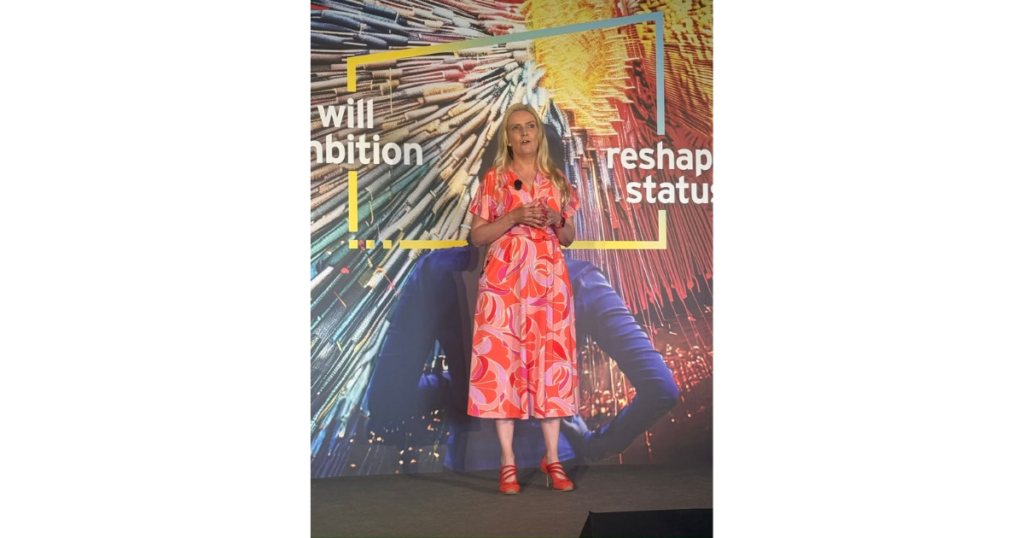
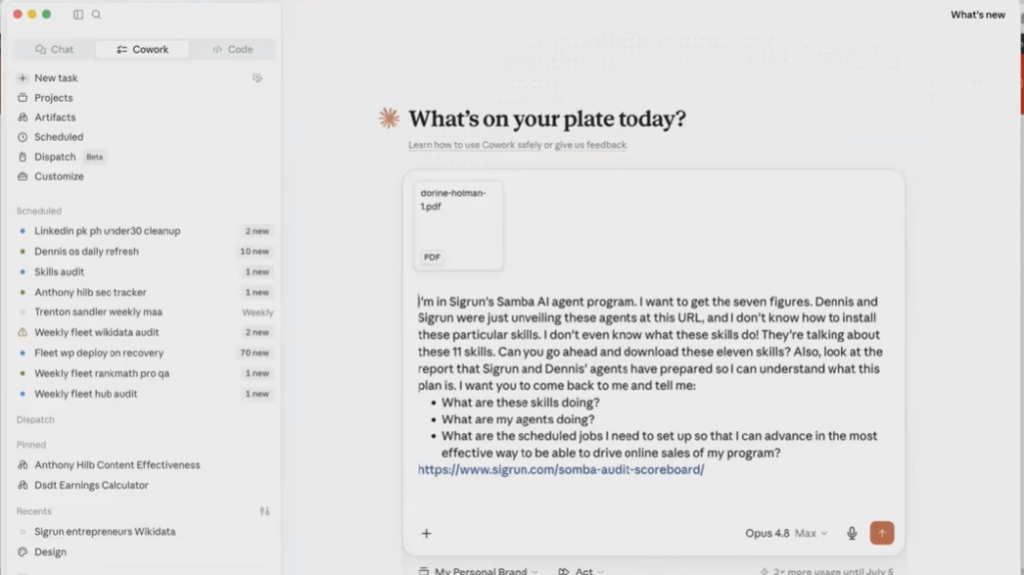
During the workshop, I did a live demonstration pretending to be Doreen, one of the participants. I literally spoke to Claude and said go to this URL, download the skill files, install them, tell me what they are, and analyze Doreen’s audit. Within minutes it had downloaded all 11 skill files, analyzed the audit report, built a plan, and set up a weekly scheduled job to check for updated skills every Monday at 8 AM. I talked to it for two minutes and it did all of that.
The most common thing I hear after the first week or two is Dennis, once I started talking to the agents I do not need to talk to you anymore. The agent gives better answers. And I am not offended. That is the whole point.
One spoken conversation can build five websites and email the owners
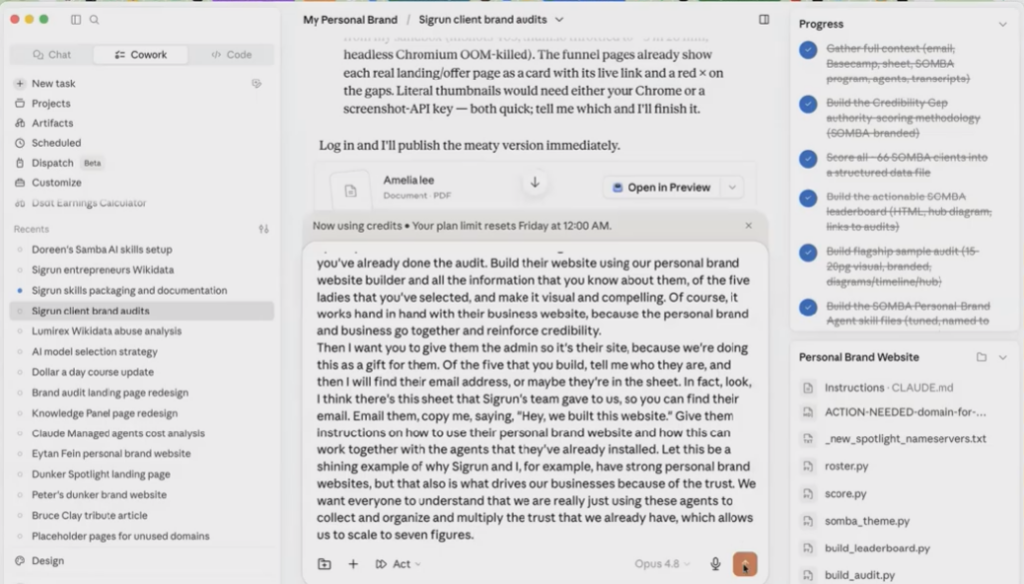
During the workshop I also demonstrated something bigger. I told my agent to look across all the audits, identify the top five women who would benefit most from a personal brand website, go to GoDaddy and register their domain names, build out their websites using our personal brand website builder on AWS, and then email each of them with admin access and instructions. All from a single spoken conversation.
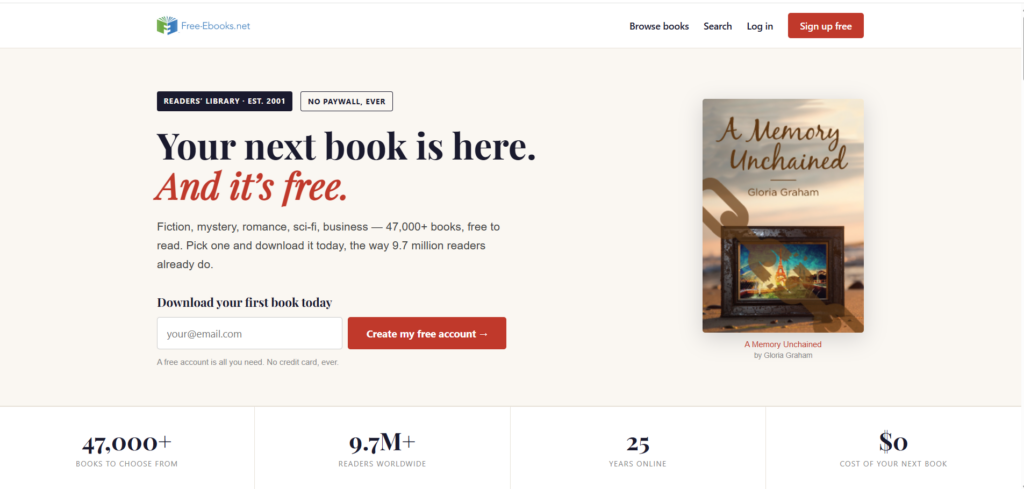
We also run the world’s largest free e-book site, free-ebooks.net, with half a million visitors a day. We can take your content, turn it into an e-book there, repurpose it on other blogs, and link back to you in a completely legitimate way. Everything we do is white hat. No tricks, no cheating the system.
When proof is assembled and agents drive traffic, scaling becomes a math problem
When your proof is assembled, your personal brand is clear, and your agents are driving traffic to a landing page that converts, scaling becomes a math problem. You tune the ads, increase the budget on what works, and let the agents monitor and optimize.
What used to require a five-person marketing agency with 25 clients can now be handled by a solopreneur with well-configured AI agents that work just for you. They do not have 25 other clients. They learn who you are, they understand your voice, and they get smarter every week.
The expertise was always there. The agents just make sure the world can see it.