
If you run an agency or any company that records Zoom calls, you need a clear policy on what gets repurposed and what doesn’t. Because someone on your team will eventually publish something that makes a client look bad, and you’ll lose trust you can’t get back.
We record all Zoom calls. Always have. That’s how we document what we do, build training, and maintain accountability.
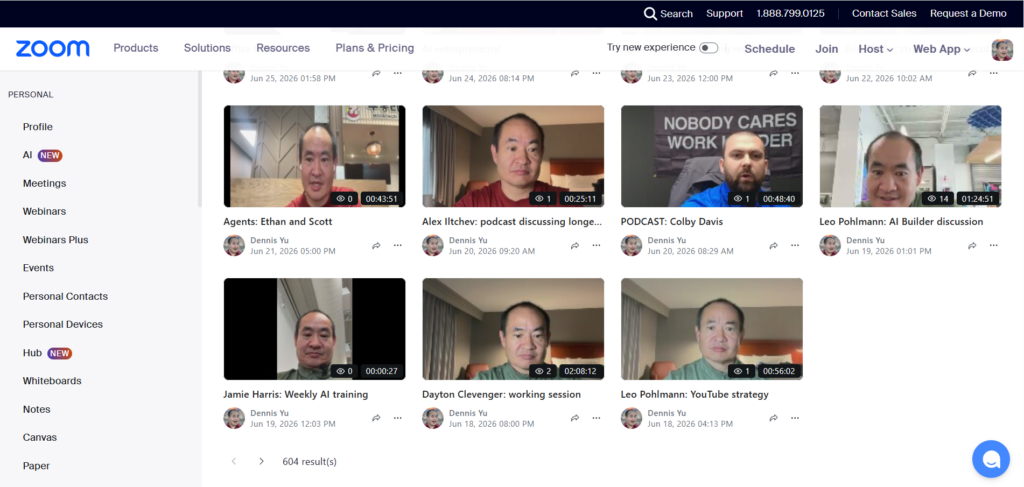
Most calls we repurpose. Some private ones we don’t. But even on the ones we do repurpose, you have to think before you publish.
I’ve seen this mistake happen on our team more than once and it’s hurt us.
How repurposing works
After a Zoom call, if we want it repurposed, we forward the email Zoom sends automatically to the host to our content team’s group email. They pick it up from there.
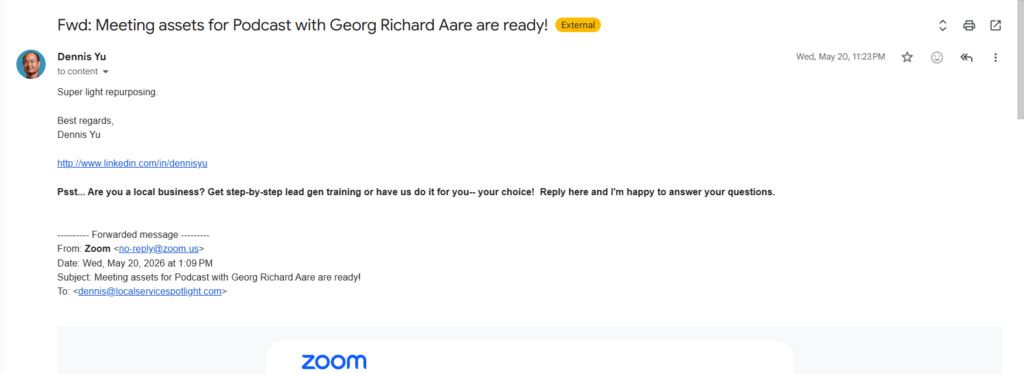
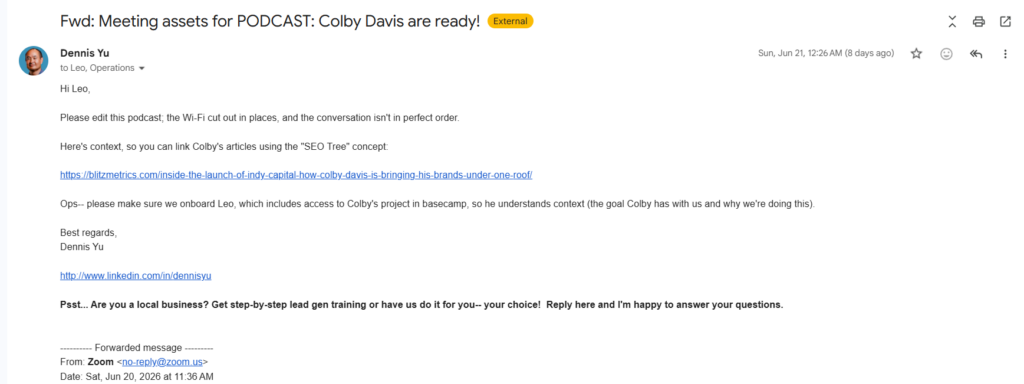
If we don’t forward it and don’t say to repurpose it in our project management tool or any email, it means it’s not requested. Simple. Your team needs a system like this so there’s zero ambiguity about what’s meant for publishing and what’s not.
Use reasoning before someone has to tell you
I caught one of these before the client even complained because it was obvious.

If someone tells you on a call that their delivery is weak, their team isn’t performing, or they don’t have good systems in place, you should be able to reason that they don’t want that published.
You shouldn’t have to be told. Think about what you’d want if you were on the other side of that call.
Most people unknowingly create problems because they aren’t thinking from the client’s perspective. The same way most people generate AI slop because they aren’t using real signal from their clients and community.
When you do repurpose a sensitive call
Sometimes you share a private call with your content team and ask for snippets and an article. When that happens, it has to be done right.
One of our team members got this right when a client flagged a problem. She pulled the full video down, cut three short snippets covering only strong topics, removed everything about the client’s delivery gaps and SOPs, and rewrote the article to remove anything that could read negatively while keeping the backlink.
That’s the standard any agency should follow.
Would this person be comfortable if their clients saw this? If not, cut it. Does it expose a weakness they shared in confidence? Cut it. Can you extract the methodology without the vulnerability? That’s your article.
Sometimes the title alone makes someone look bad. Think about framing, not just content. And always keep the backlink so you deliver SEO value to the person.
What’s safe vs. what’s not
General methodology, industry trends, topics where the person demonstrates expertise, anything they’ve already said publicly. That’s fine.
Admissions of weakness, internal business gaps they’re hiring you to fix, pricing discussions, financial details, phone numbers, credentials. Never publish those.
So do this
If you record calls at your agency or company, build a system your team can follow. Most calls you’ll repurpose. But even then, think before you cut. And if nobody asked for it to be repurposed, don’t touch it.
Originally published .