

Every time I process a video, I follow the same system. It doesn’t matter if it’s a podcast, a Zoom call, or an interview at a conference. The process is always the same, and it starts with one raw recording.
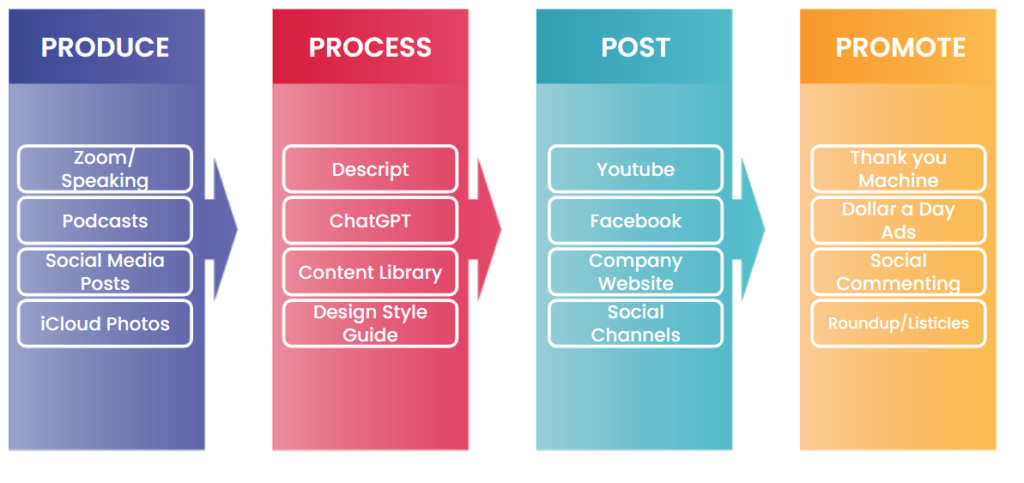
Here’s exactly what I did with my latest video, “The Swiss Army Knife of Video Editing,” a 12-minute interview I did with Marcelo from Descript at NAB Show 2026.
The raw recording
I sat down with Marcelo at the Descript booth and we talked about AI video editing, the Underlord agent, the Descript API, and how anyone can create video content without being a professional editor. One camera, one take, 12 minutes.

That single recording became the seed for everything that followed.
Processing the video in Descript
I brought the raw footage into Descript. Using Underlord, the AI editing agent built into Descript, I cleaned up the video and added captions in the Bold: Yellow highlight style so it works with or without sound. The video was ready to publish in minutes instead of hours.
This is exactly what I teach about the definitive article approach. I have a documented process for how to edit a video in Descript, and my agent follows that process every time. If something goes wrong or could be improved, I update the process so the next time is better.
Uploading to YouTube
Before uploading, I used Underlord to generate the YouTube metadata.
I settled on the title “The Swiss Army Knife of Video Editing” because it’s short, memorable, and searchable.
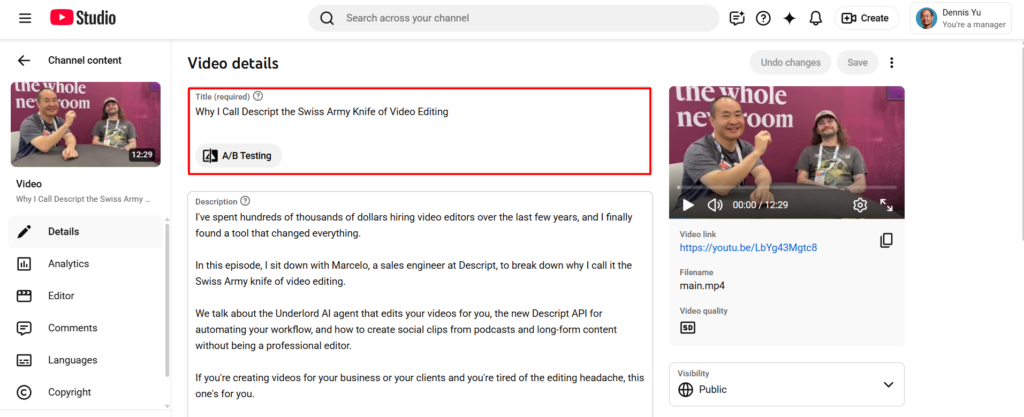
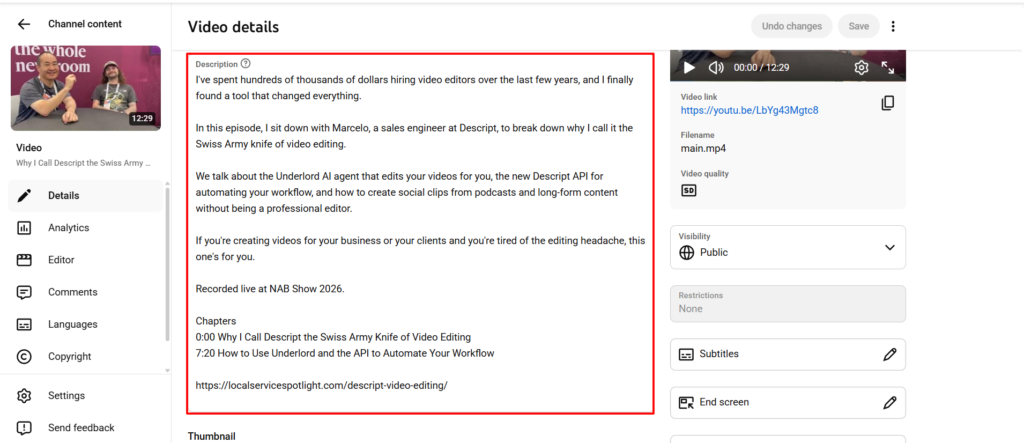
I wrote the description in first person, broken up with line breaks for easy reading, and included two chapter timestamps.
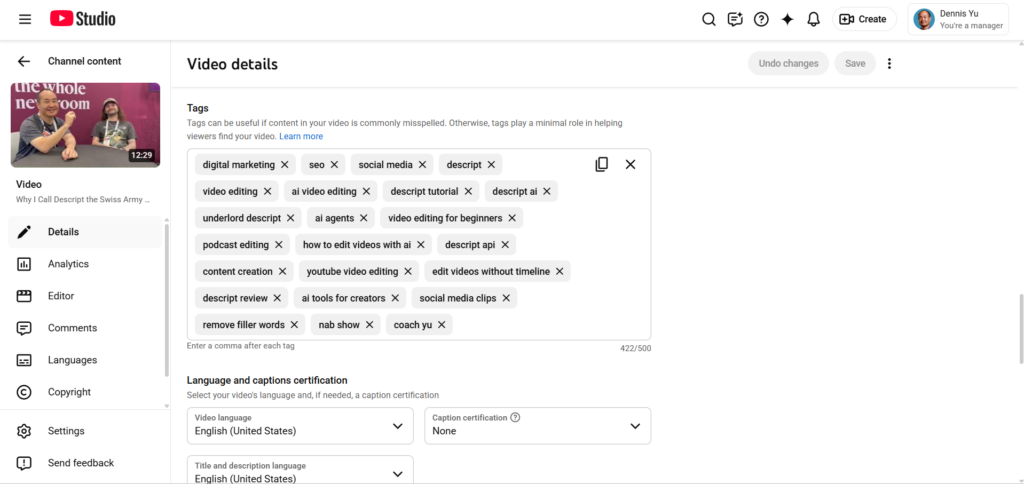
I also generated a set of tags covering all the major topics in the video.
This isn’t guesswork. I have a repeatable way of doing this, and my AI follows the same guidelines every time.
Writing and publishing an article
Next, I repurposed the entire video into a long-form article. The AI pulled out the key themes, organized them into sections with headers, and wrote it so it reads like a real article, not a transcript dump.
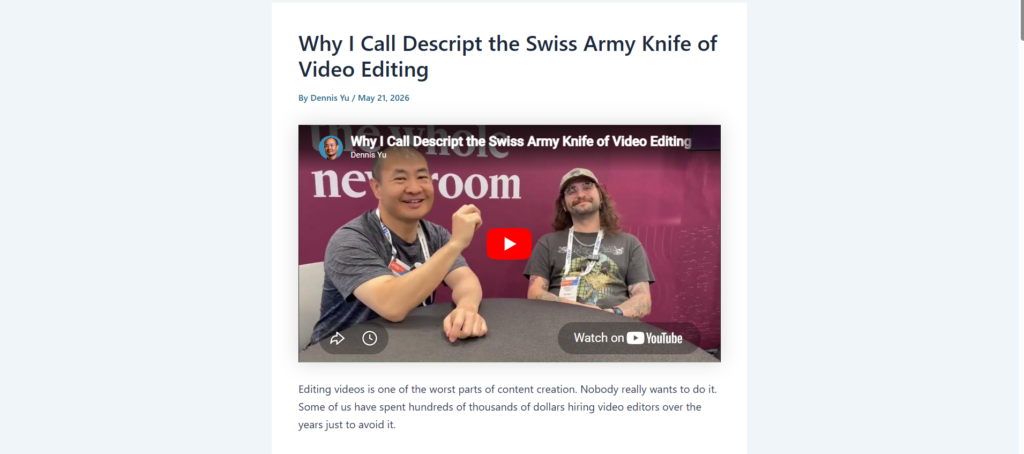
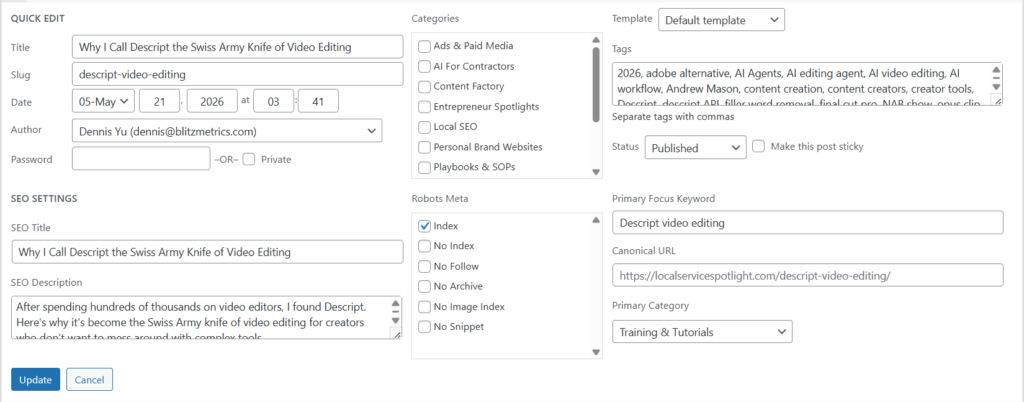
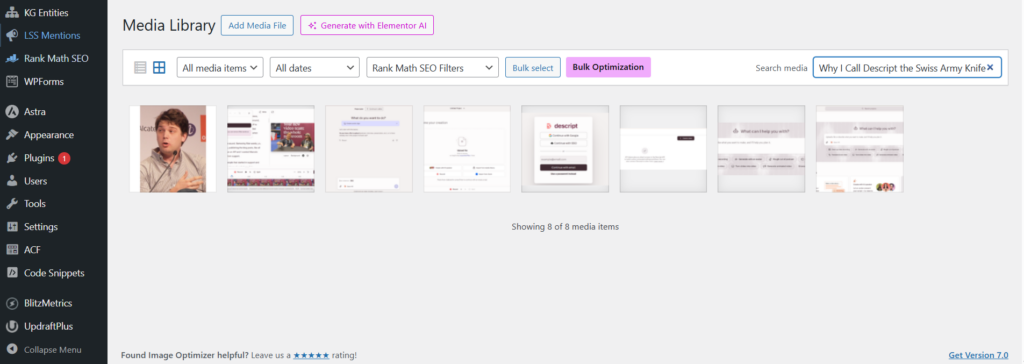
This is what I call the meta article. Every time I do a task, my agent documents what it did and publishes that as an article. That article creates legitimate SEO value because it ties together real entities, real people, real companies, and real events. It’s not AI-generated slop. It’s a documented record of real work.
The article lives on my website, and it links to other articles, other people, and other entities in a way that strengthens my whole knowledge graph. That’s the recursive loop I talk about. The more you document, the more signal you create, and the more the system improves.
Creating shorts
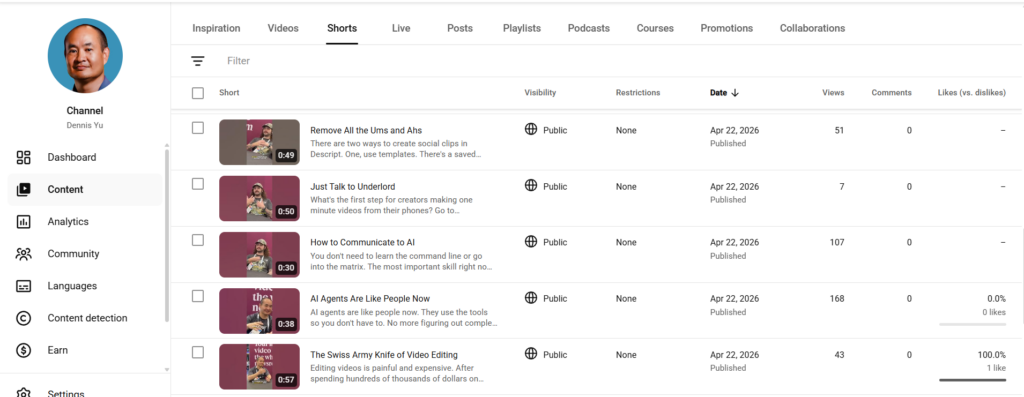
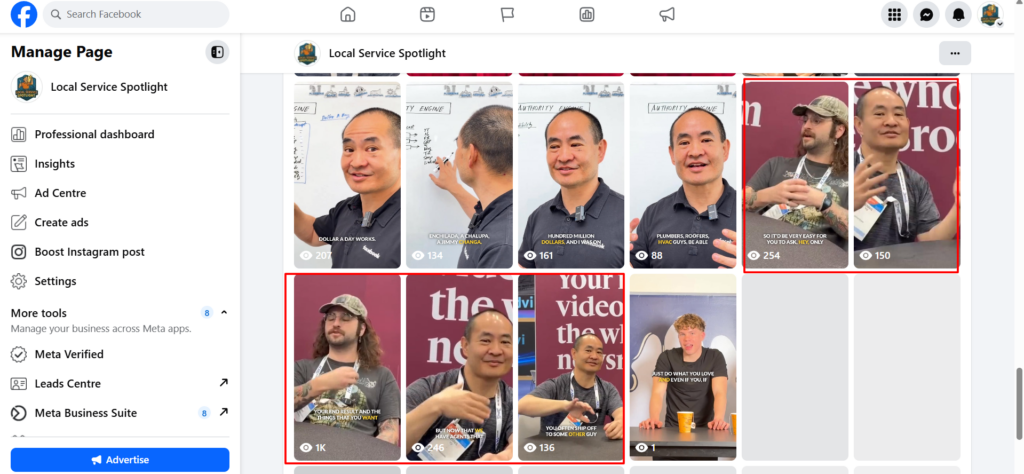
I went back through the video and identified five moments that could stand on their own as YouTube Shorts:
For each short, I created a title, description, and tags. This follows the same definitive article process. I have guidelines on how to create shorts, what makes a good clip, and how to write metadata for each platform.
Social media clips
I wrote captions to share the full video on Facebook, LinkedIn, Instagram, TikTok, and X. Each one was tailored to the platform. LinkedIn got the professional angle. TikTok got the punchy one-liner. Instagram pointed to link in bio.
Then I did the same thing for all five shorts across all five platforms. That’s 25 individual captions, each written for the specific platform and clip.

The final count
From one 12-minute video:
1 full YouTube video with title, description, tags, chapters, and captions. 1 long-form article published to the website. 5 YouTube Shorts with titles, descriptions, and tags. 5 social media captions for the full video across 5 platforms. 25 social media captions for the shorts across 5 platforms. 1 article documenting the entire process.
Over 30 pieces of content from a single recording.
I’m not just creating content. I’m building a self-improving system where every video I process makes the next one better. My definitive article on how to repurpose a video gets updated. The meta article shows how I did it this specific time. And the recursive loop continues.
If you’re recording videos for your business and you’re only uploading them once, you’re leaving 90% of the value on the table. One video, one system, 30+ pieces of content. Every single time.
Originally published .