
Dennis Yu has run high ticket sales programs for years, and every single client says the same thing when asked why they signed up: trust. The landing page, the testimonials, the screenshots of results, the names of people vouching for you — those things matter, but only because they are evidence of trust that already exists. They are proof, not the cause. What actually moves someone to write a $10,000 check is seeing that the right people believe in you and that others like them have already made the journey.
This is the lesson Zach Babcock needed to hear. Zach is a podcaster and entrepreneur who got out of prison about twelve years ago and has since built a business while raising twin boys. When Dennis and Zach connected recently, Zach said he was not ready to launch his high ticket sales offer — his studio was not finished, his website was mid-redesign, and he felt like he needed more infrastructure before he could charge serious money. Dennis told him plainly: none of that matters.
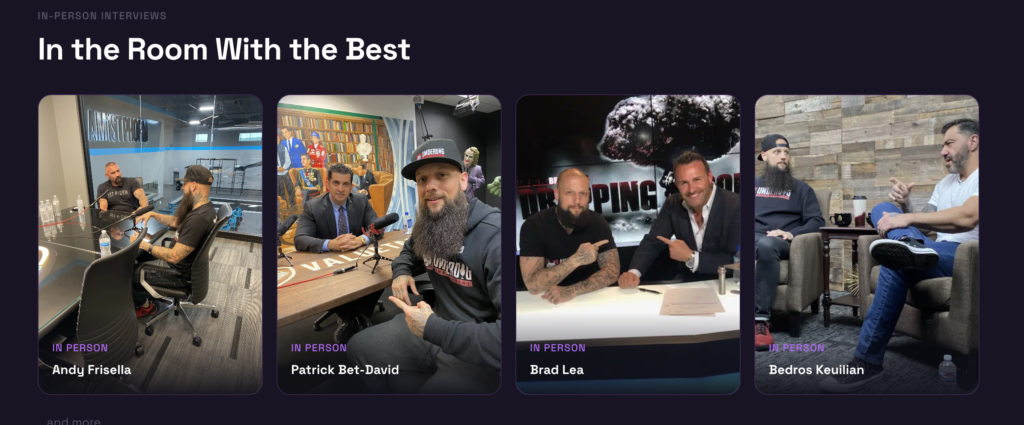
Because while Zach was waiting to be ready, he was already doing the thing that actually builds a high ticket sales business. He got moving before everything was perfect, and that momentum put him in rooms that most people only dream about. Zach has sat down in person with Andy Frisella, Patrick Bet-David, Brad Lea, and Bedros Keuilian — some of the most respected names in entrepreneurship. That is the kind of credibility no website redesign can manufacture. You earn it by showing up.
What High Ticket Sales Actually Means
High ticket sales, in the context of coaching and consulting, refers to any program priced over $10,000. At that level, the rules change completely. Buyers are no longer comparing course libraries or reading through pricing pages. They are making business decisions based on trust, relationships, and evidence of real results.
People who run businesses generating $10 million to $100 million a year do not look at a $10,000 to $50,000 investment as particularly high ticket. They treat it as a line item. Business decisions at that level come down to trust — not whether you have a fancy video studio or a professionally designed sales funnel. On the other end, someone making $10,000 a month should not be your target client for a $10,000 program. The financial pressure alone makes them a bad fit, and a bad fit leads to refunds, complaints, and reputation damage.
The Real Reason Clients Sign Up
Dennis Yu has heard the same feedback from every high ticket sales client he has brought on: they signed up because they trusted him. They saw who else was in the room. They recognized the caliber of people coming through the program. They felt confident the transformation being promised was real.
A dozen families enrolled their young adults in the AI Builder program this year without knowing exactly what the curriculum would look like, because the tools change, the techniques evolve, and the program evolves with them. What those parents knew was the goal: equip their young adults with AI skills so they can run a team, grow a business, network with serious people, and learn the fundamentals of entrepreneurship. That clarity of outcome, combined with visible examples of other young adults who had already walked that path was enough.
Show Your Community, Not Your Credentials
One of the most powerful things you can do in high ticket sales is show who your community is. When prospects see the names, the faces, and the results of people already in your program, they self-qualify. They ask whether they identify with those people. If they see that caliber and feel like they belong, they reach out. If they do not, they disqualify themselves — which is exactly what you want.
Jeff Hughes built his family law firm to $20 million before founding Rocket Clicks, a digital marketing agency serving family law firms. He has already run two of his sons through the AI Builder program. His decision had nothing to do with a landing page or a webinar funnel. It came from trust built through shared relationships and mutual industry connections. He already knew digital marketing inside and out. What he purchased was the relationship, the community, and the confidence that his sons would be surrounded by the right people.
Why You Do Not Need a Website to Start Selling
For many years, Dennis did not have a website at all. That sounds absurd until you understand that high ticket sales buyers are not Googling for coaches and comparing pricing pages. They are getting referrals. They are watching you show up consistently for other people. They are seeing your name connected to real results through podcasts, shared social content, and direct relationship-building.
When Zach Babcock asked how to launch his high ticket sales offer for podcasting services, Dennis gave him the same guidance: make a one-minute video about your mission. Talk about why you are building this business — the family, the legacy, the podcasting expertise, the ability to help other entrepreneurs build authority through their shows. Zach calls his framework acquiring authority — the process of amplifying credibility through a clear story and a consistent body of work. That is a clear mission, a clear archetype, and enough to start closing high ticket deals without a finished website.
Building Trust Through the Content Factory
The most effective way to build the trust that closes high ticket sales is to document your work and let your clients do the talking. Record coaching calls with permission. Publish the results. Honor the people going through your program publicly. Share before-and-after transformations. The Content Factory process exists precisely for this, taking the expertise you already have and turning it into structured, repeatable content that builds credibility over time without requiring you to constantly promote yourself. A podcast, a YouTube channel, regular short videos, any of these serve as the engine that continuously surfaces proof of your results to the right audience.
When your community does the marketing for you, that trust carries far more weight than anything you could say about yourself. Prospects hear about your program from people who paid for it and came out the other side with real results. That difference is everything at the high ticket level.
Qualifying the Right Clients From the Start
In the early days of selling high ticket, the temptation is to take everyone who has the money. Dennis made that mistake, he would see someone with $20,000 available, say yes, and then deal with refund requests, complaints, and clients who simply were not a fit. Bringing in the wrong people is worse than leaving money on the table.
Put the price upfront on your booking page. Do not hide it, do not reveal it at the end of a long call after forty-five minutes of rapport-building. State it clearly so that by the time someone gets on a strategy call with you, they already know the cost and have decided they want in anyway. Your goal on that call is not to maximize your close rate — it is to disqualify as many people as possible so the ones who do join are serious, aligned, and successful enough to implement what you teach.
Do not offer payment plans to people who cannot afford the investment. Do not bend the archetype for enthusiasm alone. A client maxing out a credit card to pay for a $10,000 program carries too much pressure to use the program well. That pressure lands back on you and damages both the relationship and your reputation.
Why High Ticket Sales Get More Valuable as AI Grows
Course creators are struggling. Information is free, YouTube, Reddit, and AI tools surface answers to almost any question in seconds. Coaches who built their businesses around selling information are feeling this directly. But high ticket sales survive because they deliver transformation. They give you a real person overseeing your progress, peers who are serious, and someone curating the constantly changing landscape of tools so you do not have to.
The more the AI landscape shifts, the more valuable a trusted guide becomes. Clients in the AI Builder program know that when the tools change — and they will — they do not have to figure it out alone. That peace of mind is worth far more than any course library.
High ticket sales are also the foundation that funds everything else. The revenue and relationships you build through a strong offer give you the stability to eventually launch a SaaS product, start an agency, or build additional programs. Your $10,000 clients will almost always be better clients, better partners, and better advocates than your $1,000 clients. The less people pay, the more they tend to demand. Invest your energy in the right relationships from the beginning.
If you have been waiting for the perfect studio, the finished website, or the complete course platform — stop waiting. Make the video, reach out to the relationships you already have, and be clear about the transformation you deliver. That is the only infrastructure that actually closes high ticket deals.
Originally published .