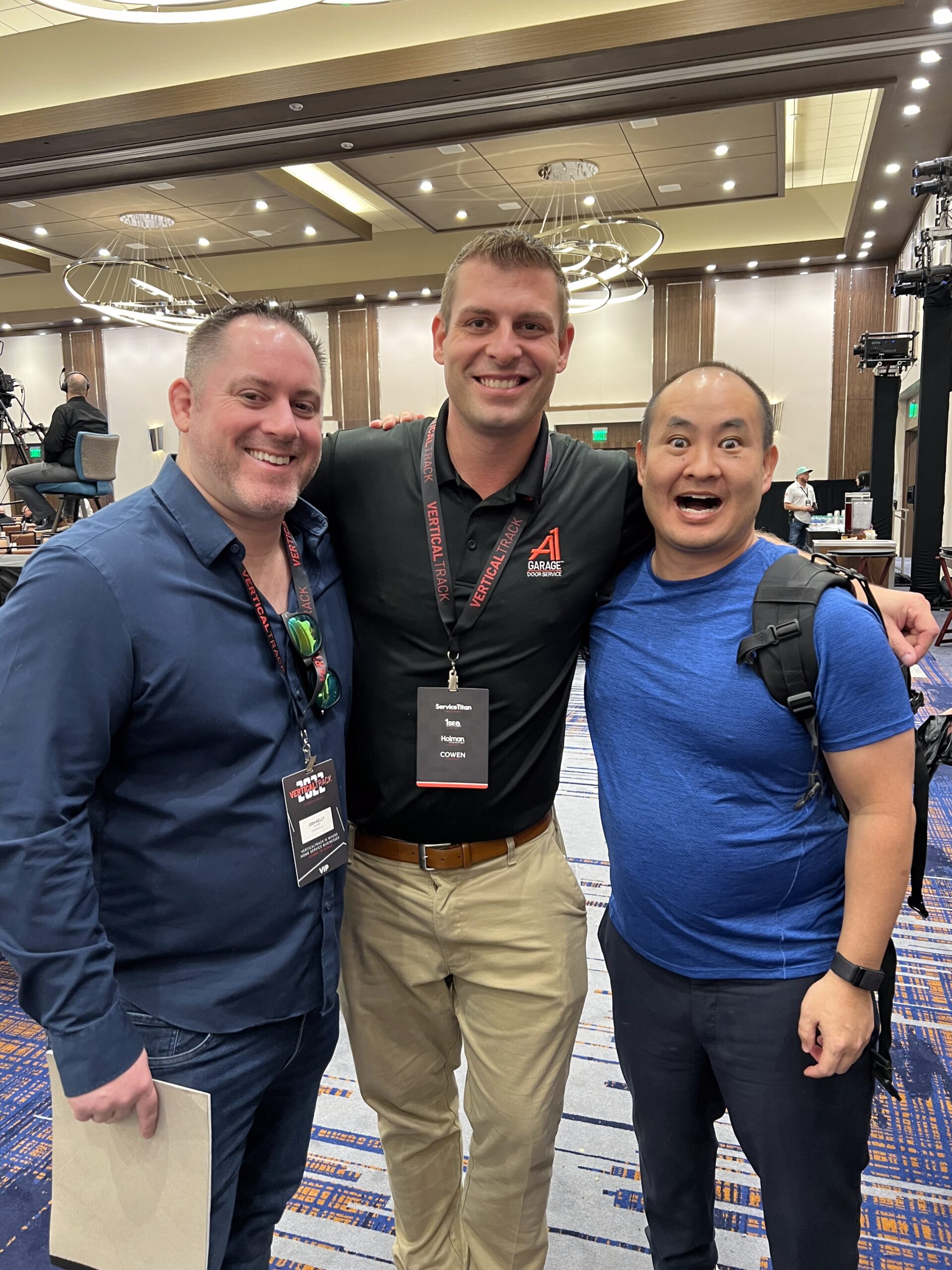
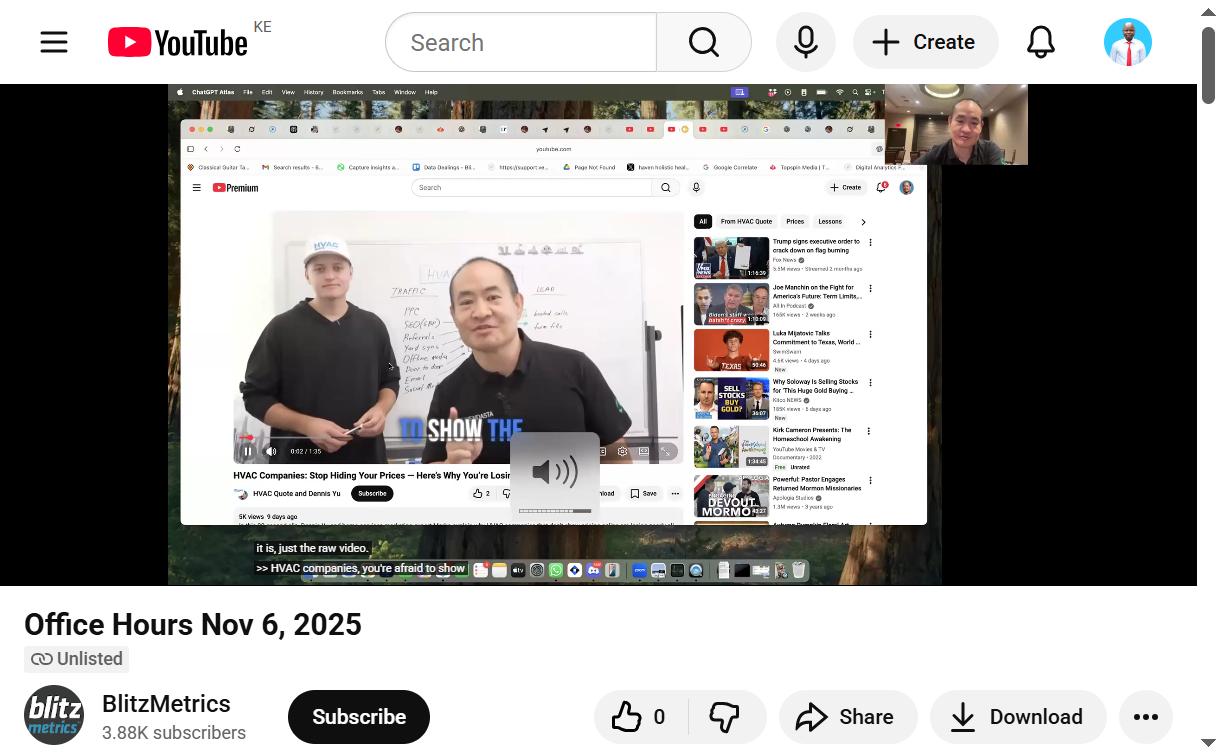
At the JVA Align Volleyball Summit in Dallas this week, Dennis Yu and Dylan Haugen sat down with Cam Hazzard, a 20 year old pro dunker about to compete in Shaq’s new DunkMan League on TNT this summer. Then, during the lunch break on day two, they used an AI agent to turn the recorded interview into an entire personal brand website. The full playbook for the build is below.
This is the playbook version. The version for athletes, for local service business owners, for any operator who has real work behind them and wants the world to find it.
The Problem the Playbook Solves
For most people who are good at what they do, the marketing problem is not a skill problem. It is a findability problem. Cam Hazzard had a 50 inch vertical, a 360 under both dunk that fewer than 10 people on the planet can throw down, a Shaq league invitation, and a triple major academic record. None of that was new the morning we got to Dallas.
What was new is that Google, ChatGPT, Gemini, and the people who use those tools could not actually find any of it. Searching his name returned a Canadian hockey player with the same name and a one line bio. His partial Knowledge Panel did not have enough structured signal to complete. For an athlete about to be on TNT in front of a national audience, that gap was a missed opportunity. For sponsors and journalists trying to research him, it was a real revenue problem.
The same gap shows up for every local service business we work with at Local Service Spotlight. The plumber with 25 years of experience whose website lost its position to a national franchise. The roofer with the best storm response in the county whose Knowledge Panel does not exist. The HVAC team with 600 five star reviews whose Google Business Profile is still tagged wrong. The skill is real. The findability is broken.
The Playbook in Five Steps
The playbook is the same whether the entity is a pro dunker, a roofer in Tampa, or a young AI builder trying to land their first job. Five steps. They go in order.
Step 1. Record real source material.
The playbook only works if the source material is real. Dennis Yu and Dylan Haugen recorded two actual interviews with Cam Hazzard before the website existed. One a Dunk Talk Podcast mini episode after the dunk session at the Texas Flight Crew court. One a longer one on one with Dennis about joining the league. Both were recorded for what they were, not for the website. The website got built later from the transcripts.
For a local business, the equivalent is the conversation the business owner has every day with customers, with employees, with people at the lumber yard. Record those conversations. They are the source material.
AI is an amplifier. If the underlying signal is fake, the amplifier amplifies fake. The source material has to exist first.
Step 2. Turn transcripts into quote driven articles.
The transcripts went into an AI agent with a clear instruction set: identify the most important quotes from Cam, write the article around those quotes, link out to the people and places mentioned. The result was two articles on camhazzard.com in Cam’s first person voice, built around his actual words inside block quotes.
The articles do not paraphrase. They quote. This is on purpose. Search engines and AI assistants index direct quotes more heavily than paraphrased content because direct quotes are evidence the person actually said the thing. For a local business, quoting the owner directly works the same way.
Step 3. Declare the entity in schema.
Once the articles existed, the agent added Person schema to the home page with everything Google needs to commit to the entity. The @id, the job title, the schools, the awards, the verified social profiles, the league membership. Every other page on the site references the same @id back to the same Person node, so the site reads as a single coherent entity declaration instead of a scatter of unrelated pages.
For a local business, the equivalent is LocalBusiness schema with the same level of completeness. Hours, service area, payment methods, founder, reviews, parent organization if applicable. The entity gets declared in structured data the same way.
Step 4. Build the site architecture around the entity.
After the articles and schema, the agent built out the rest of the site. A home page with the hero, stats banner, video embed, and three feature cards. An About page with the long form story. A Connect page with every platform plus official profile cards (World Dunk Association, DunkMan League, Abilene Christian University). A Blog page that pulls latest posts dynamically. A Links page in the style of Linktree with partner discount codes. A mentions page with quotes from DunkMan Official, Dennis Yu, Dunkademics, and others.
Every page uses the same theme, the same nav, the same footer, the same color tokens. The cross link map between pages is dense by design. Every article links to the Connect page. Every social card links back to the canonical profile. The Connect page links to the WDA profile, which links back to the site.
For a local business, the same architecture lives on the business’s own canonical site. Same nav, same footer, same cross link density. Service pages link to project case studies link to testimonials link to the contact form.
Step 5. Configure RankMath and submit the sitemap.
Before publishing, the agent set RankMath focus keywords, SEO titles, meta descriptions, and post excerpts on every article. The Rank Math sitemap is live at /sitemap_index.xml and contains every article, page, and category. The site was submitted to Google Search Console after the build.
For local businesses, this is also where Google Business Profile categories get reviewed, NAP citations get checked across the major directories, and the Knowledge Panel claim form gets submitted if it has not been claimed yet.
What the Output Looks Like
When a sponsor, journalist, or fan searches “Cam Hazzard” now, the camhazzard.com home page and all four interlinked articles surface together. The Person schema declares him as a Pro Dunker, member of DunkMan League and the World Dunk Association, alumnus of Lone Star High School and Abilene Christian University, with a 50 inch vertical, a 360 under both as his signature dunk, and a Heacock Scholar academic record. ChatGPT and Gemini both return structured answers about him now when asked.
For a local business that runs the same playbook, the outcome is the same shape. A complete Knowledge Panel. AI assistants that recommend the business confidently. A canonical site that ranks above any directory or franchise page. Sponsorship and partnership inquiries that come through the contact form because the business is now findable in a way a search engine can read.
The Local Service Spotlight Mission
The reason this playbook matters at Local Service Spotlight is that it works at scale. Cam’s build took one lunch break with two practitioners and an AI agent. The same agent, with the same playbook, can do the same work for a roofer, a plumber, an electrician, an HVAC operator, a window installer, a lawn care company, a pressure washer. The technical work compounds. The judgment is what scales.
This is the mission. Connect young AI builders with the local service businesses doing real work. Use AI to take the gold those businesses have buried in their archives and turn it into content the world can find. Drive real impact. Make the good guys win.
Dennis Yu wrote the marketing teacher version of the case study on his own site. Dylan Haugen wrote the dunker side of the build on his. Cam Hazzard wrote it in his own voice on the new site. The full BlitzMetrics breakdown of the conversation is on BlitzMetrics.
The Bar for Running This Playbook
The bar is not technical. It is not about being able to train a model or run a fine tune. It is about being able to take a conversation, a transcript, a video, a meeting note, and turn it into structured content that earns attention. Anyone who can do that becomes the connective tissue between a real business and the world that wants to find it.
If you are a young AI builder reading this, the door is open. If you are a local service operator reading this, the playbook works. The work that has to come first is the work that has always come first. Real skill. Real story. Real reps. The amplifier finds you a stage once that work exists.