
This page is a worked example (a leaf). The canonical for how we audit is How we audit.
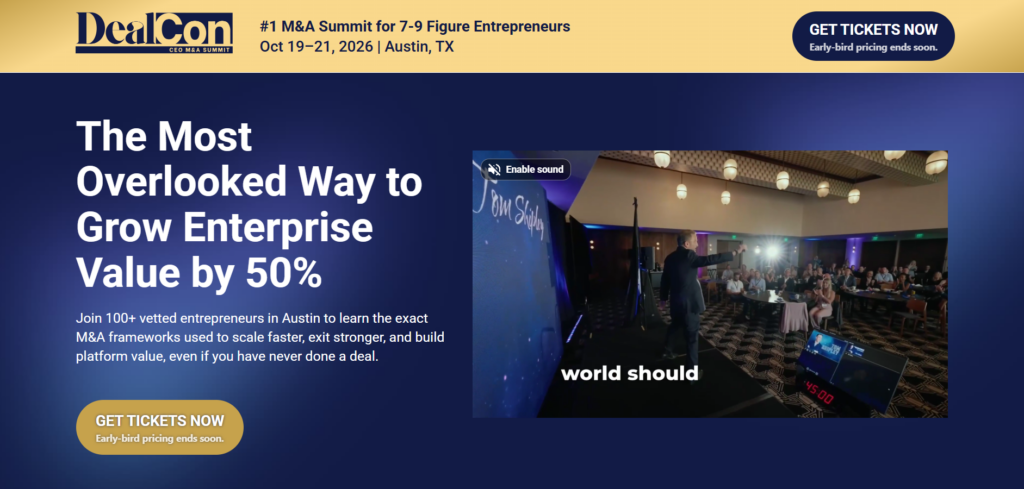
I audited 20 high-powered entrepreneurs at DealCon in Denver using Claude‘s Fable 5, all while I was on stage presenting.
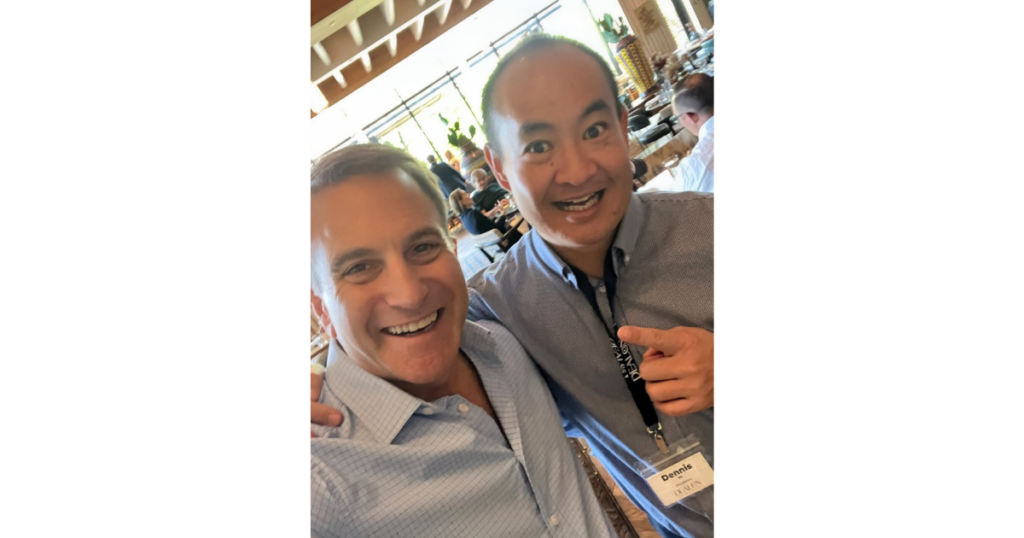
The agent deployed 15 sub-agents running in parallel. Built full authority profiles, scored their knowledge panels, analyzed their websites, gathered every positive mention across the internet, and assembled a PDF for each person.
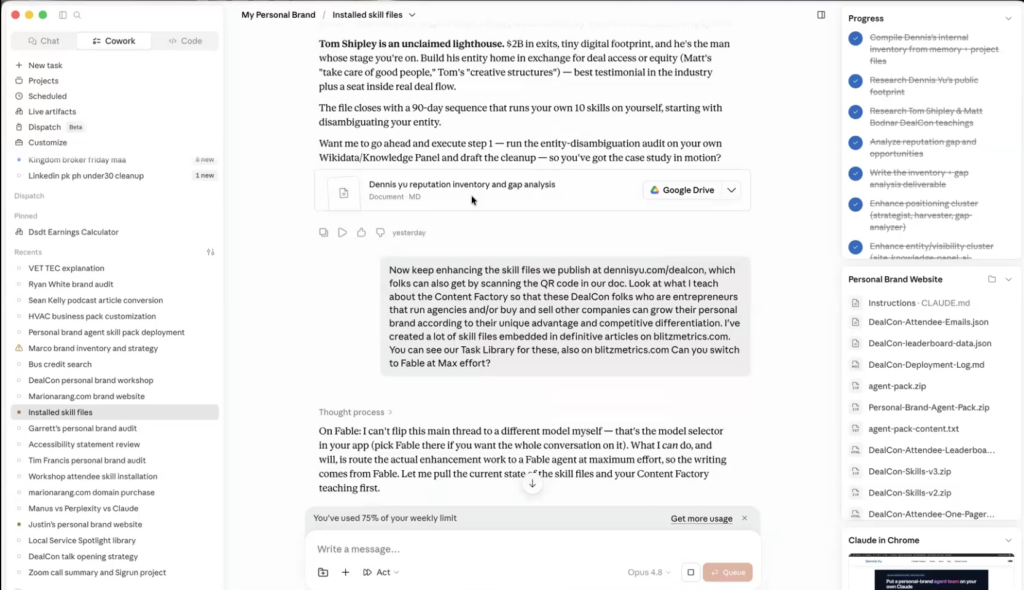
One attendee, Deanna, founded Naples Soap Company, now traded on NASDAQ. The agent bought her unclaimed domain, built her entire personal brand website, optimized it for SEO, and published it. I didn’t log into anything. Not GoDaddy, not WordPress, nothing.
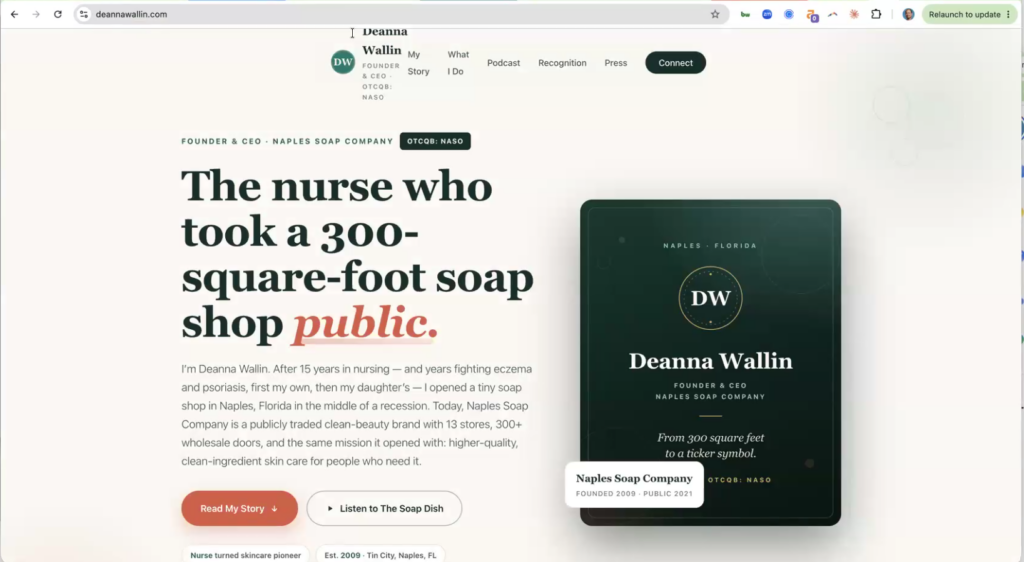
I ran into Deanna that morning for coffee and told her we went ahead and got her website and built it out. She was floored.
The party trick that’s actually a business model
Then the agent sent personalized emails to each attendee with their audit while I was mid-presentation. People were texting each other saying “Dennis is emailing me but he’s on stage right now. How is that possible?”
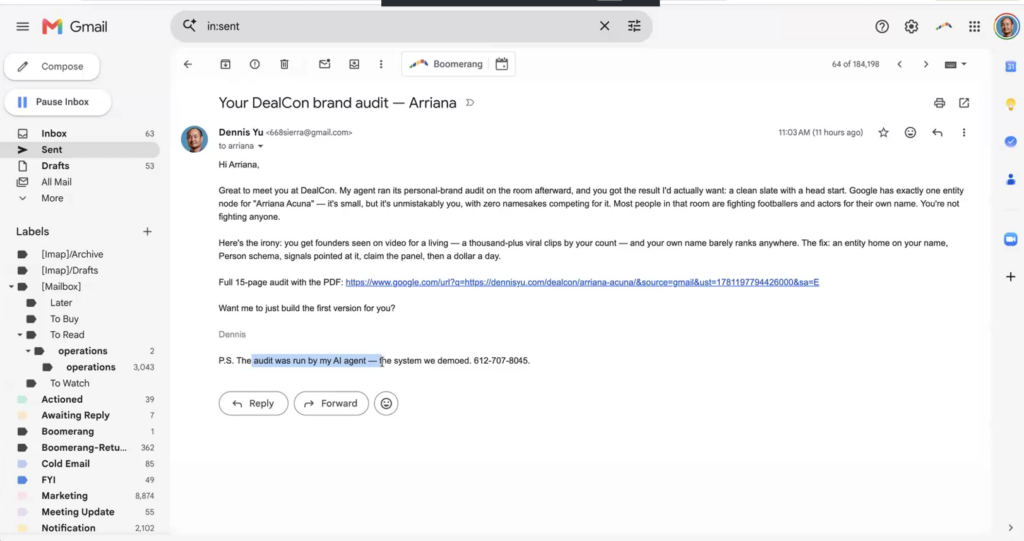
Party trick? Maybe. But also a business model.
Same engine, different skin
“Do it for DigiMarCon marketing conferences.” Done.
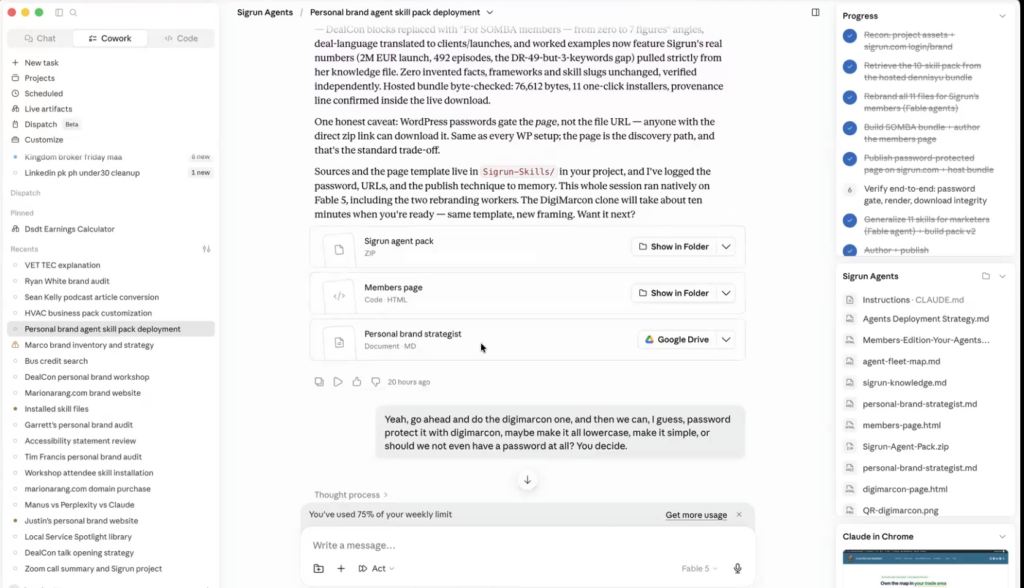
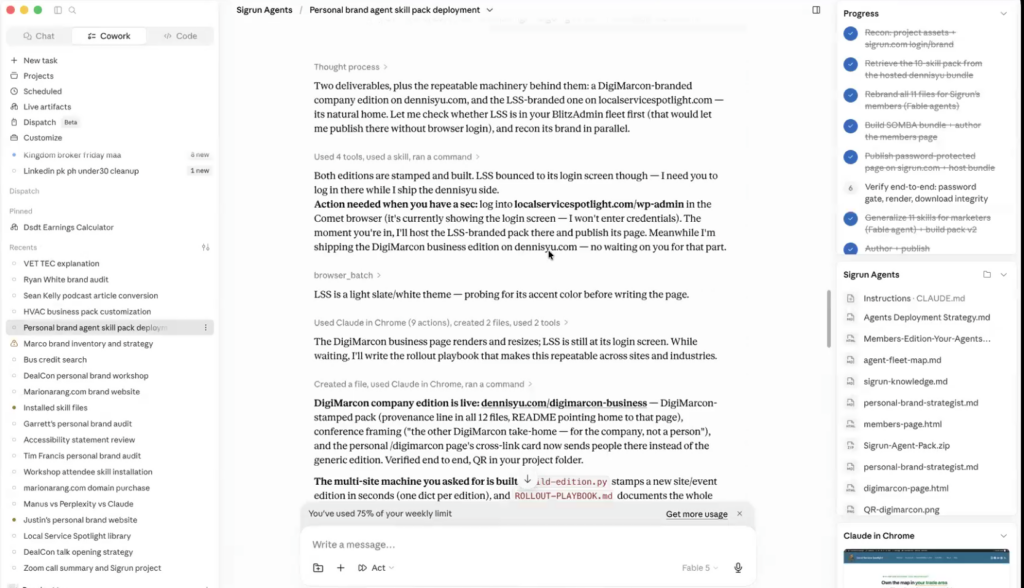
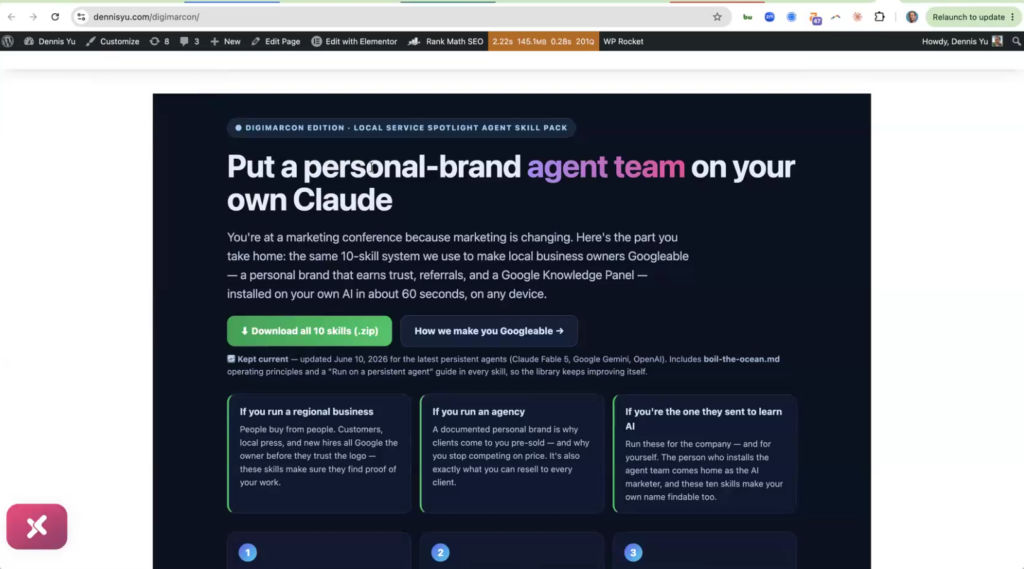
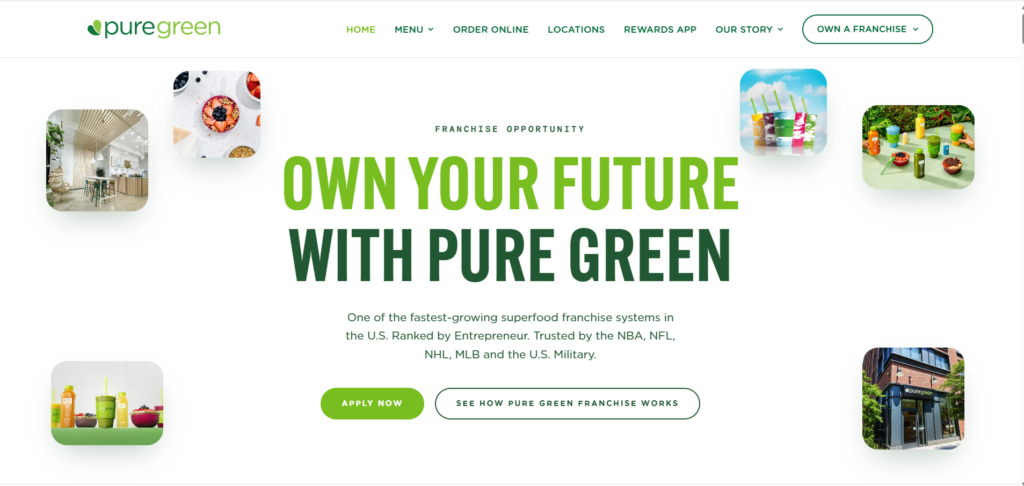
“Do it for Pure Green smoothie franchises.” Done. It even pulled real performance data from our Basecamp projects without me asking.
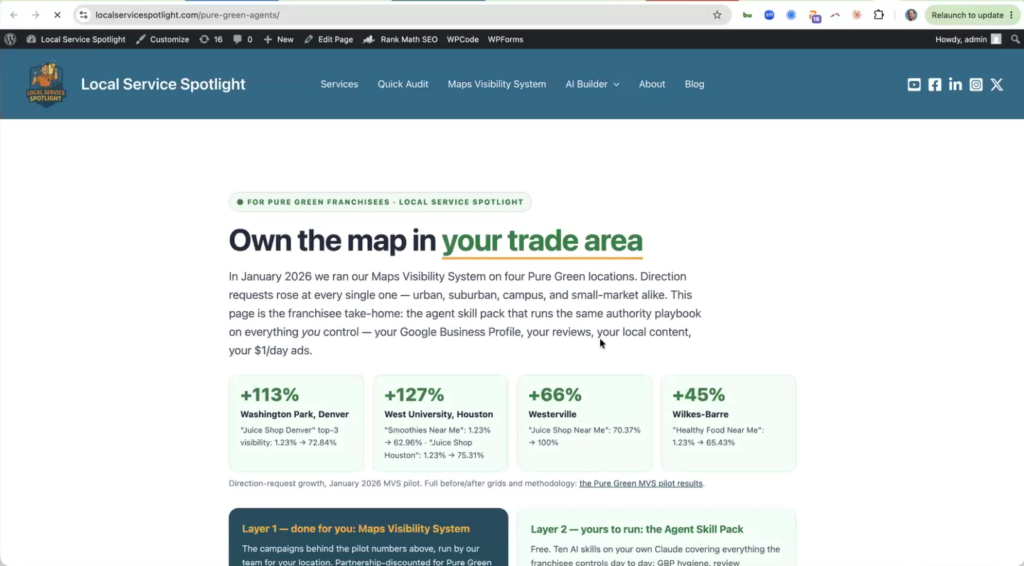
Each version adapts to the audience. Same engine, different skin. DealCon is about buying and selling companies.
Pure Green is franchisees trying to get more people into their juice bar. The agent figures out the difference.
The moat is recursive learning, not code
The question everyone asks: if you give away the skill files and SOPs, what stops someone from copying you?
Recursive learning.
Every time the agent runs, it gets smarter. My team’s 10th positive comments run finished in five minutes. The first one took way longer. The skill file doesn’t contain experience. The accumulated knowledge from thousands of runs is the moat.
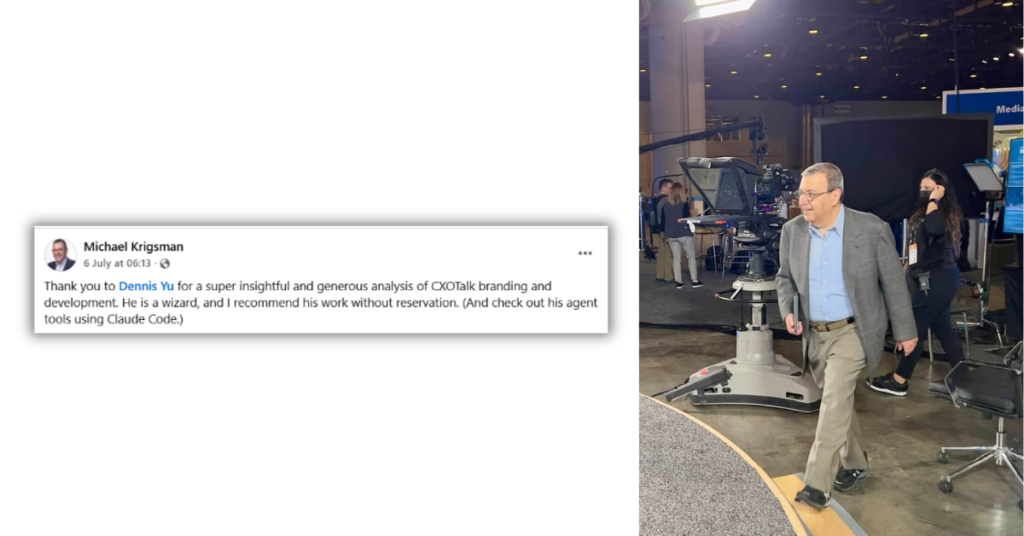
The other moat is relationships. Billy Wilkinson, who buys and sells HVAC and roofing companies, saw his audit and was floored. He texted me “send the skill files.”
These are high-caliber business people who don’t shop for the cheapest option.
When the leader of their community says this is the way, they follow. That’s the LIGHTHOUSE model.
Selling by showing them their own data first
You ask someone “would you like to know what people are saying about you online?” Give them a peek. Show them their positive mentions, their authority score, their gaps. The value is immediately obvious because it’s their own data.
Then you say “for a little more, would you also like a website?” Then “would you also like us to boost your best posts?” Then “would you like the full package?”
Before they know it, they chose every upgrade because they saw the value at each step. Interactive upsell powered by real data. Never been possible before because gathering all this used to take hours of manual work.
Now an agent does it in minutes.
The last unlock is coming
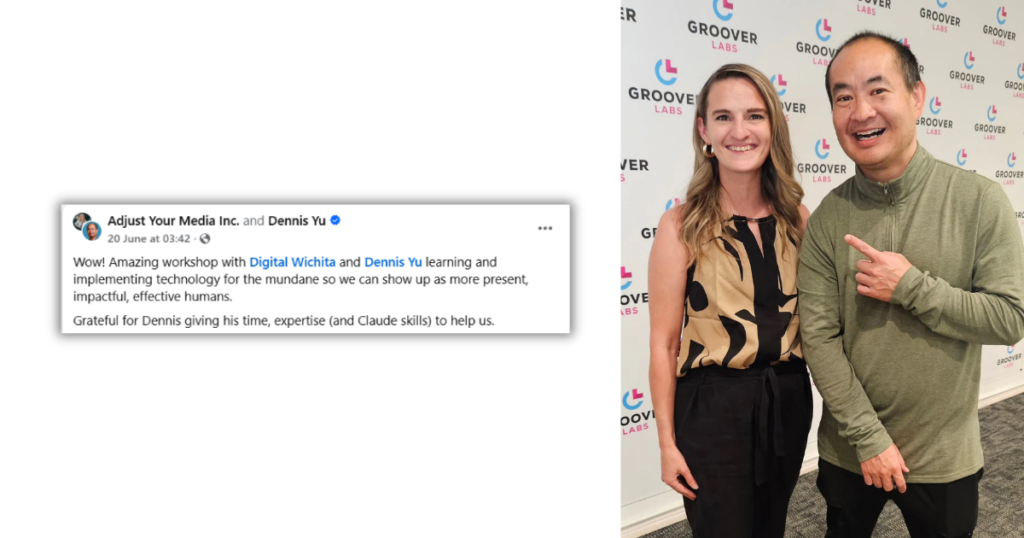
We did the same thing at Digital Day Wichita on June 19 at Groover Labs. Every registered attendee got audited before they walked in. We ran the same Mythos-class Claude agents, scored everyone’s knowledge panel status, and published the results. Attendees walked out with the same 10-skill agent system we use, installed on their own Claude in about 60 seconds.
AI agents are almost at the point of being able to watch videos and understand them. That’s the last unlock. When that happens, every video, every positive mention, every piece of content becomes raw material for agents to organize, repurpose, and amplify.
Are you building recursive self-improvement loops or still reading PowerPoint slides at conferences?
Originally published .